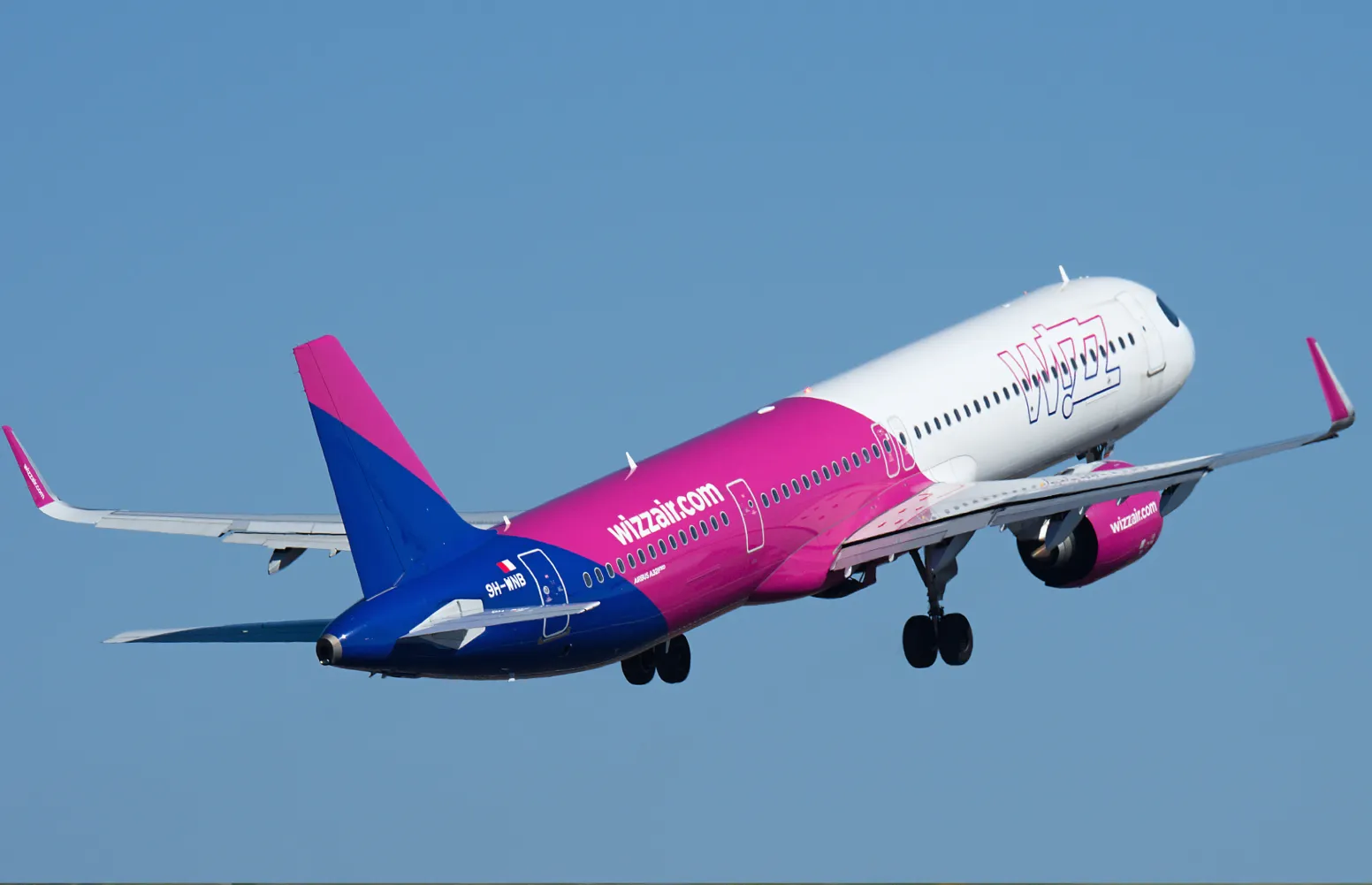
Wizz Air has announced plans to introduce Starlink satellite internet connectivity across its entire aircraft fleet, becoming the first European low-cost carrier to commit to a fleetwide rollout of the technology.
The move places the airline ahead of many of its budget airline competitors, several of which have yet to adopt satellite-based inflight connectivity on a large scale. Once installation is complete, passengers travelling across the Wizz Air network will have access to high-speed internet services delivered through SpaceX's Starlink system.
The rollout is expected to be completed by 2027, covering the airline's fleet and bringing a level of connectivity that has traditionally been associated with premium long-haul carriers rather than the low-cost market.
Faster, More Reliable Inflight Internet
For an airline built around efficiency, low fares and high aircraft utilisation, the decision represents a notable investment in passenger experience at a time when expectations around onboard connectivity continue to change.
Access to reliable internet has become a routine part of daily life for many travellers. Whether for work, communication or entertainment, passengers increasingly expect to remain connected throughout their journeys. Airlines have responded in different ways, with some introducing paid WiFi packages and others offering limited messaging services.
Wizz Air's decision to adopt Starlink across its entire fleet signals confidence in satellite technology as a practical solution for short and medium-haul operations.
Starlink uses a large network of low Earth orbit satellites to provide internet connectivity. Traditional satellite systems often rely on satellites positioned much farther from Earth, which can result in higher latency and slower response times. Low Earth orbit satellites operate at significantly lower altitudes, allowing data to travel shorter distances and improving performance for users.
For passengers, this means a browsing experience that more closely resembles ground-based internet connections. Activities such as video streaming, messaging, web browsing and video conferencing become far more practical when compared with older inflight connectivity systems.
Fleetwide Transformation
The introduction of Starlink has attracted attention across the aviation sector in recent years. Several airlines in North America and other regions have adopted the technology, reporting positive passenger feedback and strong demand for onboard connectivity.
Wizz Air's announcement marks a significant development within the European low-cost sector, where many airlines continue to assess the commercial and operational implications of introducing satellite internet services.
The carrier operates one of Europe's youngest fleets, centred primarily on the Airbus A320neo and Airbus A321neo families. These aircraft already incorporate a range of fuel-saving technologies and operational efficiencies that support the airline's low-cost business model.
Adding Starlink connectivity across the fleet will require a substantial installation programme over the coming years. Aircraft modifications must be coordinated with maintenance schedules, certification requirements and operational planning to minimise disruption.
For aviation professionals, the project highlights how technological upgrades increasingly form part of airline fleet management strategies. Modern aircraft are no longer assessed solely on fuel burn, range and capacity. Passenger expectations around connectivity, digital services and onboard experience have become increasingly important considerations for airlines seeking to maintain a competitive position.
Impact on Aviation Careers
The initiative may also create opportunities across several aviation disciplines.
Aircraft maintenance engineers will play a central role in the installation and integration of connectivity equipment. Modifications involving satellite communications systems require specialist expertise, regulatory compliance and extensive testing before aircraft return to service.
Avionics engineers and technical specialists are also likely to be involved throughout the implementation process. Satellite communication systems must integrate seamlessly with existing aircraft systems while meeting stringent safety and certification requirements.
Within airline operations, digital connectivity continues to influence how carriers engage with passengers before, during and after flights. The growth of onboard internet services has encouraged airlines to develop new customer engagement strategies, digital retail opportunities and operational communication tools.
For cabin crew, improved connectivity can contribute to changing passenger expectations. Travellers increasingly arrive onboard expecting access to services similar to those available on the ground. Managing these expectations forms part of the broader customer experience delivered throughout a flight.
Pilots and flight operations teams may also benefit from advances in communication technology as airlines continue investing in digital infrastructure. Modern connectivity solutions have the potential to support information sharing, operational updates and future technological developments across airline networks.
The Road to 2027
The introduction of Starlink arrives during a period of continued expansion for Wizz Air. The airline has built a substantial presence across Europe, the Middle East and selected destinations in Asia and Africa. Fleet growth remains central to its long-term strategy, supported by ongoing deliveries of Airbus aircraft.
As the carrier expands, maintaining consistency across the passenger experience becomes increasingly important. A fleetwide approach ensures customers receive the same connectivity offering regardless of route, aircraft type or operating base.
That consistency may prove particularly attractive to business travellers who rely on internet access throughout the day. Budget airlines have traditionally focused on leisure traffic, yet passenger demographics continue to diversify as route networks expand and travel habits change.
The wider airline industry is closely monitoring developments in inflight connectivity. Passenger demand has continued to grow, particularly among younger travellers who view internet access as a standard feature rather than an optional extra.
Airlines face several considerations when evaluating connectivity solutions, including installation costs, operating expenses, bandwidth performance and customer willingness to pay for access. Advances in satellite technology have helped address some of these concerns by improving service quality and increasing available capacity.
For low-cost carriers, the commercial case has historically been more complex. Business models built around cost control require careful evaluation of any major investment. Wizz Air's decision suggests confidence that passenger demand and operational benefits can justify the rollout across the entire fleet.
The airline's move may influence future decisions elsewhere in the European budget market. Competitors will undoubtedly observe passenger response and operational performance once implementation begins on a larger scale.
From a recruitment perspective, projects involving major fleet upgrades often draw attention to the wide range of careers required to support airline operations. Engineers, technicians, project managers, certification specialists and operations personnel all contribute to programmes of this scale.
As aviation technology continues advancing, airlines increasingly require professionals who can combine traditional aviation expertise with knowledge of digital systems and communications infrastructure.
The planned completion date of 2027 provides Wizz Air with a clear roadmap for implementation while allowing sufficient time for aircraft modifications and operational integration. By that point, the airline expects Starlink connectivity to be available across its fleet, creating one of the largest satellite internet deployments among European low-cost carriers.
Enjoying the article?
Follow us and never miss an update on the aviation industry.
Final Thoughts
For passengers, the change represents greater access to high-speed internet throughout their journeys. For the aviation industry, it reflects the growing importance of connectivity as a core component of the airline experience.
As Wizz Air moves forward with the programme, its position as the first European budget airline to commit to fleetwide Starlink connectivity is likely to attract considerable attention across the sector. The success of the rollout may help shape future connectivity strategies among airlines seeking to balance passenger expectations, operational requirements and long-term investment priorities.