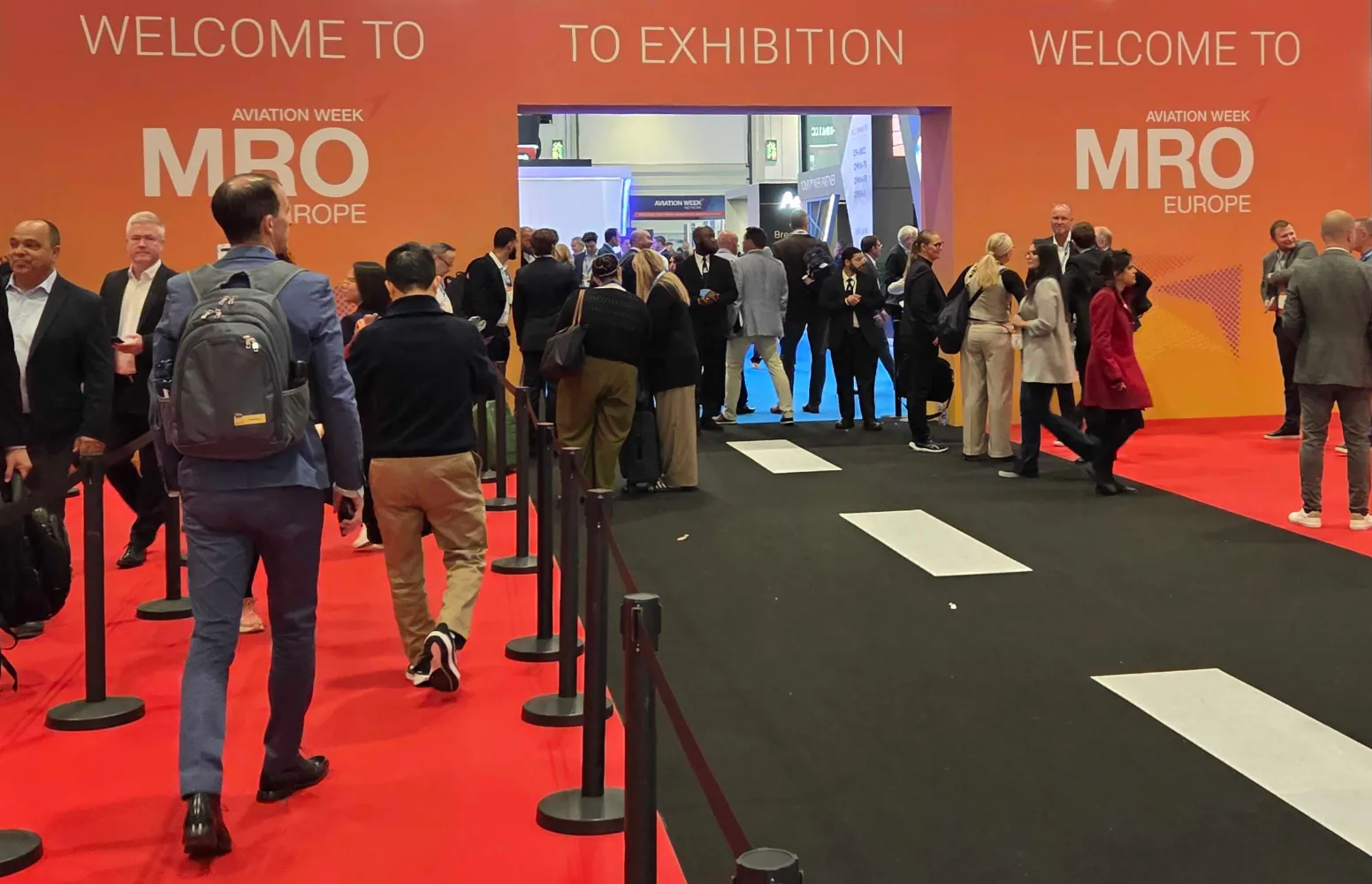
Did you know that the global aviation MRO market is expected to reach approximately $120.96 billion by 2030, with a CAGR of 4.75% from 2025? Expos and events dedicated to aviation maintenance and MRO provide a vital platform for sustaining industry dialogue, sharing innovations, and shining a spotlight on this critical domain. With its strategic impact on boosting efficiency and cutting costs across the MRO value chain, MRO Europe remains a key platform for advancing industry discussion.
The recently concluded MRO Europe 2025, which took place at London’s ExCeL centre from 14th to 16th October, provided a clear snapshot of where the aircraft maintenance, repair, and overhaul (MRO) sector is heading. For those entering the field, it offered real-time signals about opportunities, pressures, and skills in demand.
Here are ten of the most important learnings from the event.
1. The Push to Close the Skills Gap
A common theme was apparent amid the discussions and industry session- a shortage of licensed engineers, particularly B1/B2, and technicians. The event confirmed what many MRO providers, airlines, and OEMs have been facing while struggling to recruit the right profiles. The paucity also creates an opportunity for entry-level talent who can show commitment and willingness to upskill.
For organizations, it is now incumbent to build the pipeline rather than rely on the existing workforce. Carlo Girasoli from SkyForce Talent Solutions says that agentic AI can help with this: “With agentic AI, my team is spending less time doing admin, filling the database, and populating things, and more time speaking to the candidates and more time speaking with the clients as well - it’s more human using AI.”
2. The Power of a Learning Mindset
Training partnerships, apprenticeships, and early-career rotations were the focus of many stalls on the exhibition floor. The paucity of skilled talent is not just acute in the engineering domain, but across all business units. In such a scenario where demand is outpacing supply, there is an increased emphasis on attitude, adaptability, and growth potential in the hiring arena.
For aspiring aviation professionals, it is crucial to highlight their learning mindset, technical curiosity, and openness to cross-skilling. A strong learning mindset is highly valued in aviation due to the industry's constant evolution and high-stakes environment.
3. The Digital Shift
While the event covered topics ranging from regulatory updates to sustainability, digitalization and its latest advancements emerged as a key focus.
Sessions at the event underlined that MRO businesses are more vigorously adopting digital solutions, from predictive-maintenance platforms and condition monitoring sensors to generative AI for repair data and automation for inspection workflows. It signals that even at the entry level, familiarity with connected systems, sensor data, maintenance software, and digital inspection tools will be increasingly beneficial.
4. Sustainability Takes Flight
Sustainable aviation practices were a major theme at the expo, with various discussions focusing on environmentally friendly practices and the creation of sustainable supply chains, particularly through topics like sustainable sourcing, efficient supply chain solutions, and aircraft and engine lifecycle management.
Exhibitors and speakers emphasised circular economy approaches in maintenance (component remanufacturing, parts reuse, and lighter materials) and the need to demonstrate reduced environmental impact. This means that maintenance professionals are now integral to the sustainability mission.
It provides a beneficial window for early-career candidates, who can articulate awareness of sustainable practices and build a stronger profile.
5. Navigating Supply Chain Strains
The global aviation industry is currently navigating a complex landscape, one marked by acute supply chain disruptions. Such disruptions are leading to delays in acquiring essential aircraft parts, adversely affecting maintenance schedules and escalating operational costs for airlines worldwide.
At the expo, an underlying strain in parts availability, lead-time volatility, and cost inflation was repeatedly referenced. These constraints force MRO organisations to be more flexible in workforce deployment, cross-training staff, and adopting planning tools. In practice, technicians may be asked to support broader tasks (e.g., parts logistics or readiness monitoring), not just shop-floor repair.
6. Faster, Leaner Maintenance
Data presented at the event and in associated reports show that in many sectors the time to complete repairs, for engines, structures, and components, is increasing, driven by labour constraints and parts delays. For those entering the industry, this means that speed and efficiency matter, and being capable of working in a well-organised, lean environment with measurable metrics will be a plus.
7. Structured Paths, Higher Expectations
With growth in the MRO market forecast over the next decade, many organisations are offering structured progression paths. However, they also expect newer entrants to understand safety culture, documentation, regulatory compliance, and technology use.
Simply having general mechanical aptitude won’t always suffice; familiarity with aviation standards, maintenance systems, and inspection protocols gives candidates an edge. Puk Steenbergen of WFS Pro says, “It’s important to know what’s happening in the industry, that’s one of the reasons we’re here, and if you’re committed, it helps candidates find the right client and helps build a healthy relationship.”
8. Mentorship and Growth
Organisers and exhibitors spotlighted workforce-development programmes, mentorship initiatives, and collaboration between schools, training centres, and MRO providers. The message was clear: companies cannot simply hire experience; they must build it. If you are beginning your career, aligning with a company that invests in your development - structured training, hands-on practice, exposure to emerging tech - is a strategic move.
9. The Hybrid Future of Maintenance
Despite the buzz about AI, robotics, and digital twins, multiple speakers insisted that skilled human judgment remains irreplaceable, particularly in complex diagnosis, certification, troubleshooting, and quality assurance.
What’s changing is the toolkit: maintenance professionals now increasingly work alongside digital platforms, analytics, and smart inspection aids. Being comfortable in this hybrid environment matters.
Enjoying the article?
Follow us and never miss an update on the aviation industry.
10. The Path Forward in MRO
What can we take away from this year’s expo? If you are an aspiring aviation enthusiast, you are in demand. But it is also crucial that you bring more than just mechanical interest. Your competitive edge will come from improving familiarity with digital inspection tools, willingness to train, readiness to work in a metric-driven environment, and awareness of sustainability imperatives.
For recruiters and training providers, the focus emerging from the show is on closing the skill gap, investing in pipeline development, and aligning training more closely with the real-world requirements of modern MRO operations. Hiring managers reported that they will favour candidates who demonstrate structured thinking, data literacy, cross-functional interests, regulatory awareness, and an attitude of continuous improvement.
Wrapping Up
MRO Europe 2025 confirmed that the MRO sector is undergoing meaningful change - driven by digitalisation, sustainability goals, workforce dynamics, and supply-chain realities. For anyone starting, this means opportunities are present now. If you align with the themes highlighted above, you position yourself well for a role in the maintenance-repair-overhaul field.