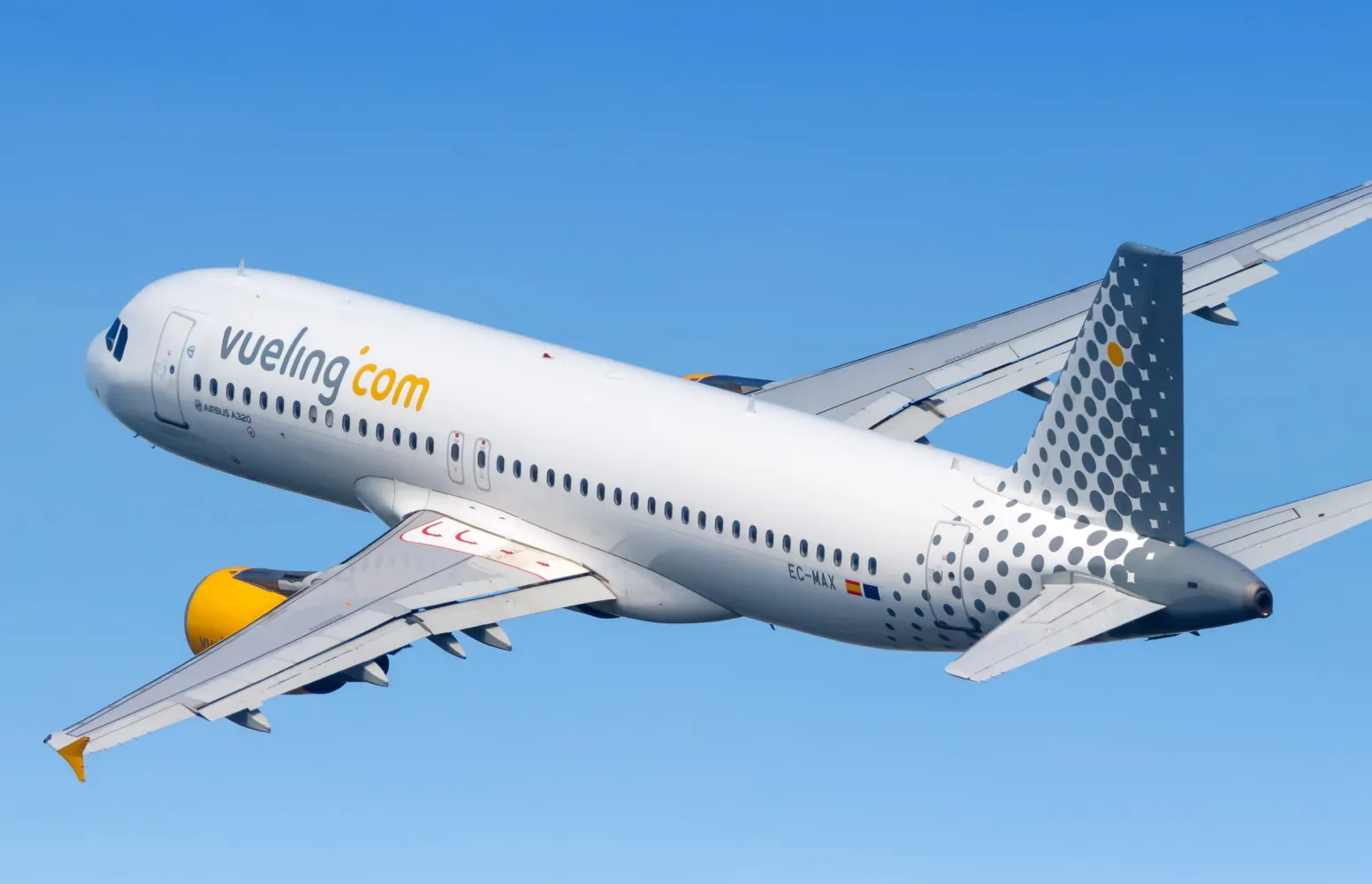
International Airlines Group (IAG)-owned Vueling has, for some time now, operated an all-Airbus fleet. But that’s going to change with IAG’s order for 50 Boeing 737 MAX aircraft. According to IAG’s Q2 financial report, the group has allocated its existing order for the 737 Maxs to the Spanish low-cost carrier. The order, announced in late July, includes 25 high-density MAX 8-200s and 25 MAX 10s, which are still awaiting certification. Deliveries are expected to begin in 2026.
Founded in 2004, Vueling began operations with just Airbus A320s and has continued with an all-A320 family aircraft fleet ever since. The allocation of 50 Boeing 737 MAXs marks a significant shift in the airline’s fleet strategy, ending its long-standing reliance on Airbus narrowbody aircraft.
The recent move also makes Vueling the first operator within IAG to introduce the Boeing model, despite the group owning several carriers with historical ties to Boeing.
From Airbus-Only to Mixed Fleet
The airline will receive the first three B737 MAX in the fourth quarter of 2026, with the remainder scheduled for delivery between 2027 and 2029. As per IAG, the move is driven by long-term efficiency and cost savings.
The 737 is considered fuel-efficient while offering strong seat economics. It also fits IAG’s push to modernise across its various brands. The high-density MAX 8-200 variant, in particular, is well suited to Vueling’s high-volume, short-sector model. Vueling's chief executive, Carolina Sandra Martinoli, specified that while the detailed deployment plans will be revealed later, the first B737 MAX will operate out of the carrier's main base at Barcelona El Prat.
The decision also signals growing confidence in the 737 MAX within European low-cost carriers. Although other European carriers have remained cautious, Vueling isn’t alone in this decision. Ryanair has already introduced the MAX 8-200 at scale. For IAG, the move balances its existing Airbus commitments with a strategic realignment.
IAG Bets on Mixed Fleet Flexibility
While the MAX 8-200 is already flying with multiple operators, the MAX 10 is not yet certified. If certification comes around without delays, Vueling’s first 737 MAX delivery could be the stretched MAX 10 variant, which directly competes with the A321neo, a model Vueling operates on a smaller scale. IAG has acknowledged this but remains confident in its long-term place in the fleet.
Having a mixed fleet comes with its own set of operational complexities. A mixed narrowbody fleet will require changes across rostering, training, parts inventory, and flight operations. Crews will also need separate type ratings, and engineers will require type-specific training. IAG has described these changes as manageable, focusing on short-term cost for longer-term savings.
Enjoying the article?
Follow us and never miss an update on the aviation industry.
No firm details have been given yet on how Vueling will allocate the aircraft or whether bases will be split by type. Recruitment, simulator capacity, and cabin configuration work are likely to scale up from mid-2025.
While the move is a notable shift in European fleet strategy, it also resets Vueling’s long-standing Airbus alignment. It signals IAG’s intention to keep options open across manufacturers, both for pricing leverage and fleet renewal flexibility.
For Boeing, the win strengthens its MAX orderbook in Europe. Boeing launched the MAX 10 in June 2017, which immediately garnered over 240 orders from more than ten different customers, with Chicago-based United Airlines being the largest customer. IAG’s order will give the MAX 10 a potential new launch operator if certification timelines hold. For Airbus, it marks the loss of a historically loyal narrowbody customer. However, it is still not a cause for worry since IAG continues to have substantial Airbus orders across its other brands.