Passenger disruption is on the rise. According to IATA, since 2019 there has been a 400% increase in passenger incidents including violence against crew and other passengers, harassment and non-compliance with in-flight rules and regulations.
In Europe - where many incidents are caused by drunken behaviour - EASA says unruly passengers threaten the safety of passengers every three hours, forcing crew to manage conflicts at altitude and confined spaces, diverting focus from safety-critical duties and exposing staff to physical and psychological risk.
While there are initiatives in place, such as the UK’s ‘One Too Many’ campaign, this has done little to quell bad behaviour despite the threat of being denied boarding, facing fines and fees, being banned from airlines and even prison.
A few recent incidents have shown how a small number of passengers can cause disruption for hundreds of people, both passengers and crew, and the significant financial impact it can have, which can often be in excess of hundreds of thousands.
Jet2 flight from Antalya to Manchester
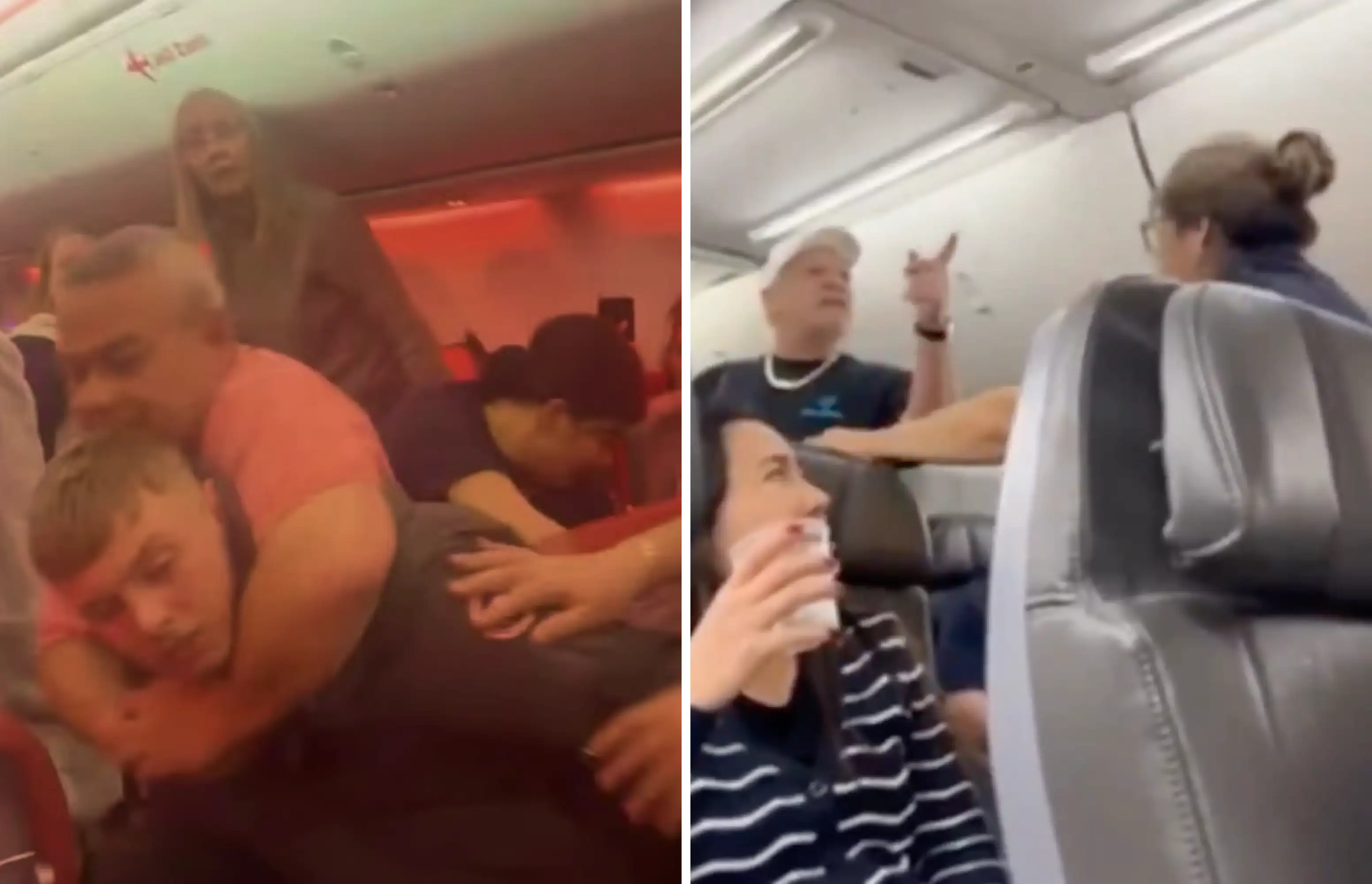
Two passengers have been banned by Jet2 following a mid-air disturbance on a service from Antalya to Manchester with an argument between passengers quickly descending into a mid-air brawl involving several passengers causing the flight to be diverted, two passengers being arrested, and Jet2 describing the conduct as ‘appalling’.
 Flight LS896 had departed southern Turkey on Thursday at 18:27 local time when two passengers became involved in a violent confrontation in the cabin. Witnesses described shouting, racist remarks, physical aggression, and repeated refusal to follow crew instructions.
Many caught the melee on video which showed the cabin crew trying to regain control as punches were thrown after one passenger snatched the glasses off one passenger while trying to take another’s phone. Other holidaymakers were cowering in their seats.
The flight was diverted approximately three hours into the flight, landing in Brussels with two passengers taken off the aircraft and into custody, with other passengers remaining on board before the flight eventually arrived at 21:35 in Manchester after a delay of around two hours.
The airline involved, Jet2, confirmed that both individuals received lifetime bans across its entire operation, including its tour operator arm. A spokesperson stated that abuse or violence towards crew or fellow passengers would not be tolerated under any circumstances on their ‘family-friendly airline’ and extended their apologies to affected passengers and crew.
American Airlines flight from Dallas Fort Worth to Las Vegas
Meanwhile, a domestic flight within the United States was disrupted by what one passenger described as a ‘MAGA grandad’ who stunned passengers by launching a racist tirade at a flight attendant during boarding.
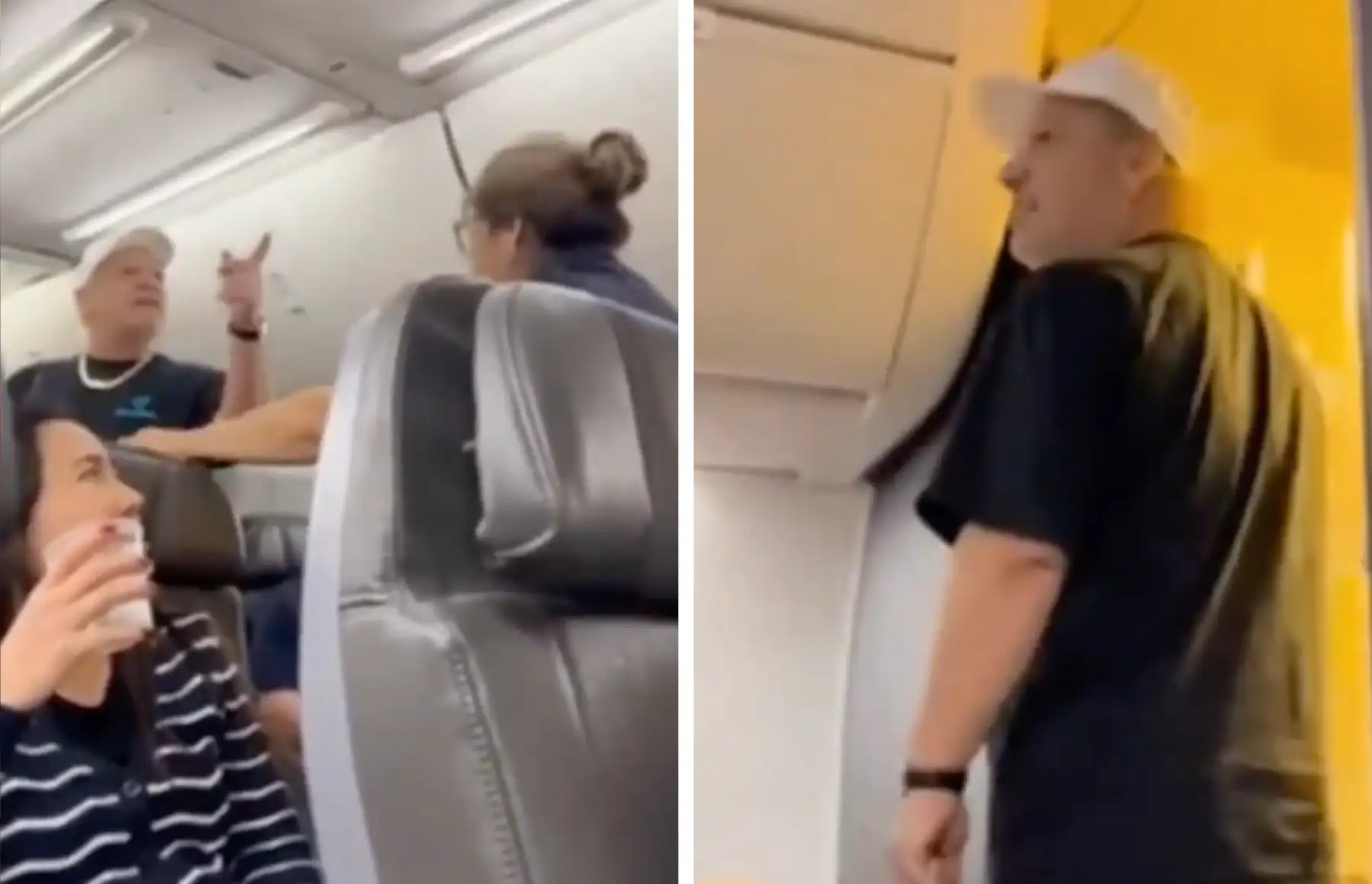 The incident occurred on a service from Dallas Fort Worth to Las Vegas, with passengers already seated when the confrontation began.
Video footage taken by other passengers captured the individual shouting that ‘I’m American, you’re the illegal [immigrant]’ and accused her of ‘buying an illegal social security number’ to which the flight attendant calmly responded that ‘I’ve lived here my whole life… whatever, you’re a racist”
While the crew intervened, the captain coordinated with ground crew to re-attach the jetbridge to deboard the passenger, however due to technical difficulties this took longer than expected, delaying the flight further.
Eventually the fully grown man was removed from the flight.
American Airlines later confirmed that the passenger had been placed on an internal no-fly list pending further review. The airline reiterated that discrimination, harassment, or intimidation directed at staff or passengers breaches conditions of carriage and may result in permanent exclusion.
Rodent discovered on SAS flight from Stockholm to Malaga
While many disruptions are caused by fully grown adults - if you can call them that - even smaller passengers can cause big problems, even four-legged ones.
A Scandinavian Airlines flight had to return to Stockholm after a mouse was spotted on a flight to Malaga on 7th February 2026. Performing a turn-around mid-way through the flight, it eventually landed back in Stockholm after three hours.
While all reports show that passengers and crew were not directly at risk, rodents can pose a serious safety risk due to their appetite of chewing through aircraft panelling, cabling and creating a fire hazard, particularly in inaccessible parts of the aircraft.
This resulted in the flight being re-routed back to Stockholm where passengers were transferred onto another aircraft before embarking on their flight back to Malaga - just without the stowaway rodent and arriving after a significant delay.
The stranded aircraft presumably was inspected by pest control, maintenance teams and fully cleaned before returning into service the next day.
The financial cost of disruption
Unruly passenger incidents and onboard irregularities carry substantial financial consequences. A single short-haul diversion within Europe can exceed $100,000 (£74,000, €86,000) once fuel burn, landing fees, crew costs, handling, passenger welfare, and schedule recovery are included. Long-haul diversions can climb far higher.
Even without diversion, the costs can be astronomical. Missed slots, extended crew duty, aircraft out-of-position recovery flights, and compensation under passenger rights legislation add up quickly. For low-margin short-haul operations, repeated incidents materially affect profitability.
Insurance rarely covers behaviour-related disruption unless criminal damage occurs. Airlines increasingly pursue civil recovery from individuals responsible, supported by clearer terms of carriage and improved evidence from cabin reporting systems (and those with smartphones).
Consequences faced by unruly passengers
The days of being escorted off a flight with little follow-up are largely over. Airlines now apply a combination of immediate and long-term penalties.
Fines vary, but can reach $25,000 (£18,500, €21,500) or more in the United States for interference with crew duties, laws which have been strengthened since an uptick in anti-social behaviour on board post-pandemic. European states apply criminal penalties that may include suspended sentences or custodial terms for violent behaviour.
Lifetime or long-term bans are increasingly common, particularly where violence, threats, or discrimination are involved.
These bans often extend across airline groups and affiliated brands. In some cases, data sharing agreements mean behaviour on one carrier may influence access to others.
Passengers may also be billed directly for diversion costs, with courts in several countries supporting airlines’ right to recover expenses. Payment plans or wage attachment orders have followed high-profile cases.
What this means for aviation professionals
For cabin crew, this behaviour is clearly unacceptable and takes them away from safety-critical roles, places them in a dangerous situation within a confined space and can have a mental impact despite being trained in de-escalation and passenger containment techniques.
The growing behavioural risk also has an impact outside the cabin too with the impact of disruption cascading through to those in flight operations and ground handling too, while costing airlines thousands.
It also makes recruiting people into these roles harder. While airlines and authorities look to make an example of disruptive passengers, it can be offputting to those looking to seek a career in aviation.