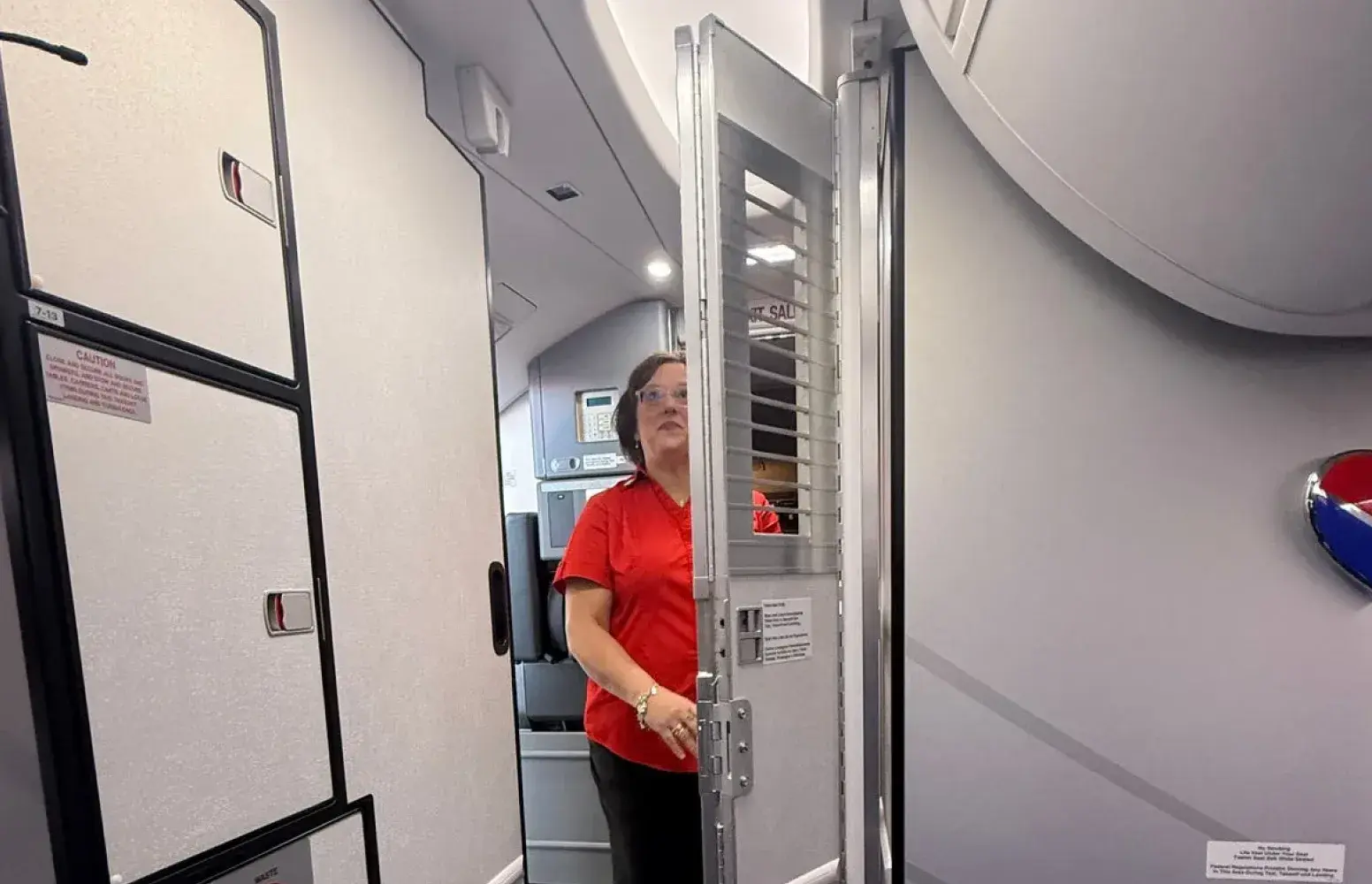
In a first for the aviation world, US-based Southwest Airlines has debuted a brand-new aircraft fitted with a secondary cockpit barrier. The move adds a new layer of security aimed at preventing unauthorised access to the flight deck. The barrier was recently installed on a recently delivered 737 Max 8, which made its inaugural flight from Phoenix to Denver on August 29.
The secondary barrier has been a long-standing demand from pilot groups, who argue that the extra layer of fitment gives added protection when cockpit doors are opened in flight. The retractable barrier will be deployed by flight attendants when pilots take a break for bathroom visits or refreshments.
The rollout follows a rule issued by the Federal Aviation Administration (FAA), which demands installation of a secondary flight deck barrier, often a lightweight, retractable gate, on all newly manufactured airliners. However, the rule applies only to new deliveries; existing aircraft aren’t subject to retrofit requirements. The airline expects to take delivery of about 25 more of these modified jets before the year’s end.
Compliance-Driven Security Upgrades Take Flight
The swift adoption of these barriers by the airline has gained industry-wide support. Pilot associations have long pressed for added security in the cockpit. A lightweight, retractable gate ensures that even during breaks or when receiving service, pilots remain protected. In a statement, the airline explained, “For Southwest, this was the right decision. We have a robust safety management system that takes a proactive approach when it comes to enhancing safety wherever possible.”
The barrier is the latest in a slew of security measures, introduced after 9/11. The tally of hijacking attempts since 2001 stands at 52 worldwide. While a successful hijacking might still be rare, that number showcases real and consistent intent. In such a scenario, aviation security enhancements seem like a necessary and effective step in curbing cockpit intrusions.
In terms of cockpit intrusions, airlines report sporadic efforts by passengers to rush the door, often linked to disruptive behaviour rather than terrorism. FAA’s unruly passenger data shows more than 6,000 cases investigated in 2021, though very few involved attempts on the cockpit. Crew training and restrained doors stopped nearly all. The absence of a successful post-2001 hijacking suggests the layered approach of reinforced doors, crew drills, and law enforcement presence has held.
Some critics point out the absence of any recent data about the cockpit intrusion hijacking. This suggests that existing measures, such as hardened cockpit doors and crew training, are being effective in this area. But those defences depend on the door remaining closed or monitored. The new barrier adds resilience during those brief exposures, providing a buffer that others lack.
Enjoying the article?
Follow us and never miss an update on the aviation industry.
Southwest Sets the Pace
Proponents of the secondary barrier argue that aviation is about risk layering. Their point? A determined attacker only needs a short lapse. When the door opens, even briefly, the barrier buys precious seconds to re-secure the cockpit. That makes it harder for opportunistic intrusions to succeed.
While the barriers are lightweight, stowable, and designed not to obstruct boarding, their adoption has been delayed till 2026. The decision to pause the rollout follows requests from the trade group, Airlines for America, which stated that a two-year delay was necessary. The group represents major carriers, including American Airlines, United Airlines, and Delta Air Lines. It cites the FAA’s failure to certify any secondary barrier design or approve related manuals, procedures, or training programmes as reasons for the requested extension.
But what is clear is that Southwest’s move signals a willingness to go ahead of regulation. With deliveries of 25 additional 737 MAX 8s fitted with barriers planned this year, it sets a precedent others may follow before July 2026.
Image: Southwest Airlines