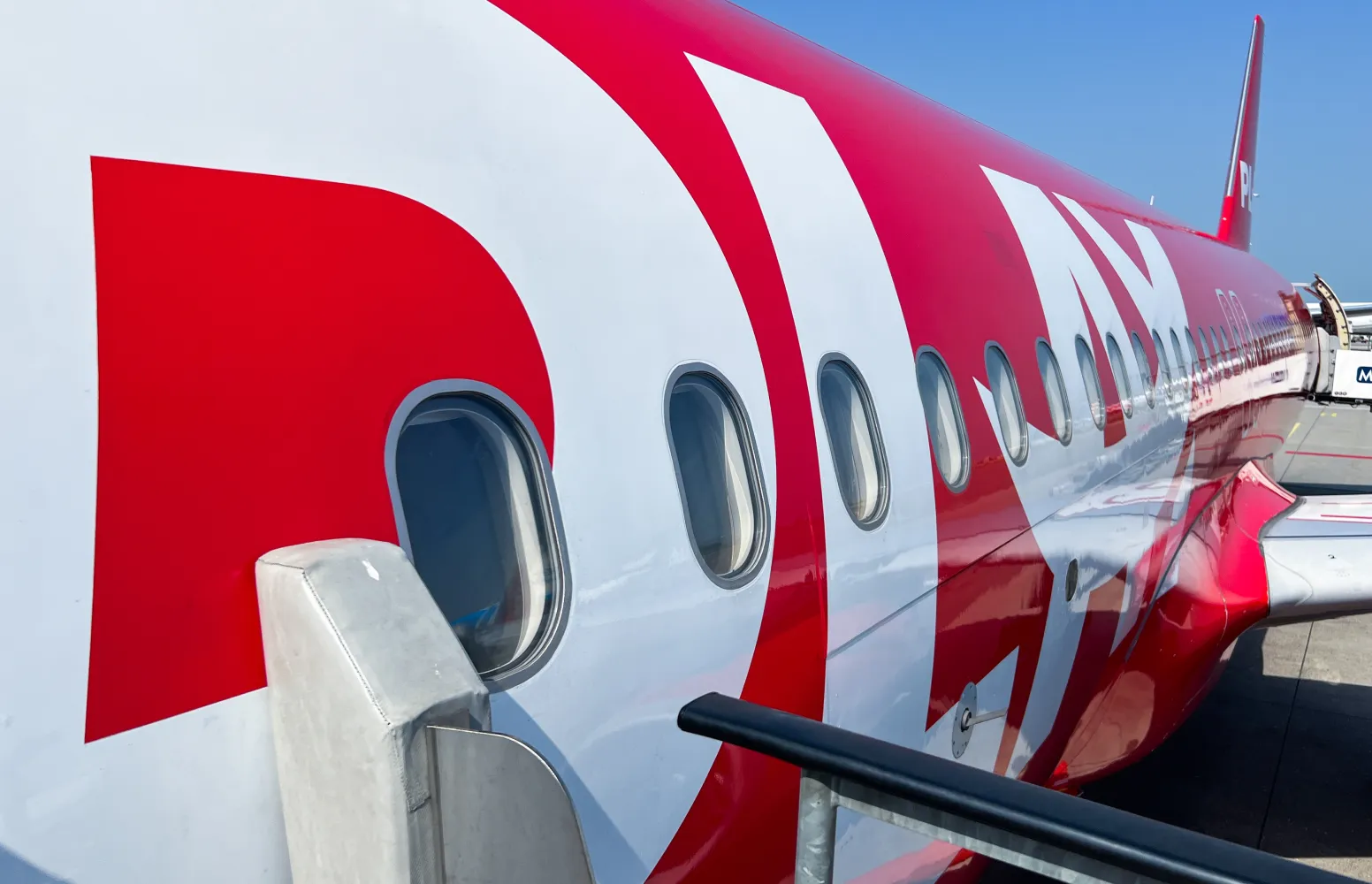
The Icelandic budget airline, PLAY, has ceased all its operations, effective from 29 September 2025. The airline’s board of directors submitted a petition to the Reykjavik District Court, requesting PLAY to be placed into bankruptcy proceedings. PLAY also posted a notice for all the affected passengers, urging them to “check flights with other airlines.”
Founded about five years ago, PLAY follows former Icelandic carriers Primera Air and Wow Air into aviation oblivion. Those airlines failed in 2018 and 2019, respectively. As of now, roughly 400 staff members have lost their jobs. The airline had built its operations connecting Iceland to Europe. The aim was to cater for “point to point” traffic between Keflavik International Airport outside Reykjavik and locations in Europe. It recently started operations in North America as well.
So, what went wrong?
PLAY’s Fall
Until the news of its bankruptcy proceedings became public, PLAY was serving destinations including London Stansted, Amsterdam, Paris CDG, Alicante, and Faro. Once the news was out, flights scheduled for that day and onward were grounded. In Keflavík alone, some dozen departures were cancelled that day, affecting perhaps 1,750 passengers. Most found themselves cut off. The last flights arriving in the UK from Iceland landed, but their return leg was cancelled.
In the aftermath of its bankruptcy, scores of passengers were told to seek refunds via credit card issuers if they’d paid that way, or to contact travel agencies or package-holiday providers if flights had been booked in a bundle. While EU/EEA passenger rights may offer some grounding for claims, in practice, those rights are difficult to enforce in an insolvency. For staff, the sudden shutdown was traumatic. Many crew, ground staff, engineers, and administrators were abruptly unemployed.
PLAY was not alone in this kind of failure. Its predecessor, WOW, attempted a model of ultra-low cost point-to-point transatlantic service, which PLAY had also aimed for initially. Those earlier collapses offer lessons in the risks of thin margins, dependency on fuel costs and exchange rates, and exposure to seasonal demand swings. There are other more familiar names, like Norwegian Airlines and Primera Air, that share a similar pattern of overexpansion, undercapitalisation, weak revenue per seat, and unpredictable external shocks. PLAY’s failure aligns with many of those risk factors.
PLAY’s Struggles Beneath the Surface
While the shutdown appears sudden, PLAY’s collapse had been building for some time. PLAY had earlier signalled strategic changes. In 2025, it announced intentions to shift focus from transatlantic services to more European leisure routes. There were plans to wet-lease aircraft and to move its Air Operator Certificate (AOC) responsibilities to Malta (via its subsidiary Play Europe). But those plans did not succeed in time to prevent failure.
The airline has also been plagued with prodigious financial losses throughout its brief existence. While many carriers lost money during COVID, most of them have recovered. Not Play. In February, PLAY’s chief executive, Einar Orn Olafsson, claimed that the airline had had a turnaround and that they were optimistic about 2025. But, this came at the end of a year in which PLAY had lost $66m (£49m).
The Icelandic home market is also small, limiting local demand. In response, the airline attempted to compete on transatlantic routes connecting secondary European cities to the U.S. But it was a model demanding high load factors and strong yield control. Add currency fluctuations and fuel price volatility to the mix, and controlling costs became increasingly difficult. In June 2025, PLAY announced it would exit U.S. services by October and focus more on European leisure links. That was a sign that the transatlantic gamble had failed to deliver.
The airline also cancelled some European and Canary Island routes even before the final collapse, reducing revenue diversity. The plan to shift to wet leasing and an AOC transition may have created operational complexity and uncertainty for staff, financiers, and partners.
What PLAY Staff Can Do Next
With hundreds of staff impacted by the collapse, what measures can be taken to minimize the damage?
- File claims in insolvency proceedings: One can submit claims for unpaid wages, severance, and entitlements to claims for unpaid wages, severance (if applicable), and entitlements (holiday pay, pension arrears). It is vital to adhere to deadlines here.
- Check local employment protections: Depending on Icelandic labour law, there may be guaranteed severance pay, unemployment benefits, or transition support.
- Gather employment records: Request contracts, payslips, rosters, performance evaluations, and any correspondence regarding redundancy. This can be used when demonstrating experience to future employers.
- Contact recruitment networks: Many aviation recruiters and job boards specialise in crew, maintenance, and operations. Update your CV, reach out to staffing agencies, and indicate that you are immediately available.
- Consider relocation or retraining: If the region lacks opportunities, look to markets with demand, such as Asia or the Middle East. Alternatively, upskill in adjacent roles to remain competitive.
- Monitor announcements: Some airlines may recruit staff to absorb routes or replace capacity. Be ready to respond to calls or job offers.
- Seek references and endorsements: A solid reference from management or peers at PLAY helps for your next role.
The loss of a job in a collapse is severe. But many aviation professionals recover by leveraging networks, timing, flexibility, and readiness.
Enjoying the article?
Follow us and never miss an update on the aviation industry.
What the Industry Can Learn
PLAY’s demise is not an uncommon case in aviation. Several other carriers, especially the low-cost carriers, have faced financial stress in 2025 alone. But a ripple effect of a collapse like PLAY’s can reverberate. Airlines that expanded aggressively may now rethink expansion plans. Even larger legacy airlines cautiously monitor their cost base and exposure to weak markets.
What about the Icelandic market? Its national carrier, Icelandair, will absorb some of PLAY’s routes and traffic. That positions it to benefit but also to face scaling challenges.
The PLAY collapse serves as a warning: even moderately successful growth needs robust financial buffers, an adaptable strategy, and realistic route economics. What has unfolded for PLAY is also a lesson for aviation professionals. It shows how a lean, ambitious carrier can run out of runway when costs, yield pressure, limited market size, and strategic uncertainty converge.