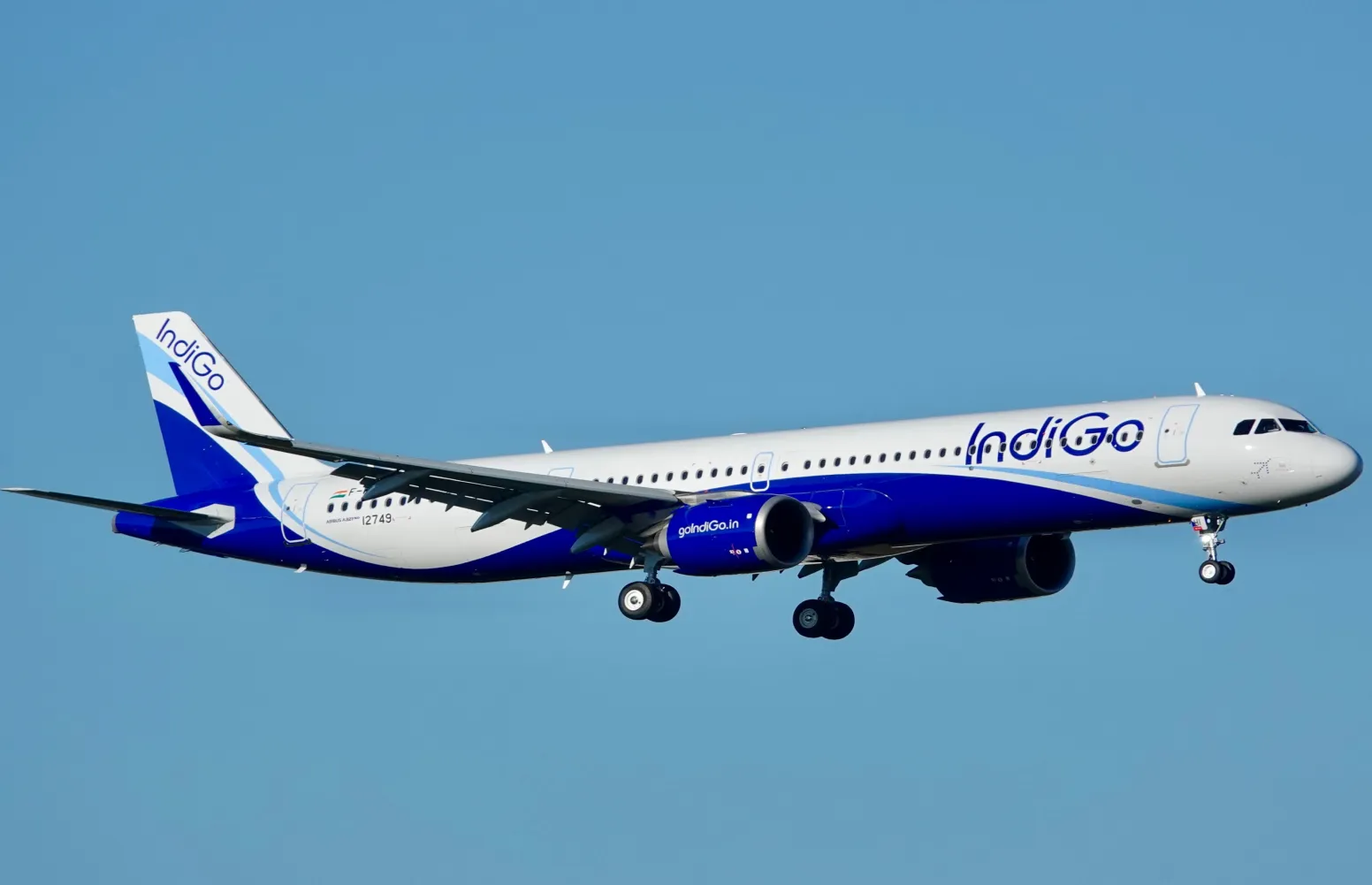
India’s largest airline has confirmed a major leadership change, coming only months after one of the most serious operational disruptions in the country’s aviation sector.
IndiGo announced that chief executive Pieter Elbers has stepped down from his role, stating that the decision was made for personal reasons. The development follows a turbulent period for the carrier after widespread flight cancellations late in 2025 triggered regulatory scrutiny and criticism from passengers, pilot groups, and aviation authorities.
The timing of Elbers’ departure has drawn attention across the industry. IndiGo dominates the Indian domestic market and operates one of the largest fleets of narrowbody aircraft in the world, making stability at the airline significant for the wider aviation ecosystem.
Chaos in India’s Skies
Operational problems emerged in early December 2025 and quickly escalated into a nationwide disruption. Thousands of flights were cancelled across the carrier’s network over a period of around ten days, leaving passengers stranded at airports across India during one of the busiest travel periods of the year.
By the time operations stabilised, roughly 4,500 flights had been cancelled. The disruption affected major hubs such as Delhi, Mumbai, Bengaluru, and Hyderabad, where passengers reported long queues, delayed departures, and last-minute cancellations.
At the centre of the crisis were new flight duty and rest regulations introduced by India’s aviation regulator, the Directorate General of Civil Aviation. The revised rules increased mandatory rest periods for pilots and changed limits on night flying and duty time.
The regulations had been planned for several years as part of efforts to reduce pilot fatigue and improve safety standards across Indian aviation. Yet the changes required airlines to adjust pilot rostering and staffing levels, which proved difficult for IndiGo.
The airline’s scheduling systems and crew planning processes struggled to adapt quickly enough to the new requirements. Flights that had been scheduled weeks earlier could no longer be operated because crews were no longer legally available under the updated duty limits.
The result was a wave of cancellations that spread through the network. On the most difficult days of the disruption, more than 1,000 flights were cancelled in a single day as the airline attempted to rebuild its schedule and reposition crews.
Passenger frustration grew rapidly as the crisis continued. Airports reported large numbers of stranded travellers, and alternative flights with other carriers quickly sold out or surged in price.
For an airline that had built its reputation on punctuality and operational reliability, the disruption represented a rare breakdown in performance.
Regulatory Action and Operational Pressure
India’s aviation regulator responded with an investigation into the causes of the disruption. Officials examined crew planning practices, scheduling decisions, and the airline’s readiness for the new fatigue rules.
The probe concluded that planning gaps had contributed to the scale of the cancellations. Authorities said the airline had not created sufficient buffers in its scheduling system and had underestimated how many additional pilots would be required under the updated regulations.
A record financial penalty followed. IndiGo was fined around $2.45 million (£1.9 million, €2.3 million) and ordered to implement operational improvements. Regulators also required the airline to provide financial guarantees to ensure compliance with aviation rules over the following months.
Additional scrutiny came from competition authorities, which began examining whether the airline’s dominant position in the domestic market had affected ticket availability and pricing during the disruption.
The episode also raised wider questions about staffing levels and expansion across the Indian aviation industry. IndiGo had been growing rapidly in recent years, adding aircraft and routes while maintaining a low-cost business model focused on high aircraft utilisation.
Some industry observers suggested that pilot recruitment had not kept pace with fleet expansion, creating a narrow margin for operational disruptions once the new fatigue rules were enforced.
Despite the turmoil, the airline restored normal flight operations within roughly two weeks. The recovery required schedule reductions, adjustments to pilot rosters, and support from regulators who temporarily eased some rules while the airline stabilised its network.
Leadership Under Scrutiny
Throughout the crisis, attention inevitably turned toward the airline’s leadership team.
Pieter Elbers had taken over as chief executive in 2022 after leaving his role at KLM Royal Dutch Airlines. His appointment had been widely seen as a step toward strengthening IndiGo’s international ambitions.
During his tenure, the airline ordered hundreds of additional aircraft, expanded its network beyond South Asia, and began preparing for long-haul operations using larger aircraft types.
The airline also pursued a major fleet expansion programme that included one of the largest aircraft orders in aviation history, covering hundreds of Airbus narrowbody jets.
Yet the cancellation crisis placed the management team under pressure. Regulators issued warnings to senior executives and demanded changes within the airline’s operations leadership structure.
Although Elbers publicly apologised to passengers during the disruption and pledged improvements to planning and crew management, the episode remained one of the most serious operational failures in the airline’s history.
CEO Departure Confirmed
IndiGo confirmed this week that Elbers has now stepped down as chief executive.
The airline stated that the decision was made for personal reasons, with the board accepting his resignation and beginning the process of identifying a successor.
Industry analysts noted that leadership changes often follow periods of operational difficulty, particularly at airlines where reliability and schedule integrity are central to brand identity.
IndiGo’s board has appointed co-founder Rahul Bhatia as interim chief executive while a longer-term replacement is considered. Bhatia is one of the original architects of the airline’s growth and has remained closely involved in the company’s strategic direction through its parent company, InterGlobe Aviation.
Under the interim leadership structure, the airline intends to maintain its current strategy of expanding international services while continuing fleet growth.
A Turning Point in Indian Aviation
The leadership transition comes at a time when India’s aviation market is expanding at a rapid pace. Rising middle-class demand, improved airport infrastructure and increased regional connectivity have all driven passenger numbers higher.
IndiGo remains the dominant airline in the country, controlling roughly two-thirds of the domestic market and operating more than 400 aircraft across its network. Its fleet continues to grow, supported by large aircraft orders that will shape the airline’s capacity for many years.
That scale means operational reliability carries importance far beyond the airline itself. When a carrier with such a large market share experiences disruption, the effects ripple through airports, competing airlines, and the wider travel sector.
For aviation professionals, the episode has served as a reminder that regulatory changes and staffing requirements can reshape operations quickly, particularly when an airline runs a tightly optimised schedule.
Pilot recruitment, training pipelines, and crew planning systems are receiving renewed attention across the industry as airlines prepare for further growth.
Enjoying the article?
Follow us and never miss an update on the aviation industry.
Looking Ahead for IndiGo
The airline has spent the past several months rebuilding operational stability. Flight schedules have returned to normal levels and regulatory oversight continues as authorities monitor compliance with crew duty regulations.
At the same time, IndiGo remains focused on expansion. The airline has plans to increase its international presence across Asia, the Middle East and Europe while also strengthening domestic connectivity across India’s growing network of airports.
For employees and job seekers across the aviation sector, leadership changes at major airlines often signal shifts in strategy, recruitment and organisational structure. IndiGo’s scale means its decisions influence pilot hiring, cabin crew recruitment and engineering demand across the region.
The resignation of Pieter Elbers closes a chapter marked by rapid growth and an unexpected operational crisis. The next phase for IndiGo will centre on restoring confidence, strengthening operational planning and continuing the airline’s expansion in one of the fastest growing aviation markets in the world.