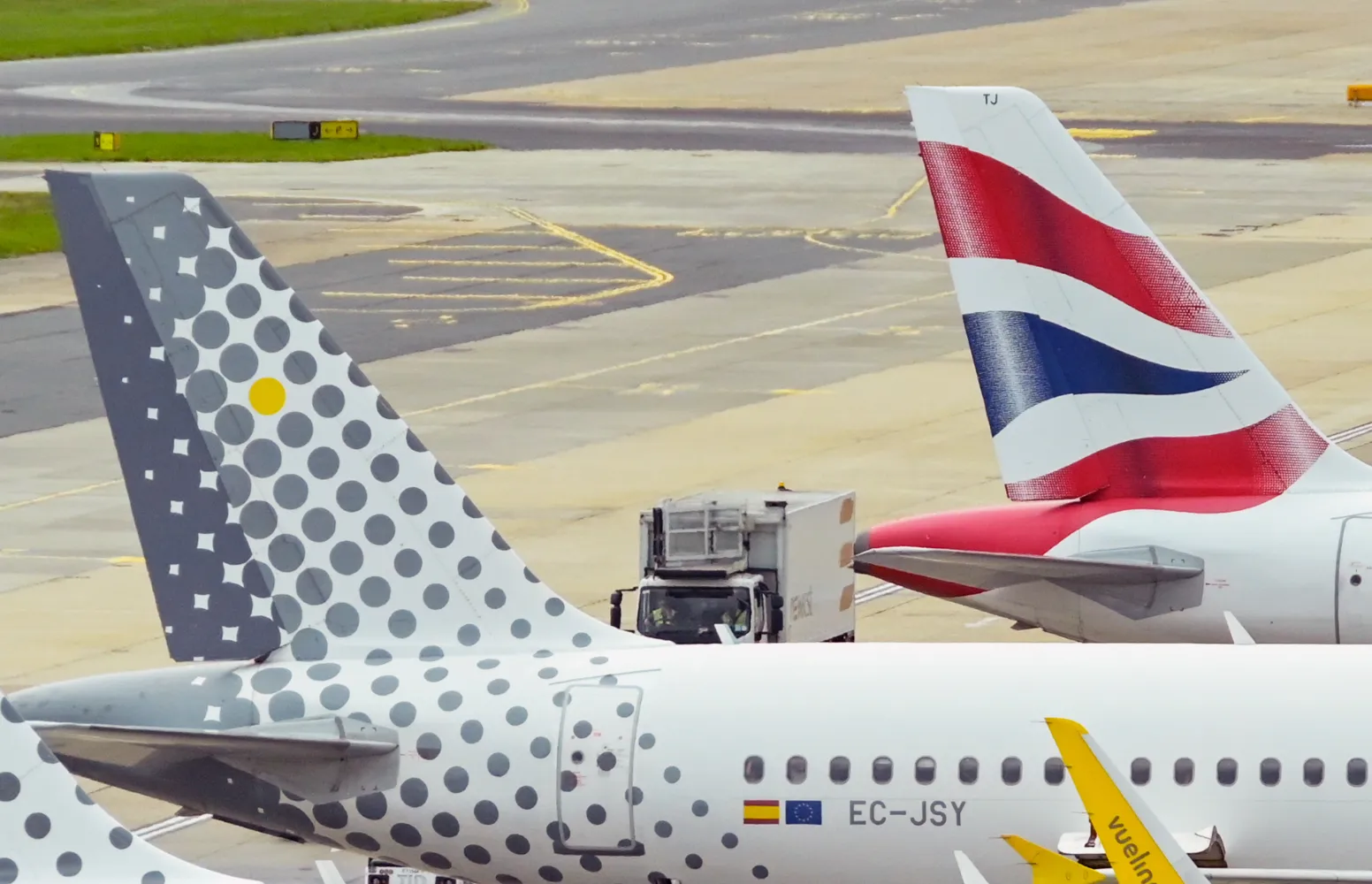
International Airlines Group (IAG), the parent company of British Airways, Iberia, Aer Lingus, and Vueling, recently announced its first quarter (Q1) 2025 financial results. With a 27% jump in annual operating profit, IAG has surpassed market expectations as it curbed costs and growth in its lucrative transatlantic routes took off. While the results are strong and passenger demands are up, the group has held off raising guidance.
IAG has reported €629 million in revenue for the first half of 2025. This marks an 11.1% increase over the same period last year. The company has also reported a 4.5% rise in cargo volumes and a 6.4% increase in yields, reinforcing its resilience in a dynamic global logistics landscape. Margin’s higher costs are flatter. Most of it came from long-haul traffic, particularly across the Atlantic.
Several performance indicators have been set to guide IAG on the right path. First is strong travel demand. IAG has benefited from increased travel demand, particularly over holiday periods like Easter. Capacity expansion is also attributed to the group investing in capacity growth, with plans to increase Available Seat Kilometres (ASKs) by around 7% for the whole year. Lastly, operational efficiency has been the focal point for the group with ongoing transformation initiatives leading to improved operational performance and customer experience.
Willie Walsh, Director General of the IATA, had once said that IAG would always prioritise margins over market share. That approach seems intact. CFO Nicholas Cadbury called the results “very strong” but stopped short of upgrading forecasts for the whole year. Analysts expected more bullish guidance given the earnings beat.
From BA to Vueling: Inside IAG’s Varied Performance
The airline group isn’t alone in its caution. Lufthansa’s latest results were flat. Their profit was down nearly 90% quarter-on-quarter. The German carrier blamed strikes, fuel hedging losses, and weaker yields. EasyJet, by contrast, posted record Q3 revenue, but flagged “softening” forward bookings. Ryanair, too, warned of slower winter demand.
British Airways has also reported a strong half-year, driven by long-haul recovery. Premium leisure demand has stayed high. In terms of regions, North Atlantic flying has been profitable. Operational performance has also improved. The carrier has witnessed fewer cancellations and better punctuality. While cabin crew sickness remains a drag, staffing is broadly stable. The numbers are now nowhere near pre-2020 capacity, but the yields are definitely higher. They’ve also added a few new routes - Portland, Cincinnati, Abu Dhabi - with more A350s and 787s arriving. Fleet modernisation is picking up again, though there are still delays from Airbus and Boeing.
Iberia, the flag carrier of Spain, has continued to deliver and has become IAG’s quiet performer. What has worked in Iberia’s favour is its transatlantic expansion to Latin America. This helped offset slower intra-Europe demand while also assisting the carrier in having the highest operating margin in the group. Iberia has also witnessed less turnover and fewer strike threats. Iberia Express remains low-cost but reasonably well-integrated. The Spanish carrier benefits from a strong domestic base and less union disruption.
Vueling’s position is more challenging. The airline remains profitable, but margins are tight. It has to operate in the same airspace as Ryanair, Wizz, and easyJet without the same scale or cost base. The airline has trimmed some loss-making routes and focused on core Spanish and French markets. But despite the improvements, the airline suffers from staffing issues. It is also the least punctual of IAG’s carriers. The airline is also preparing to transition to a mixed Airbus-Boeing fleet, adding complexity in the short term.
The last name on the list is Aer Lingus. The Irish airline company had a quieter half but remained profitable. Transatlantic routes again drove performance, with Boston, New York, and Chicago all performing well. The airline has benefited from the Dublin-US preclearance advantage, though competition out of Ireland is growing. Ryanair’s pressure is relentless, and JetBlue is now active on the New York route.
Caution Over Optimism in IAG’s Outlook
IAG kept its full-year profit forecast unchanged, targeting operating profit before exceptional items of around €3.3 billion. The decision not to upgrade spooked some investors. But it reflects a cautious approach, not a sign of weakness.
IAG has built its performance on two core markets-flying passengers across the Atlantic and on shorter regional trips in Europe. While the group is not immune to the broader trends impacting the industry, the group's exposure to the transatlantic market and high-spending holidaymakers travelling in business and first class has it well-placed.
Unlike Lufthansa, IAG didn’t suffer significant strikes or hedging missteps. And compared to easyJet or Ryanair, it strikes a better balance between premium and leisure customers. The airline group remains conservative on capacity. No major ramp-ups have been planned this winter. But forward bookings for Q3 are strong, particularly long-haul.
Enjoying the article?
Follow us and never miss an update on the aviation industry.
The Takeaway
IAG’s results look clean when compared with its competitors. Where Lufthansa blamed “extraordinary circumstances,” easyJet’s margins were lower. Ryanair and Wizz Air also reported substantial falls in quarterly profits. Compared to these, IAG stands out. It’s made no significant acquisitions recently, no major bets on new aircraft types, and no sudden strategic shifts.
But not everything is perfect. There are still reliability issues, ageing fleets, and rising wage demands. Vueling has structural problems. BA hasn’t regained complete customer trust after the recent disruption. But on balance, the group is performing solidly.
For those aspiring to enter the sector, one thing is clear: flag carriers can still be commercially successful if they hold their nerve, manage unions, and don’t overreach.
And for job seekers, the outlook’s better than it was. Hiring has resumed across the group. Cabin crew, engineering, and IT roles are all back on recruitment boards. Although none of these numbers are close to the pre-pandemic level, they are gradually increasing.