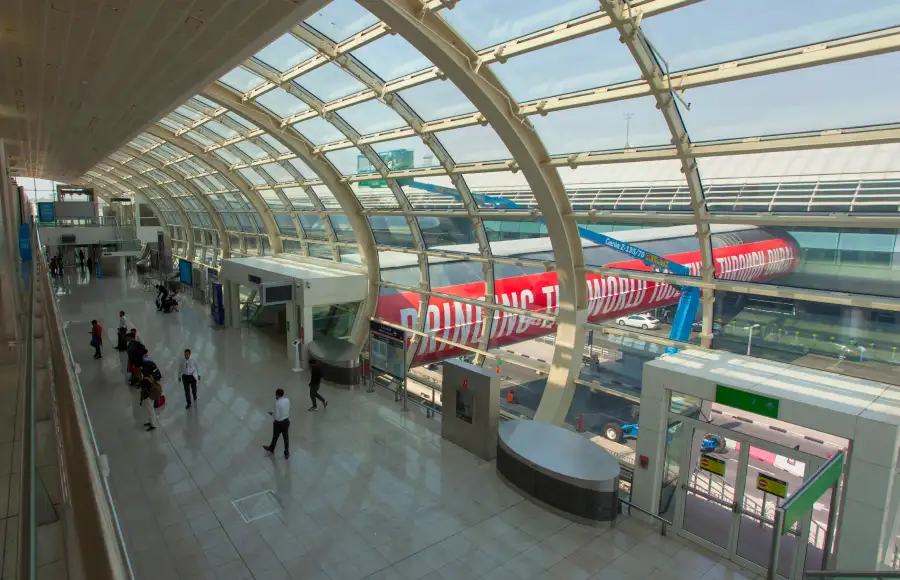
On 28th February 2026, the United States and Israel launched co-ordinated strikes against Iran - killing Supreme Leader Ayatollah Ali Khamenei and triggering an immediate wave of retaliatory attacks across the Gulf. Within hours, ballistic missiles and drones were being directed at Bahrain, Kuwait, Qatar and the UAE, targeting nations that host US military bases.
The result, for the aviation industry, has been one of the most severe operational shocks in recent memory - more abrupt in some respects than anything seen since the early days of the COVID-19 pandemic.
By 2nd March, the airspace of at least ten countries - including Iran, Iraq, Israel, Jordan, Kuwait, Qatar, Saudi Arabia, Syria, Bahrain and the UAE - had been partially or fully closed. More than 3,000 flights had been cancelled since the conflict began, according to aviation data firm Cirium, with hundreds of thousands of passengers stranded or diverted as far afield as Brazil, Australia, Bali and Kathmandu.
Dubai and Abu Dhabi: Strikes on the World's Busiest Hubs
The UAE sits at the epicentre of global aviation. Dubai International Airport is consistently ranked among the world's busiest international airports, and Zayed International in Abu Dhabi is the home of Etihad Airways. Both facilities were struck directly.
At Dubai International, four staff members were injured following what airport officials described as an "incident" that caused damage to the facility. In Abu Dhabi, a drone targeting Zayed International was intercepted, but falling debris killed one person - confirmed as an Asian national - and injured seven others.
The UAE government condemned what it called a "blatant attack involving Iranian ballistic missiles."
Dubai Airports confirmed that all flight operations at both Dubai International and Dubai World Central - Al Maktoum International - were suspended until further notice. For a hub that handles an enormous share of long-haul transit traffic between Europe, Africa and Asia, the closure sent ripple effects across every continent. On what would normally have been a peak-season winter weekend, Dubai's highways fell quiet and its skies emptied. One resident described it as feeling like "Covid days" - a city that usually never stops, abruptly silenced.
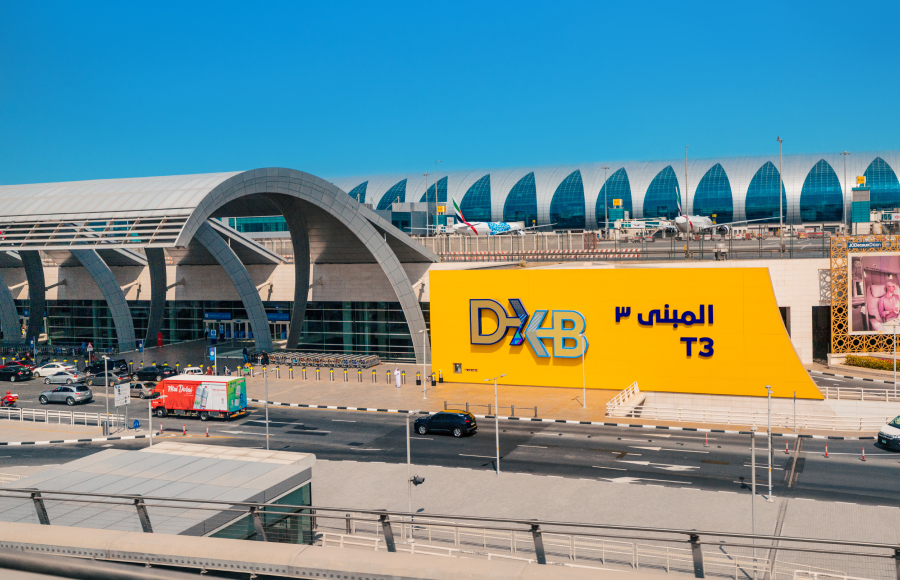
The situation in Doha was equally serious. All aircraft movements at Hamad International Airport, the base for Qatar Airways, were suspended following the closure of Qatari airspace. Explosions were also reported in Bahrain's capital, Manama, where Iran struck a service centre used by the US Navy's 5th Fleet.
By Sunday 1st March, flight tracking site Flightradar24 reported that more than 2,000 flights to and from seven key Gulf airports had been cancelled. FlightAware recorded 7,716 delays and 2,280 cancellations globally in a single day.
Airlines Cancelling Flights
The scale of the airline response was unprecedented in pace. Within the first 24 hours, virtually every major carrier with routes through the region had either suspended operations or issued waivers allowing passengers to rebook without fees.
Emirates, the world's largest long-haul airline, suspended all flights to and from Dubai - grounding its entire network until at least 15:00 UAE time on 3rd March 2026. Its low-cost subsidiary flydubai followed suit. The airline also asked passengers with bookings before 5th March to rebook or request full refunds.
Etihad Airways suspended all departures and arrivals from Abu Dhabi, with its latest update indicating suspension until 02:00 UAE time on 2nd March, later extended. Given that the airline's Airbus A380s were scattered across cities including London, Paris, Toronto and Singapore when the airspace closed, repositioning aircraft once it reopened was expected to take additional time.
Qatar Airways issued a statement confirming it was "temporarily suspending all flights to, and from, Doha due to the closure of Qatari airspace," adding that a further update would be provided once the Qatar Civil Aviation Authority confirmed safe reopening.
.webp)
European and Asian carriers moved quickly as well. British Airways, Deutsche Lufthansa, Air France, KLM and Turkish Airlines all suspended services to affected destinations. Air France cancelled scheduled services to Tel Aviv, Beirut, Dubai and Riyadh until 3rd March. KLM suspended Dubai flights until 5th March and announced it was not routing through the airspace of Iran, Iraq or Israel. Turkish Airlines cancelled flights to destinations including Bahrain, Dammam, Riyadh, Iran, Iraq, Jordan, Kuwait, Lebanon, Qatar, Syria and the UAE. Wizz Air suspended all services to Israel, Dubai, Abu Dhabi, Amman and Saudi Arabia through to 7th March.
American carriers were equally fast to act. United Airlines cancelled Tel Aviv flights through 6th March and Dubai services through 4th March, describing Tel Aviv as among its most profitable international routes. Delta Air Lines suspended Tel Aviv service through at least Sunday 1st March.
More than 40 aircraft were diverted mid-flight on the night the strikes began. With Iran and Iraq closing their airspace simultaneously, routing that would normally transit the Gulf had to be abandoned in real time, forcing aircraft to divert via Larnaca, Jeddah, Cairo and Riyadh. Air India, caught with flights simultaneously inbound to the Middle East and en route across the region between India, Europe and the United States, cancelled not only its regional services but its India-to-Europe and India-to-US services on 1st March - a sign of how a Gulf airspace closure cascades far beyond the immediate geography.
EgyptAir announced suspensions covering Cairo services to Kuwait, Dubai, Doha, Bahrain, Abu Dhabi, Sharjah, Dammam, Erbil, Baghdad, Amman, Beirut and Muscat, citing "rapid developments and tensions in the region." Kuwait Airways grounded all inbound and outbound flights until further notice. Saudia cancelled services to Amman, Kuwait, Dubai, Abu Dhabi, Doha, Bahrain, Moscow and Peshawar until 23:59 local time on 2nd March.
Cirium estimated that at least 90,000 passengers transit daily through Emirates, Qatar Airways and Etihad alone. The true figure of those affected globally - including connecting passengers, cargo and crew - is significantly higher and, as the firm acknowledged, difficult to calculate in full.
How This Will Shape Aviation Going Forward
The immediate operational disruption is severe. But for those working in aviation - whether in operations, scheduling, commercial or finance - the medium-term consequences are only now becoming clear.
Fuel costs and jet supply
Oil prices surged the most in four years when markets opened on 2nd March. Brent crude briefly hit $82.37 (£61, €71) per barrel - the highest since January 2025 - before settling around $79-80. The US benchmark WTI climbed around 8-10% to approximately $72 per barrel.
The significance for aviation lies not just in crude prices but in jet fuel supply specifically. According to commodity analysts, roughly 20% of global jet fuel flows through the Strait of Hormuz - the narrow waterway off Iran's coast through which approximately one-fifth of the world's total oil supply also passes. Tanker traffic through the strait has largely halted, with shipping owners and traders self-imposing a pause as the conflict widens. At least 150 tankers had anchored in open Gulf waters by 2nd March. An oil tanker was struck off the coast of Oman, signalling a shift in targeting from military facilities to energy infrastructure.
Kuwait is a central hub for regional jet fuel supply. Any sustained disruption to Strait of Hormuz transit translates directly into European aviation supply tightening. Industry analysts note that the jet fuel crack spread - the margin between crude and refined jet fuel - can remain elevated for weeks once a genuine supply shortage emerges, as the market learned during disruptions in June 2025.
Linus Bauer, head of UAE-based consultancy BAA & Partners, told industry media that if the disruptions prove short-lived, the impact on airlines remains manageable. "If airspace avoidance persists, airlines face structurally higher operating costs, weaker aircraft utilisation and profit margin pressure - especially on long-haul networks reliant on Middle East transit corridors," he said.
Route restructuring and operational inefficiency
The Middle East has become an increasingly vital transit corridor in recent years, not least because Russian and Ukrainian airspace has been closed to most carriers since 2022. The Gulf route has absorbed much of that displaced traffic. With that corridor now also unavailable, carriers face a shrinking set of viable paths between Europe and Asia - adding flight time, burning more fuel and reducing aircraft utilisation.
EASA issued a Conflict Zone Information Bulletin for the Middle East and Gulf, advising airlines against operating in affected airspace and citing a "high risk to civil aviation." The bulletin noted that retaliatory actions against US and Israeli assets in the region - including in countries hosting US military bases - introduced additional risks not only in Iranian airspace but across neighbouring states.
War risk insurance premiums will rise materially for any carrier still operating near the affected zone, further compressing margins on routes that remain open.
Demand and the leisure market
The Gulf states - the UAE in particular - have been major growth markets for leisure and business travel. Dubai receives millions of tourists during the winter peak season, and the region's three major hub carriers were operating near capacity when the conflict began. That demand will not simply redirect elsewhere; for many travellers, especially those connecting through Dubai or Doha to destinations in South and Southeast Asia, rerouting adds hours and cost.
The longer the conflict continues, the more likely consumer confidence in the region will erode. Tour operators are already scrambling to reroute or cancel bookings. For airlines that have invested heavily in Gulf-facing capacity - and for those whose entire network model is built around Gulf transit - a prolonged disruption presents a genuine commercial threat.
Henry Harteveldt, airline industry analyst and president of Atmosphere Research Group, was direct in his assessment: "For travelers, there's no way to sugarcoat this."
For the industry as a whole, the challenge now is managing an overlapping set of pressures - fuel costs, rerouting, stranded aircraft, rebooking obligations and uncertainty about when normal operations will resume - while the military situation continues to develop. The pace at which airlines acted over the first 48 hours reflects both the severity of the risk and the hard lessons learned from previous conflicts in the region. How long those lessons will need to be applied remains, for now, an open question.
Main image: FlightRadar24
Dubai airport image: EdNurg, Adobe Stock