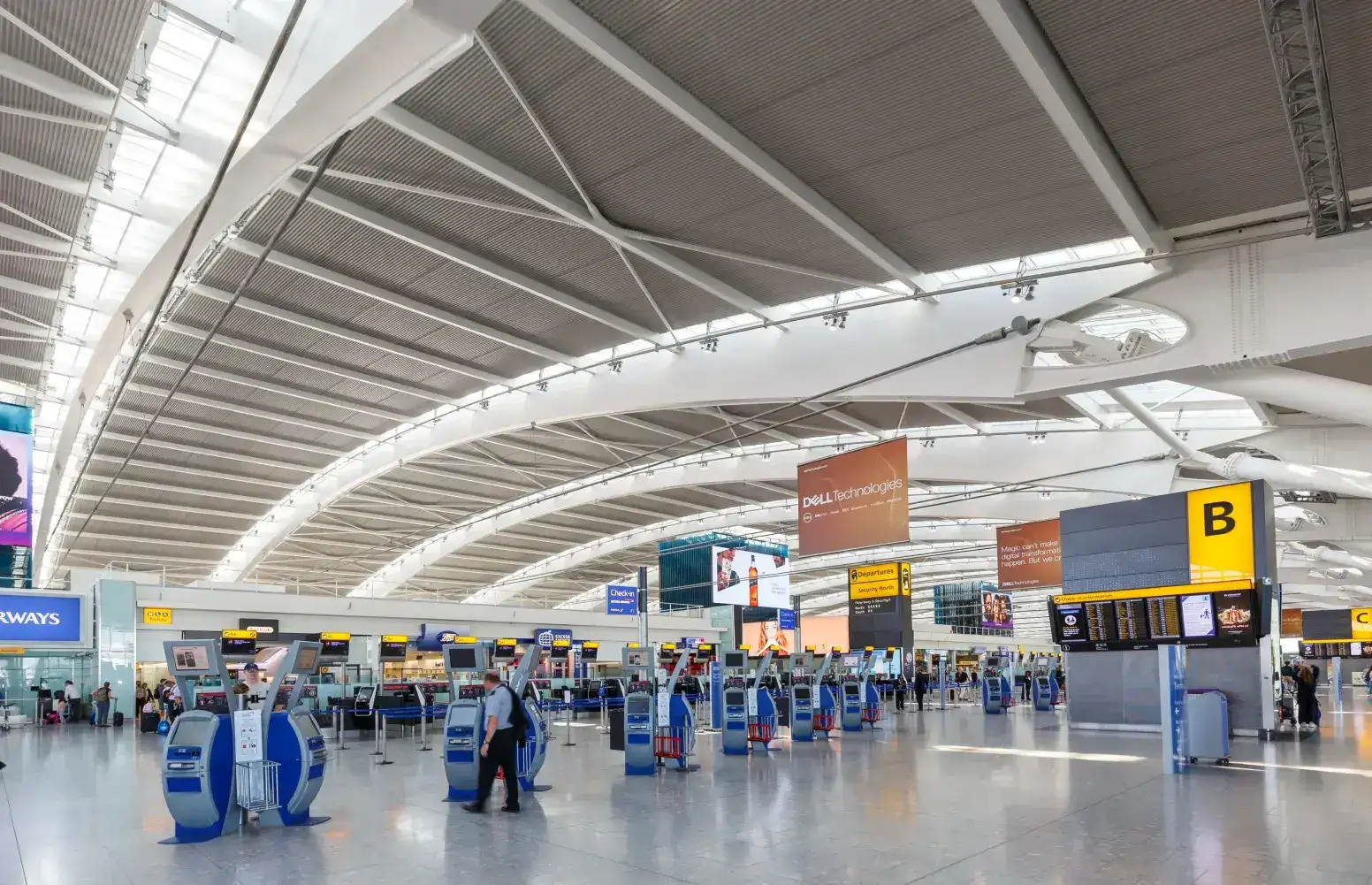
London Heathrow Airport has ended the 100ml liquid restriction for hand luggage at security checkpoints following the rollout of advanced computed tomography scanners across all terminals. Passengers can now carry containers of liquids, aerosols and gels up to two litres in hand luggage. There is also no longer a need to place them in transparent plastic bags. Electronics such as laptops and tablets can remain inside bags during screening, streamlining the passenger experience and reducing the time spent at security. This update makes Heathrow the largest airport to implement the new technology at full scale.
The 100ml limit has been in place for nearly two decades, introduced in response to security threats involving liquid explosives. For years, travellers have needed to measure liquids carefully, transfer them into small clear bags and remove laptops and other electronics for separate screening. The new CT scanners use high-resolution imaging to analyse baggage in three dimensions, allowing security staff to identify potential threats without requiring items to be removed from bags. This capability underpins Heathrow’s decision to raise the allowable liquid volume to two litres.
Passengers passing through Heathrow’s security checkpoints will notice a visible difference. Laptops, tablets, phones and liquids can remain in hand luggage and trays for separate screening are less crowded. The change also reduces the reliance on millions of single-use plastic bags, a move welcomed by environmental advocates. Security lines are expected to move more smoothly as a result, while staff focus on interpreting the detailed imagery provided by the scanners.
Tens of millions of passengers will benefit
The decision is significant for Heathrow as Europe’s busiest airport. Tens of millions of passengers pass through its terminals each year, making the introduction of advanced CT scanners at every security lane a substantial logistical achievement. Operating the technology across the entire airport ensures that both threat detection and passenger convenience are maintained at a high standard.
Other UK airports have installed CT scanners or are in the process of doing so, but they have not yet been granted approval to increase the liquid limit from 100ml. Airports including Birmingham, Bristol, Gatwick and Edinburgh are using the same technology but remain restricted to the previous limits until regulatory permission is granted. The distinction highlights the role of government oversight in balancing technology capabilities with security standards.
Even airports with the scanners operational continue to enforce traditional rules in some areas. Locations such as London City, Luton and Teesside operate high-resolution equipment but must maintain the 100ml limit until authorities confirm the technology is sufficient to allow increased allowances. This creates a situation where passengers travelling through multiple airports may need to adhere to different rules depending on local approvals.
The introduction of CT scanners changes how security teams operate. Unlike older X-ray systems that produced flat, two-dimensional images, these scanners generate layered, three-dimensional views of baggage contents. This enables staff to distinguish between materials and detect potential threats with greater accuracy. It also reduces the need for secondary inspections and allows multiple items, including liquids and electronics, to remain in the same bag, improving efficiency at security checkpoints.
The removal of the 100ml limit offers passengers a practical benefit. Travellers can carry larger quantities of liquids without pre-measuring and laptops and tablets no longer need to be transferred to separate trays. The result is a faster, simpler and less stressful process, especially for those with multiple devices or personal care products. With liquids no longer required to be bagged in transparent pouches, passengers also avoid the repeated handling and repacking that has been a feature of airport security for years.
Limits on liquid remain at many airports
While Heathrow has implemented these changes fully, passengers should be aware of regulations at connecting airports. If onward flights involve airports that have not lifted the 100ml restriction, the lower limit still applies and travellers may need to repack liquids before boarding. Awareness of differing rules remains important, particularly during busy travel periods or when passengers are less familiar with local airport procedures.
The wider aviation industry is observing Heathrow’s rollout closely. Airlines, airport operators and security specialists are analysing the effects of increased liquid allowances and the impact on passenger flow. For those involved in airport management, ground handling or airline operations, the Heathrow implementation offers an example of how investments in advanced screening technology can improve throughput and passenger satisfaction while maintaining safety standards.
Staff training has been a key component of the rollout. Security personnel are learning to interpret detailed images from the CT scanners and apply new procedures consistently across all lanes. Ensuring staff confidence in the technology helps maintain rigorous threat detection standards while enabling smoother passenger journeys. Airports looking to follow Heathrow’s lead will need to replicate similar training programmes and operational adjustments to ensure consistent results.
The change also signals a shift in expectations for future airport investments. CT scanners require space, staff expertise and maintenance, but they offer operational flexibility and improved passenger experience. As other airports secure regulatory approval to increase liquid limits, Heathrow’s approach provides a reference for managing large volumes of passengers while integrating high-tech screening solutions.
From a passenger perspective, the update reduces one of the most frequent points of friction during air travel. The familiar scene of bottles, gels and electronics being removed and rearranged on trays is largely gone, allowing for a smoother security process. At the same time, the safety benefits of detailed 3D imaging remain a priority, ensuring that security measures evolve alongside passenger convenience.
Heathrow’s decision to scrap the 100ml liquid rule demonstrates the practical application of modern screening technology at scale. Allowing up to two litres of liquids in hand luggage, keeping devices in bags and eliminating the need for clear plastic bags simplifies the experience for travellers while maintaining rigorous security standards. Other airports are preparing to follow suit once regulatory approval is granted and the impact on passenger operations and airport management will be closely monitored in the coming months.