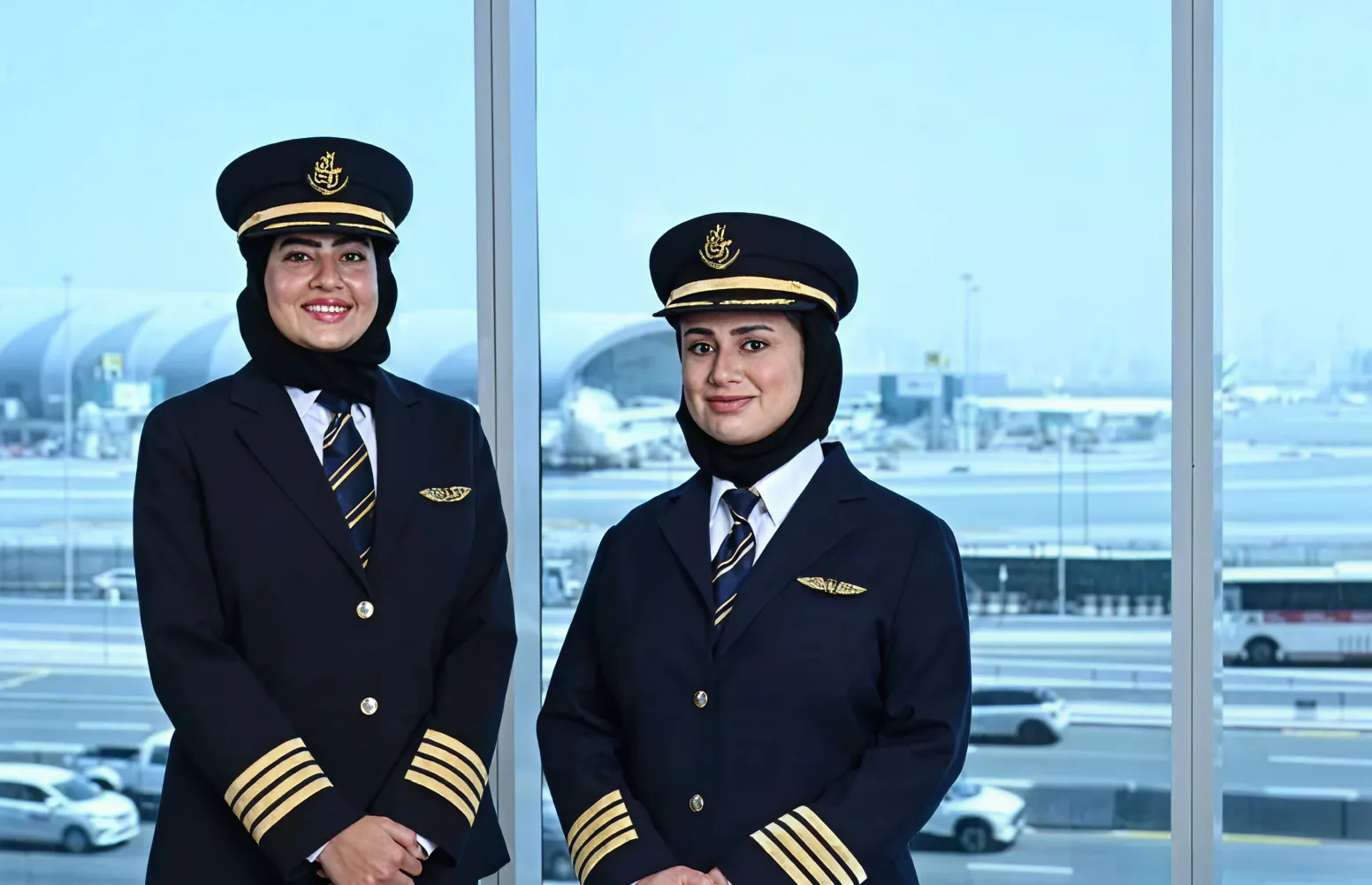
Emirates has promoted its first two Emirati female pilots to the rank of Captain, marking a significant moment in the airline's history and a notable development for female representation within commercial aviation.
Hanan Mohammed Jawad and Bakhita Al Mheiri have become the first Emirati women to reach the left-hand seat at the Dubai-based carrier, following years of training, operational experience and progression through the airline's flight deck ranks. Their promotions represent a major achievement for the pilots themselves and reflect wider changes taking place across the aviation sector as airlines seek to attract and retain talent from a broader range of backgrounds.
The milestone carries particular significance within the Gulf region, where female participation in aviation has increased steadily over recent decades. As two of the most recognisable names in global aviation, Emirates and Dubai have played an important role in shaping perceptions of aviation careers across the Middle East. The promotion of Emirati women to Captain positions sends a clear message to aspiring pilots that opportunities exist at every level of the profession.
The Path to Command
Jawad and Al Mheiri are currently operating Emirates' Boeing 777 fleet, one of the largest long-haul aircraft operations in the world. The Boeing 777 forms a central part of the airline's international network, serving destinations across Europe, Asia, Africa, North America, South America and Oceania.
Operating as a Captain on the Boeing 777 requires extensive experience, technical knowledge and leadership capability. Emirates' Captains are responsible for the safe operation of flights carrying hundreds of passengers across some of the longest routes in commercial aviation. The position represents the culmination of years of development, assessment and operational performance.
For many aspiring pilots, particularly those beginning their aviation careers, the route to command can appear lengthy. Promotions such as these provide a visible example of how progression within a major international airline can be achieved through commitment, consistency and strong operational performance.
The careers of Jawad and Al Mheiri highlight the opportunities available to Emirati nationals pursuing professional aviation pathways. As aviation continues to expand across the United Arab Emirates, airlines, training organisations and government initiatives have invested heavily in developing local talent. The presence of Emirati pilots in senior flight deck positions has become increasingly important as the country strengthens its position as a global aviation hub.
Leading by Example
Female representation within airline cockpits remains lower than many other areas of the industry. Across the global airline sector, women account for only a small percentage of professional pilots. Progress has been made in recent years, with airlines introducing outreach programmes, scholarships, cadet pathways and educational initiatives designed to encourage more women to consider aviation careers.
Achievements such as those of Jawad and Al Mheiri help provide visible role models for future generations. Young women considering careers in aviation often cite representation as an important factor when evaluating professional opportunities. Seeing female pilots progress to command positions at one of the world's largest international airlines can have a meaningful impact on career aspirations.
The significance of this development extends beyond the flight deck. Aviation relies on a wide range of skilled professionals including engineers, maintenance technicians, air traffic controllers, flight dispatchers, safety specialists and airport operations personnel. Increased visibility of women in senior operational roles contributes to greater awareness of the many career pathways available throughout the industry.
For Emirates, the promotions also reflect the airline's continued investment in pilot development. Operating a fleet that includes some of the world's largest widebody aircraft requires a substantial pipeline of highly trained flight crew. Advancement from First Officer to Captain involves rigorous training, simulator assessments, line checks and operational evaluations designed to ensure the highest standards of safety and professionalism.
The Boeing 777 operation presents unique demands. Emirates operates the aircraft on high-density routes, ultra-long-haul sectors and services connecting major global business centres. Captains must manage complex operational environments while leading flight crews through varying weather conditions, airspace structures and airport procedures across multiple continents.
Jawad and Al Mheiri have progressed through this demanding environment to reach command positions, demonstrating the expertise required to operate at the highest levels of commercial aviation.
Meeting Future Demand
Their promotions arrive at a time when airlines worldwide continue to face pilot recruitment challenges. Demand for qualified pilots remains strong across many regions as carriers expand networks, restore capacity and prepare for future fleet growth. Industry forecasts continue to indicate substantial long-term demand for pilots over the coming decades.
As airlines compete for talent, visibility of successful pilot career pathways becomes increasingly important. Stories of progression from training through to command can help encourage new entrants into the profession and support wider recruitment efforts across the industry.
The United Arab Emirates has become one of the world's most important aviation centres, supported by major international airlines, extensive airport infrastructure and strong links between continents. Aviation careers remain highly attractive to many young professionals within the region, and the promotion of Emirati Captains at Emirates provides another example of the opportunities available within the sector.
For aspiring pilots seeking pilot jobs, the achievement of Jawad and Al Mheiri demonstrates what can be accomplished through dedication to training and operational excellence. Command positions at major international airlines represent some of the most respected roles in commercial aviation, carrying significant responsibility for passengers, crew and aircraft.
Their advancement also reflects the continued evolution of the aviation workforce. Airlines increasingly recognise the value of attracting talent from diverse backgrounds and ensuring that career progression is accessible to all qualified professionals. Greater representation within flight operations helps strengthen the industry's talent pool and supports long-term workforce development.
Enjoying the article?
Follow us and never miss an update on the aviation industry.
Key Takeaways
The promotions of Hanan Mohammed Jawad and Bakhita Al Mheiri will stand as an important chapter in Emirates' history. As the airline's first Emirati female Captains, they have achieved a distinction that places them among a growing group of women reaching senior flight deck positions across global aviation.
For the next generation of pilots, particularly young women considering captain jobs in aviation, their achievement offers a powerful example of what is possible within one of the world's most demanding and rewarding professions. As they continue flying the Boeing 777 across Emirates' global network, their success is likely to inspire future aviators for years to come.