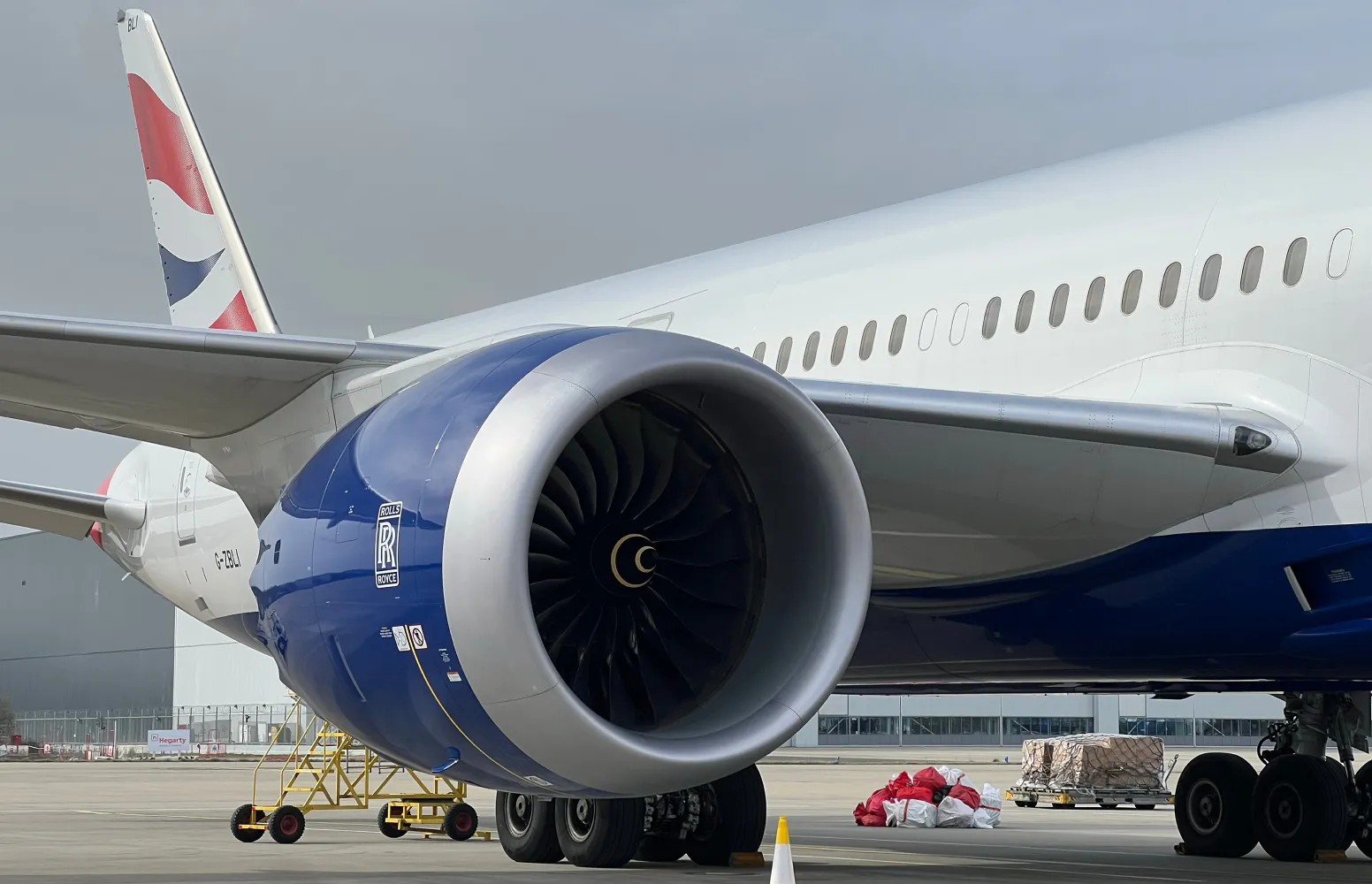
MRO Europe kicked off at London’s ExCel Center with the Chief Technical Officer (CTO) of British Airways, Andy Best’s airline keynote speech. His keynote speech highlighted a pressing issue: not one engine from BA’s primary engine suppliers has been delivered on time in 2025. “This is the reality, we’re seeing it. Those failures just pass the risk into our operation. Of course, we have to manage the risk. We get around it,” said Best.
Best also warned that this failure undermines BA’s service promises to customers: “It undermines our commitments that we have with our customers. When a customer flies with British Airways, we basically sign a contract with them to get from point A to point B safely.” He added that BA’s confidence in aftermarket service is “not great” and conceded, “We are not happy.”
His speech also emphasised that his remarks were not intended to be a complaint session. Instead, he framed them as a call to action. He invited industry stakeholders who are willing to “transform and make change” to collaborate with BA.
Grounded Jets, Rising Costs
Delays in engine arrival can have a ripple effect, leading to schedule disruptions and increased costs. This delay impacts subsequent flights, potentially impacting passengers, crew duty limits, and airport slot allocations. Best’s observation might force BA to:
- Keep engines on the wing longer than intended. This poses risks to reliability and aircraft performance.
- Ground aircraft while awaiting engines, reducing fleet availability. Best acknowledged that “we’ve got aircraft grounded … because we haven’t got those engines.”
- It can lead to rescheduled services, cancelled flights, and reallocated aircraft to cover gaps, all of which negatively impact reliability and customer trust.
- BA may be forced to seek alternative suppliers or shift future procurement decisions, such as switching to a different engine family. In fact, BA’s choice to order GE Aerospace’s GEnx engines for 38 Boeing 787-10s was partly motivated by aftermarket concerns with existing engine suppliers.
Shaping a More Agile MRO
BA’s challenges with engine delays have attracted scrutiny from investors and industry analysts, who are closely monitoring the airline’s capacity to emerge from these risks. It also gives a headway to competitors to emphasize their own reliability and parts availability, potentially shifting market dynamics.
So, what can BA do differently now? What can be changed to navigate the situation?
The first task on the list is to align design, durability, and maintainability. It is incumbent that engine designers balance efficiency against maintainability. If new models push maintenance intervals shorter, the aftermarket must anticipate the load. The supply chain also needs to become transparent and agile. Airlines, MROs, and OEMs need shared visibility on material flows, constraints, and lead times.
Airlines can also co-invest in engine spares pools, shop capacity, or even MRO ventures to de-risk reliance on external providers. Where possible, designing components and parts for interchangeability, reducing exotic spares, and simplifying logistics helps resilience.
A long-term view on upskilling through apprenticeships will help in attracting and retaining engineers, technicians, planners, and supply chain operators. Best says BA is already pushing technical apprenticeship and graduate programmes.
Enjoying the article?
Follow us and never miss an update on the aviation industry.
A Call to Collaborate
Best’s keynote speech was clear on one thing: that his remarks are not intended as a complaint but as a call to action for the entire aviation sector. He emphasized that the only way to address the persistent supply chain issues is industry-wide collaboration among stakeholders, including British Airways, suppliers, and service providers. If you want to transform and make a change, come and work with us,” he invited, highlighting the necessity of collective effort to overcome these challenges. His message is clear- an airline’s schedule, reliability, and reputation depend more than ever on a stable, capable supply chain.
For entry-level engineers and planners entering this space, the engine delivery crisis presents both a challenge and an opportunity. As the aftermarket adjusts, those with data skills, logistics insight, and cross-disciplinary training will be critical in keeping aircraft powered and in the air.