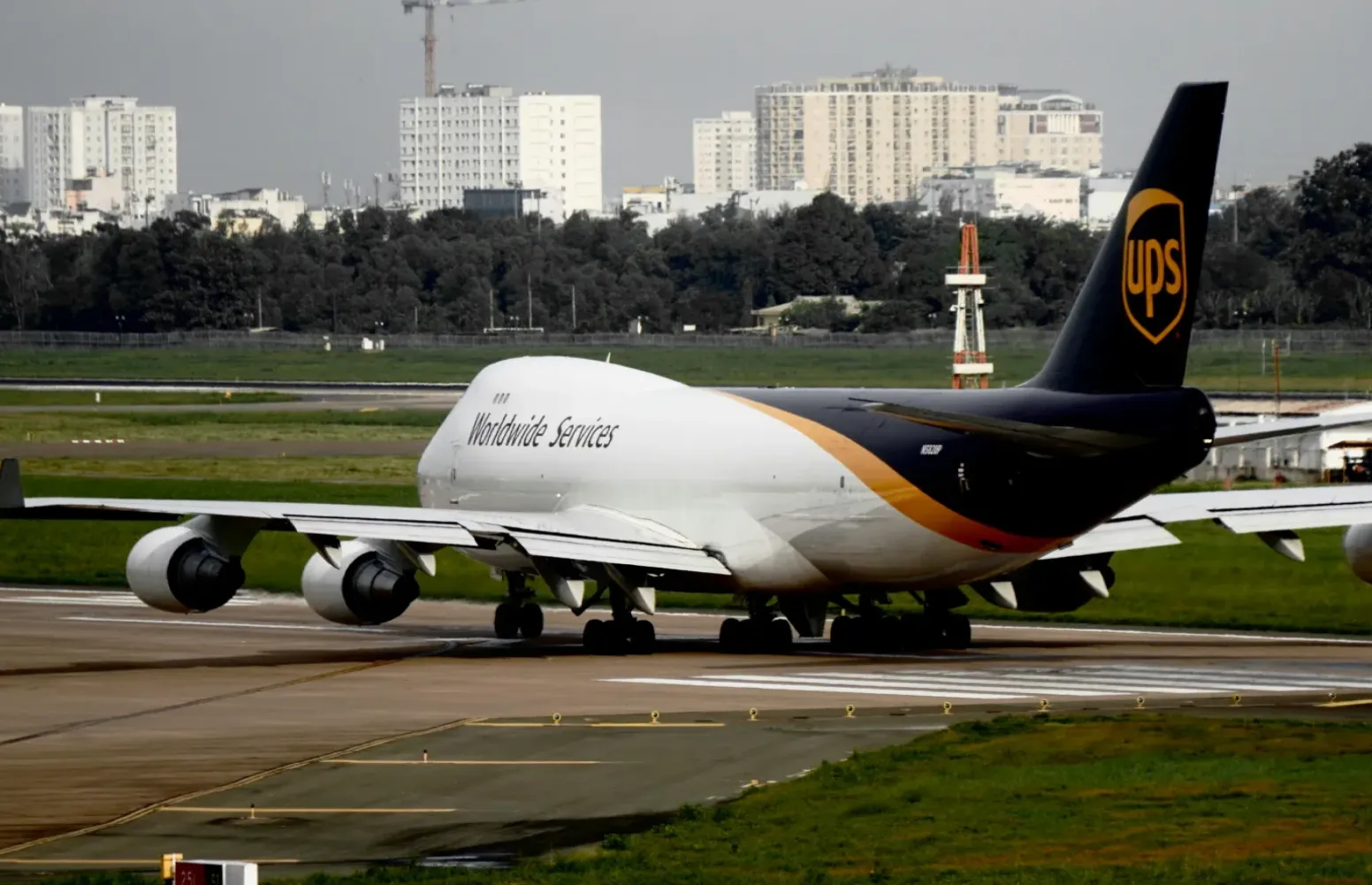
The Federal Aviation Administration (FAA) has taken the unusual step of issuing an Emergency Airworthiness Directive for the McDonnell Douglas MD‑11 aircraft type following a cargo-aircraft crash in Louisville, Kentucky, that claimed 14 lives, including three pilots.
The accident occurred when an MD-11 operated by UPS Airlines crashed shortly after take-off from the company’s world-hub facility in Louisville. Initial data indicate that the left-hand engine and its pylon separated from the wing, creating an unsafe condition that prompted the FAA’s directive. The regulator specified that the condition “could result in loss of continued safe flight and landing.” The directive prohibits further flight of all U.S.-registered MD-11 and MD-11F aircraft until inspections and corrective actions are completed.
The Crash and the Directive
On the evening of Tuesday, 4th November 2025, the UPS MD-11 departed the Louisville hub en route to Honolulu. Moments after rotation, the aircraft reached about 30.5 metres (100 ft) above ground when the left-hand engine detached and the wing was engulfed in fire. The crew attempted control for roughly 25 seconds as a cockpit warning bell sounded repeatedly. The jets’ departure ended in a crash into nearby business premises, which resulted in a fireball and multiple ground fatalities and injuries.
Fourteen people on board lost their lives, including all three flight-deck crew members. Given the severity of the failure and the fact that other MD-11s share the same type design, the FAA’s Emergency Airworthiness Directive (AD) cites “an unsafe condition that is likely to exist or develop in other products of the same type design.” The directive applies to all U.S.-registered MD-11 and freighter variant MD-11F aircraft, suspending operations until inspections are completed.
Industry Implications and Fleet Action
In parallel with the FAA step, major cargo operators quickly grounded their MD-11 fleets. UPS indicated that its 26 MD-11 aircraft, representing about 9 percent of its fleet, were grounded immediately. FedEx Corporation also confirmed that its 28 MD-11s are subject to suspension while a full review is underway. Boeing, which inherited the MD-11 type via its 1997 merger with McDonnell Douglas Corporation, supported the grounding and called for additional engineering analysis.
CEOs and maintenance leadership are now scrambling to implement contingency routing and capacity adjustments in overnight freight networks. Although only a minority of cargo aircraft remain MD-11s in active service, the type has been a workhorse of the wide-body freighter sector for decades. Forced inspections will ripple through maintenance schedules and may delay aircraft returns to service until corrective actions are validated.
What New Entrants Should Know
For those new to roles in safety management, maintenance, flight operations, or logistics support, this event illustrates how historic airframes remain subject to modern oversight.
Entry-level mechanics must appreciate that an Emergency AD can ground an entire fleet overnight. Pilots in training or early-career dispatchers should recognise that warnings, alarms, and system separations push operations into emergency-response mode and that the regulator may step in to halt flights until airworthiness is assured.
At supervisor and line-maintenance levels, the directive underscores the importance of documentation: maintenance logs, engineering bulletins, inspection records, and modifications may form part of the investigation and corrective-action path. For ground-crew or logistics operatives, this grounding will impact flight schedules, hub processing, and cargo routing, making flexibility and awareness of regulatory triggers vital.
Enjoying the article?
Follow us and never miss an update on the aviation industry.
What Happens Next
The FAA investigation will focus on the maintenance history of the accident aircraft, which had spent weeks in heavy maintenance in San Antonio before the departure. The agency has also indicated that inspections will cover engine pylons, attachment hardware, and structural integrity of adjacent systems. Until the root cause is identified and fleet-wide risk assessed, the grounding will remain in effect.
The next phase will involve the National Transportation Safety Board (NTSB) reviewing flight-recorder data, cockpit alarms, and the sequence of events reaching the decision-speed threshold (V1) during take-off. Once a probable cause is determined, corrective-action bulletins will follow. At that time, the FAA may lift the grounding subject to compliance. Until then, operations personnel in aviation roles should track the directive, review affected aircraft lists, and monitor for updates from operators, airworthiness authorities, and the manufacturer.
Photo: Pham Huynh Tuan Vy - Pexels.com