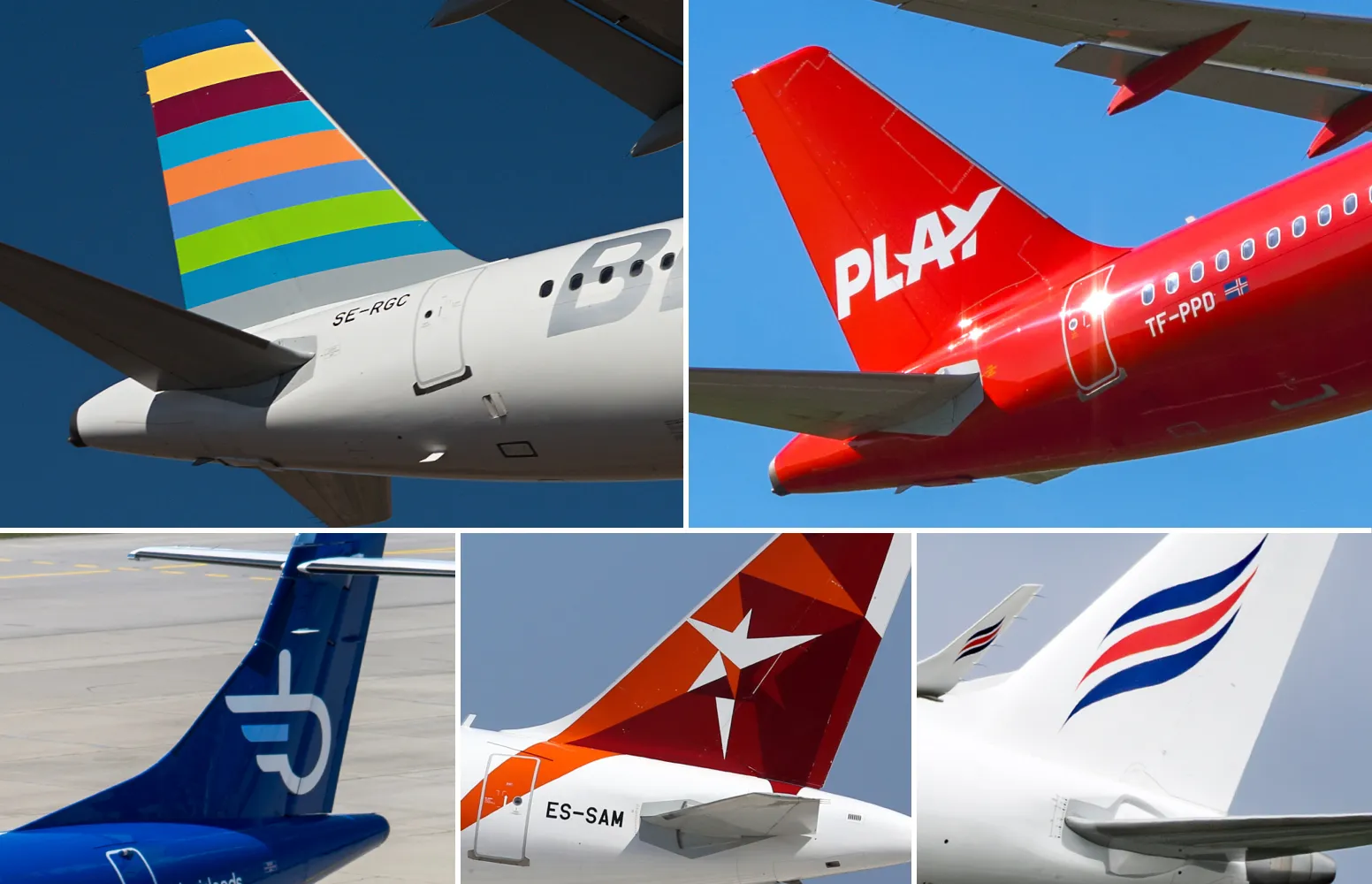
Several carriers in Europe have shut down this year, creating a harsh backdrop for anyone working inside the industry. Traffic has been healthy in many regions, yet certain operators have not benefited from it. Margins have tightened, aircraft availability has shifted, leasing costs have climbed, labour needs have been unpredictable, and contract flying has turned into a riskier bet. Smaller and mid-sized airlines in particular have found themselves squeezed between rising expenses and revenue that never quite matched projections.
Labour disputes, staff strikes, manufacturing delays, and bankruptcy have created a harsh backdrop for anyone working inside the industry. Air traffic continues to grow regardless. But strong demand hasn’t guaranteed profitability for all carriers.
The ultimate closure of multiple airlines has also not followed the same pattern. Each airline faced its own pressure point. Some relied on ACMI work that disappeared with little warning. Others struggled with fleet choices. A few never fully recovered from previous winters. Taken together, the run of failures has left recruiters, crews, and technical teams uneasy. When five carriers disappear within months, it signals deeper problems that regulators, banks, suppliers, and airports cannot ignore.
The following section outlines the key details for each carrier, then expands on the circumstances around their final months. The intention is not to soften the story but to set out how these failures happened and why they matter to those working in aviation today.
SmartLynx Shuts Down After Financial Struggles
.webp)
At a Glance:
- Latvia, around 1000 employees, 1992 to 18th August 2025
- Collapsed due to loss of ACMI customers and rising aircraft leasing costs
The most recent closure news came from the Latvian carrier, SmartLynx Airlines, which announced the halt of all commercial operations as of November 24, 2025. The announcement followed a review of the company’s financial outlook. The carrier described the choice as a “difficult but necessary step after exploring potential paths forward”.
Commencing operations in 1992, the airline had become one of Europe’s most recognisable ACMI providers. Its ability to place aircraft across Europe, the Middle East, and Asia made it a significant player in peak seasons. The business model worked when demand for short-term capacity stayed strong.
When several of its largest customers reduced requirements during early 2025, the company’s revenue fell sharply. The airline had taken on additional aircraft during late 2023 and 2024, expecting further growth. This didn't go as planned. As leasing rates rose, the company found itself in a situation where several aircraft were underutilised. An internal bulletin from the board noted that the airline had been “unable to finalise revised leasing terms that would allow the fleet to remain active during weaker months”. Reports from crew groups suggested that duty hours fell and schedules shrank month by month.
By August of this year, the carrier had informed staff about funding failures. The chairman issued a statement saying the company had reached a point where continued operations would lead to deeper losses. Flights were grounded on 18th August 2025.
The collapse sent a jolt through the ACMI sector. Many airlines across Europe had depended on SmartLynx for seasonal lift. The absence of such a large provider left gaps that other ACMI operators filled only partially.
Image: herraez (Adobe Stock)
Revenue Shortfalls Force Blue Islands Closure
.webp)
At a Glance:
- Channel Islands (Guernsey), around 200 employees, 1999 to 4th September 2025
- Collapsed due to drop in passenger revenue and unsustainable operating costs
On November 14, 2025, Blue Islands, an airline based in the Channel Islands, posted a statement on its website, stating that it has “suspended trading”. It was not immediately clear what caused Blue Islands to cancel its flight, or if the carrier had filed for bankruptcy.
Since becoming operational, the carrier had carved out a network between the Channel Islands and the UK. Its operation depended on consistent commuter traffic, seasonal tourism, and a stable cost base.
In 2024 and early 2025, the airline’s revenue fell short of forecasts. Tourism showed signs of recovery, but not at levels needed to offset higher cost pressures. Lease payments, fuel, and maintenance created a burden the airline could not manage. By summer 2025, staff said the mood inside the company was uneasy. The network team looked at trimming flights, but reductions risked weakening airport agreements. The board attempted to secure support from regional authorities, although these discussions did not yield a result. The airline’s chief executive later wrote that the company had reached a point where “operating with reduced income and rising expenses is no longer possible without fresh backing”.
Early on 4th September, Blue Islands informed customers that flights were suspended. The airline’s disappearance left gaps on routes that had served residents for decades. Several UK airports had relied on Blue Islands for consistent regional links. The collapse increased pressure on the limited pool of qualified crews within the islands.
Image: Matteo Ceruti (Adobe Stock)
End of the Line for Iceland’s PLAY Airlines
.webp)
At a Glance:
- Iceland, around 360 employees, 2019 to 22nd November 2025
- Collapsed due to cash shortfall after prolonged losses and weakened forward demand
Icelandic low-cost carrier, PLAY Airlines, stated on September 29, 2025, that it was ceasing operations effective immediately, canceling all flights and leaving thousands of passengers stranded. The airline said that the decision was made following prolonged financial underperformance, poor ticket sales in recent weeks, and internal discontent among staff.
A known name in the low-cost air travel space, PLAY entered the market in 2019 with a plan to use Iceland as a low-cost bridge for transatlantic traffic. For a while, the strategy held together. Load factors stabilised, and the network started to build routine connectivity into North America and Europe.
Trouble began in the summer of 2024 when fuel costs rose, and the airline’s debt repayments increased. Management sought additional capital during early 2025. Talks with investors continued through the spring, but the funding conditions became tougher as each quarter passed. The chief executive noted in an internal memo that the airline had reached the limit of what it could cut without harming operations.
A staff notice arrived shortly before midnight on 22nd November 2025. The statement also acknowledged that the airline had run out of both time and liquidity. Aircraft returned to Reykjavík overnight, and flights halted at once.
The collapse brought an abrupt end to a carrier that had positioned itself as an alternative to legacy transatlantic fares. Crews and operations staff were left searching for roles in other parts of the region as the country lost its second major scheduled operator.
Image: Trevor Benbrook (Adobe Stock)
Contracts Collapse Lead to Eastern Airways Shutdown
.webp)
At a Glance:
- United Kingdom, around 350 employees, 1997 to 27th October 2025
- Collapsed due to termination of key contracts and sustained losses on regional routes
In late October 2025, UK domestic airline Eastern Airways suspended operations, and all of its flights were cancelled. The company filed a notice of intention to appoint an administrator at the Insolvency and Companies Court within the High Court.
The airline’s focus was on stitching together niche routes that larger carriers often avoided. This model depended heavily on consistent contracts, especially flying for major European airlines. So, when one of its most important partners, KLM, ended its agreement in 2025, the airline’s finances went into decline.
During early autumn, airports in the north of England reported irregular schedules and several cancelled rotations. Internally, staff said planning meetings became more urgent as each week passed. The company’s director of operations noted in a message to employees that the carrier had been facing “tight conditions for some time, made worse by contract loss and rising supplier charges”.
By 27th October 2025, all flights were cancelled with immediate effect. Administrators were appointed that afternoon. The chairman stated that the airline had “no viable path” after attempts to secure backing failed. Some aircraft were already parked, while others returned to their bases by mid-evening.
Departments that supported corporate contracts were hit hardest. Eastern had been a crucial link for several communities, and the shutdown removed connections that few operators were prepared to replace quickly. Crews and engineering staff had limited time to plan their next steps as the airline moved into full administration.
Image: Heorshe (Adobe Stock)
End of an Era for Braathens International
.webp)
At a Glance:
- Sweden, around 600 employees, 1946 to 14th October 2025 (filing for bankruptcy protection)
- Losses tied to Airbus A320 operations and reduced ACMI demand
In September 2025, Swedish carrier Braathens International Airways filed for bankruptcy after failing to resolve liquidity challenges and secure additional funding for its transition to an all-turboprop fleet. The airline suspended all flights operated with five Airbus aircraft, impacting around 200 employees across Braathens International Airways AB and Braathens Crew AB.
The airline’s A320 fleet became its main source of difficulty. Operating costs grew faster than revenue, and several ACMI customers reduced their requirements as summer ended in 2024. The company also had ongoing commitments for aircraft that it could not easily sublease.
In the months before the filing, Braathens attempted to restructure its network. While the ATR fleet continued flying, the A320 operations posted repeated deficits. A statement from the chief executive noted that the company had “exhausted measures to stabilise the Airbus unit” and that the wider group could not carry the losses any longer. Attempts to renegotiate with lenders did not deliver enough relief, and the board finally opted for bankruptcy protection.
The final decision arrived in mid-October. Administrators confirmed that efforts to secure further backing had not succeeded. The message to employees focused on the long service many had given to the company.
The collapse ended one of Scandinavia’s better-known regional names and created uncertainty for airports that depended on the carrier for scheduled links.
Image: pavel1964 (Adobe Stock)
Implications for Airlines and Job Seekers
Seeing five carriers collapse in a single year creates pressure far beyond the companies involved. Airports lose traffic and feed, lessors deal with aircraft that need storage or rapid redeployment, training organisations face uncertainty as cadets reconsider long-term plans and recruiters talk about applicants who fear committing to a move only to face layoffs months later.
There are patterns across the failures. Most relied on either thin regional routes or ACMI work. Both areas suffer quickly when costs rise or contracts vanish. Another pattern sits in the structure of leasing commitments. Several carriers had taken on aircraft to meet expected growth. When demand softened, they could not reshape their fleets fast enough.
Many airlines in the Middle East are also expanding rapidly with Emirates and Etihad both recruiting heavily, especially for those experienced in their respective roles, while new airlines such as Riyadh Air step up operations ahead of a full route launch.
For airlines in Europe, there’s evidence that a business model built on thin margins cannot absorb repeated shocks. Those with balanced revenue streams and predictable cost structures are less likely to be caught out. Regional connectivity remains vital, but the economics have become harder for small carriers with ageing fleets. ACMI providers need consistent customers, careful fleet planning, and reliable financing when rates fluctuate.
The closures in 2025 have left a mark on European aviation. They have reshaped capacity, grounded crews, and disrupted communities. They also highlight the need for operators to keep flexibility at the core of their planning. As winter approaches, the market will watch how remaining carriers adjust their strategies, control expenses, and secure stable revenue in a sector that continues to shift.
For job seekers, the picture is mixed. Failures create an immediate wave of redundancy, yet they also release experienced staff into a market where many airlines are facing crippling shortages of crew and engineers. As always, we’re encouraging people to make sure their CV or resume is uploaded to Aviation Job Search, and their profile is constantly updated.
Header image credit: Composite of images by VanderWolf Images, kamilpetran, pavel1964, Matteo Ceruti, Markus Mainka (Adobe Stock)