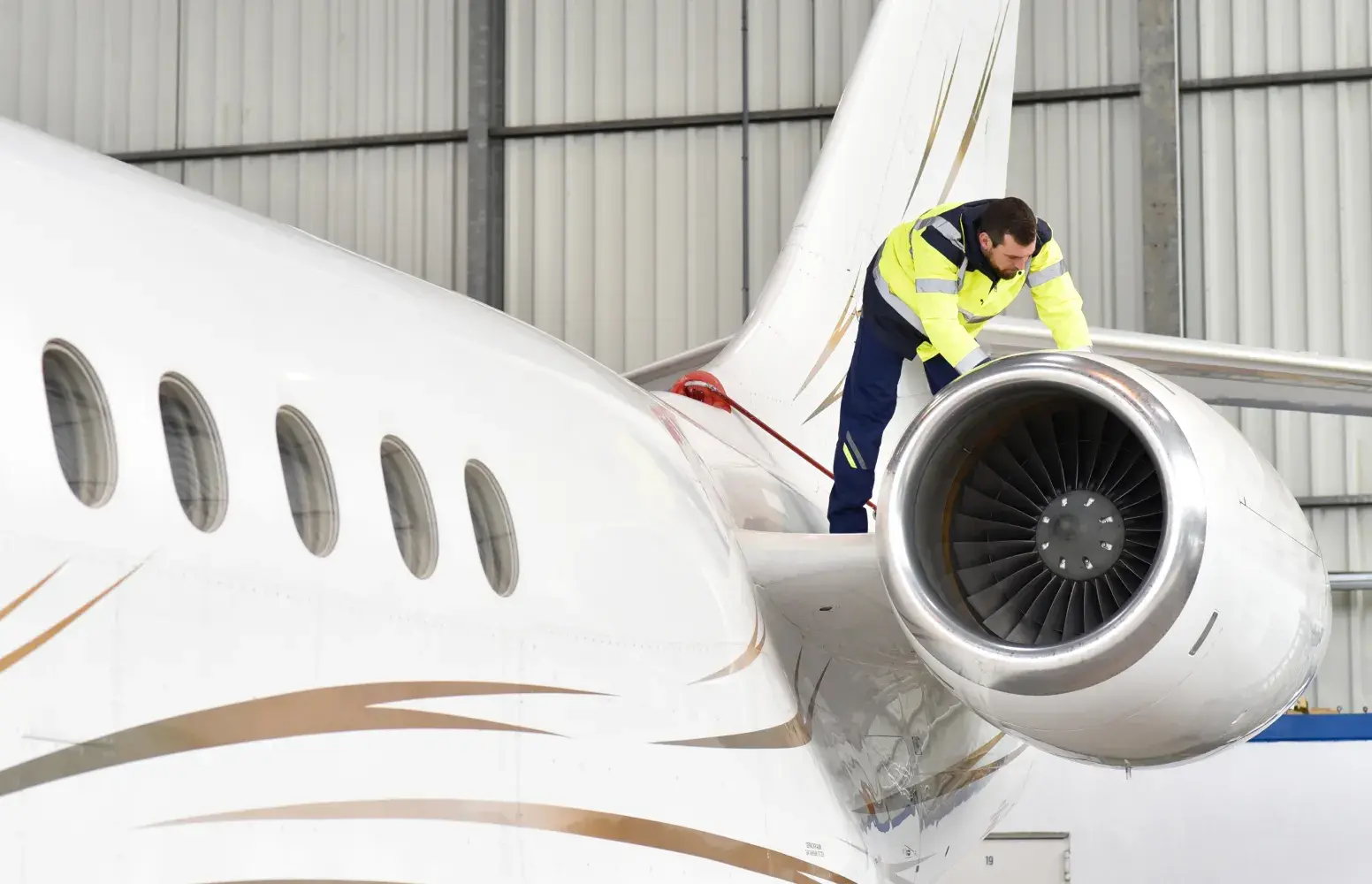
If you are a fresher looking to make a career as an aircraft maintenance technician or an AMT, then now is the right time to get ready for the job interviews. Aircraft maintenance technology is rapidly progressing, increasing the demand for skilled AMTs who can take care of the expanding aircraft fleet. The career provides excellent job security, a high pay package, and the chance to work hands-on with advanced technology. If you are preparing for your next job interview, here’s a list of the most-asked aircraft maintenance technician interview questions.
1. What do you understand about the role of an Aircraft Maintenance Technician?
Among the various aircraft maintenance technician interview questions, this will generally be the first one to be asked. With this question, recruiters want to know if you truly understand the role of an AMT. They are assessing if you have a thorough understanding of the responsibilities of the role you are applying for. While you may not have hands-on experience as a fresher, you must demonstrate an awareness of safety, inspections, troubleshooting, and regulatory compliance. This will help you gain a competitive advantage.
How can freshers answer this:
Start by explaining the essential responsibility of an AMT, which is inspecting, maintaining, repairing, and ensuring the airworthiness of aircraft systems. You can also highlight the other areas of responsibility, such as diagnosing mechanical or electrical issues and adhering to aviation safety standards. The role of an AMT requires teamwork, precision, and a focus on following the correct manuals and procedures. While you answer these questions, don’t forget to connect your training or coursework to the role.

Posted 4 days ago

 Verified

Posted 5 days ago
Verified


Posted 8 days ago
Posted 12 days ago
Posted 12 days ago

2. Why do you want to become an Aircraft Maintenance Technician?
While the first question attempted to understand your understanding of the role, aircraft maintenance technician interview questions like this one help recruiters understand your motivation and passion for the field. This is because the role of an AMT is often dynamic and includes high responsibility, irregular hours, and strict safety standards. Employers look for candidates who are genuinely interested in the role and will be committed to the long-term.
How can freshers answer this:
Start by talking about what interested you in aviation and how that interest evolved into a desire to work in a technical, hands-on environment. This is where you can mention relevant education, certifications, or training that further position you to enter this line of work. It is important to emphasize your safety mindset, focus on problem-solving, and interest in working with advanced technology. Avoid generic answers; instead, connect your personal journey or experiences to your career choice.
3. What safety precautions should be followed during aircraft maintenance?
Some aircraft maintenance technician interview questions, like this one, are asked by recruiters to gauge how adept you are at following safety protocols. Safety procedures are integral to success in the aviation field. When even a small mistake can have a serious, transcendent impact on aircraft safety, recruiters look for candidates with a strong awareness and attitude towards safety.
How can freshers answer this:
You can answer by highlighting the key precautions an AMT is supposed to follow, such as following maintenance manuals, wearing proper personal protective equipment (PPE), ensuring tools are accounted for, and maintaining a clean work environment. Don’t forget to mention lockout/tagout procedures, proper handling of hazardous materials, and double-checking work before completion. It is also important to let your interviewers know that, while you are a fresher, you understand the importance of communication and teamwork in this line of work.
4. How would you handle a situation where you made a mistake during maintenance?
It is only human to err. Aircraft maintenance technician interview questions like this one help recruiters understand your views on honesty, accountability, and problem-solving. While the aviation industry is highly regulated and safety-centric, there are always areas where one can make a mistake. What is important is to own up to the responsibility and act quickly to prevent further issues.
How can freshers answer this:
You must highlight how anyone is prone to making mistakes. The key, however, is to report them immediately. You can talk about a situation where, if you make a mistake, the first thing you will do is inform your supervisor, follow proper procedures to correct the issue, and ensure safety is not compromised. Your answer should highlight how such mistakes can offer new learning opportunities. Additionally, avoid saying you never make mistakes, as that sounds unrealistic.
5. What do you know about aviation regulations and authorities?
Aviation regulations and authorities, such as the FAA, EASA, and DGCA, play a crucial role in ensuring the safety and efficiency of global air transport. Aircraft maintenance technician interview questions like this one help recruiters understand how aware you are of regulations and whether you understand their importance in keeping the global aviation industry running smoothly.
How can freshers answer this:
All professionals, both experienced and freshers, need to know about aviation rules and the authorities that set them in motion. Your answer should tell recruiters about the different aviation authorities. You should also talk about a few examples of regulations in areas such as aircraft maintenance, safety, and certification. It will also be beneficial to talk about why these regulations must be followed and how they ensure aircraft airworthiness. While no one expects you to know everything, you must demonstrate respect for rules and procedures.
6. How do you stay updated with new aviation technologies?
Considering the rapid evolution of the aviation industry, some aircraft maintenance technician interview questions will be directed at judging whether you make it a point to stay updated with the current developments in the field. By asking this question, recruiters want to evaluate if you are proactive about updating your knowledge.
How can freshers answer this:
Start by mentioning the type of content you consume related to this field, such as aviation blogs, industry news, workshops, and learning from mentors. As continuous learning is always valued, you can highlight any online courses or training programs you have undertaken. It is important to show that your commitment to learning is for the long-term and that you want to be consistent throughout this endeavour.
7. How do you approach troubleshooting an intermittent fault in an aircraft system?
Some aircraft maintenance technician interview questions will move away from the basics and try to assess your knowledge about aircraft maintenance. Take intermittent faults, for instance. These are one of the most challenging issues in aircraft maintenance, as they are not consistently reproducible. Recruiters often point towards this question to evaluate your logical thinking skills and patience. While you don’t have any experience, such a question helps recruiters understand if you are capable of following a structured diagnostic process.
How can freshers answer this:
Start by explaining what these faults are and how they require a methodical and evidence-based approach to solve. Your answer should highlight a structure, starting with pattern identification, which you do after reviewing maintenance logs, pilot reports, and previous defect history. Then comes visual inspection, where you will check connectors, wiring, and components prone to wear or vibration-related issues. Focus on highlighting how you will only use approved diagnostic tools for the issue. End your answer by emphasizing the importance of documentation. You can also stress the need to stay patient while adhering to safety procedures.
8. How do human factors influence aircraft maintenance, and how can errors be minimized?
Human factors are a major cause of maintenance errors. This means at least one of the aircraft maintenance technician interview questions will revolve around it. Recruiters want to know if you understand the major causes, such as fatigue, stress, communication gaps, and environmental conditions, and their impact on aircraft performance. Besides an awareness of human factors, this question is also directed at judging your maturity, safety awareness, and ability to work responsibly.
How can freshers answer this:
Knowing about human factors can genuinely set you apart as a candidate and get you one of the many aircraft maintenance technician jobs. This is because understanding aviation is not just about technical skills; it is also about the interaction of humans with machines, systems, and environments. Explain the different types of human factors, such as physical and psychological conditions, that impact performance. It is also important to tell the recruiter how simple steps can help avoid these, such as taking adequate rest and adhering to standard procedures. Highlight that being aware of human limitations helps prevent mistakes.
Enjoying the article?
Follow us and never miss an update on the aviation industry.
Conclusion
Did you know that by 2034, 416,000 new technicians, including AMTs, will be required to replace an aging workforce and meet the high demand? While new technological advancements such as AI and predictive maintenance have changed the field, it has not reduced the need for skilled AMTs.
Aspiring AMTs who want to enter this domain must understand that the role is transforming towards digital proficiency. It requires a skill set evolution where there is a bigger emphasis on learning new technologies like augmented reality (AR), 3D printing, and advanced composite material repair. To get a deeper understanding of the field, check out Aliasger Harneswala’s journey to becoming an aircraft maintenance technician.