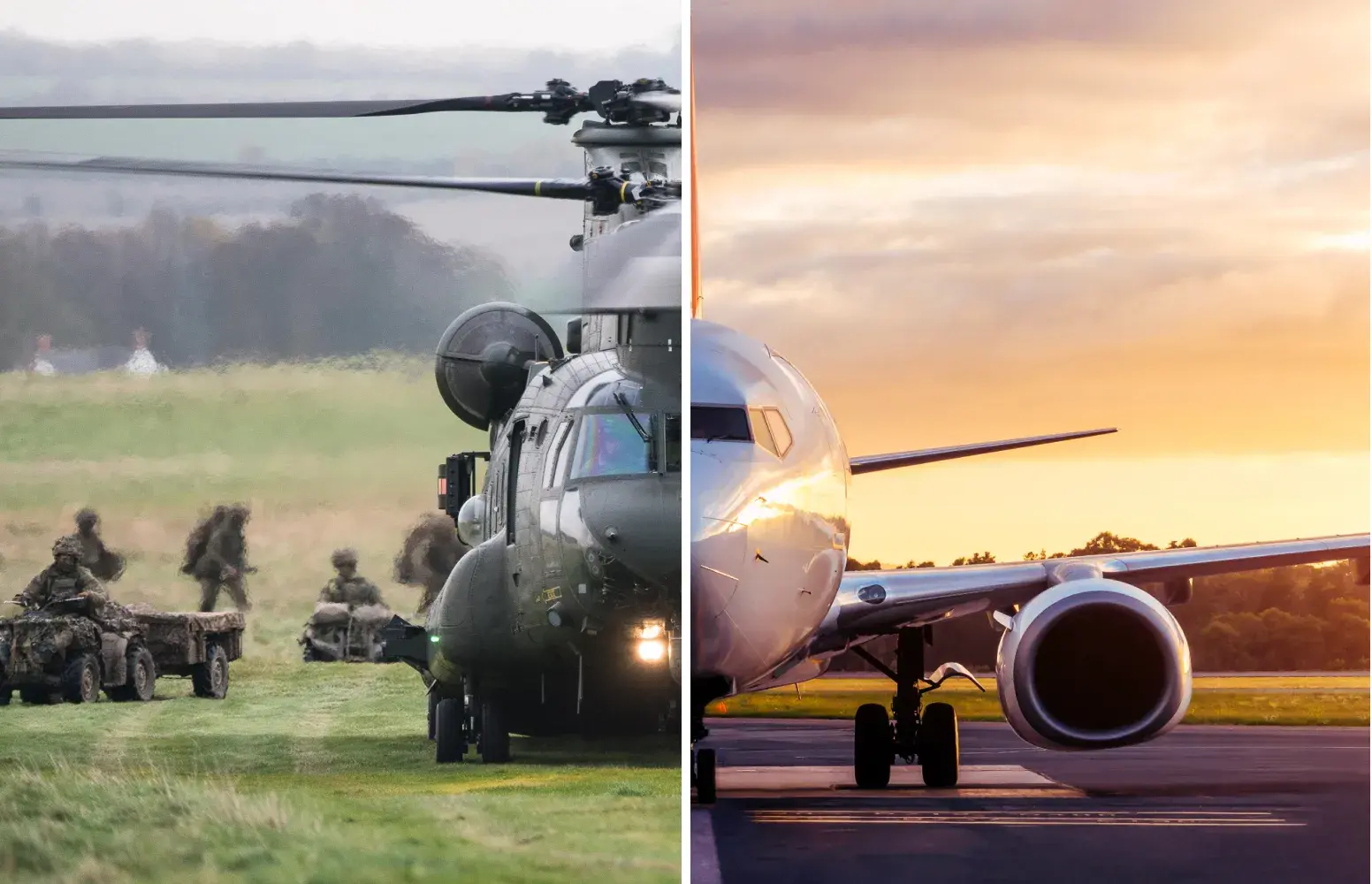
Many military helicopter pilots seek a move away from their current roles and enter the field of commercial aviation. They dream of building on their current skill set while exploring a new career path. The transition from military helicopter pilot to airline pilot can open doors to passenger aviation. However, such a move also involves more than a change in the cockpit.
A transition from military helicopter pilot to airline pilot requires civilian licenses, completing fixed-wing training, and meeting the requirements of their target airlines. On the positive side, the experience gained from their military career can provide a strong foundation for this change.
This guide explains the key steps, challenges, and opportunities involved in making the transition.
Can a Military Helicopter Pilot Become an Airline Pilot?
Yes, professionals can go from being a military helicopter pilot to airline pilot. The process, however, involves several areas. The main challenge is that military helicopter experience does not automatically qualify a pilot to fly commercially.
Despite their strong background, they will need to obtain the appropriate civilian licenses, complete airplane training, and meet the required instrument requirements. Airline assessments and aircraft-specific training might also be part of the selection process.
The exact pathway depends on the pilot’s existing qualifications and the regulations of their target aviation authority. With careful planning, going from being a pilot in rotary wing to airline pilot is possible.

Posted 2 days ago

 Verified
Posted 2 days ago
Verified

Posted 3 days ago
Verified
Posted 3 days ago
Verified
Step-by-Step Roadmap to Become an Airline Pilot
For pilots in rotary wing to airline pilot, professionals need to build on existing aviation experience while meeting civilian requirements. The following steps provide a practical starting point.
Step 1: Military Qualifications and Flight Experience
The first step to going from military helicopter pilot to airline pilot is a review. Go through your military flying records and identify qualifications that a relevant civil aviation authority will recognize. It is also crucial to gather details such as flight hours, pilot-in-command experience, instrument time, night flying, multi-crew operations, and aircraft types flown.
This review will help you understand where you are and what still needs to be done. While a military background provides strong operational experience, civilian licensing requirements will be the big hurdle to cover.
Step 2: Civilian Pilot License
The next step to transitioning from a pilot of military helicopter to airline pilot is obtaining civilian licenses. This may involve obtaining or converting a commercial pilot license, instrument rating, and other relevant qualifications.
Each aviation authority, depending on the country, has its own set of rules. So it is important to confirm the requirements before enrolling in training.
Step 3: The Transition
One of the most crucial parts of the transition from a pilot of military helicopter to airline pilot is learning to fly airplanes. While helicopter flying provides valuable aviation experience, a fixed-wing aircraft is designed differently. It has different aerodynamics, handling characteristics, performance, and operating procedures.
You might require airplane flight training, instrument training, multi-engine experience, and preparation for commercial operations.
Step 4: Flight Experience
Airlines assess a pilot’s total flight hours. Other areas of consideration include pilot-in-command time, instrument experience, multi-engine flying, multi-crew operations, and experience relevant to the aircraft or role.
When preparing for transition from military helicopter pilot to airline pilot, professionals should review the requirements of their target airlines. Ultimately, your experience must be both substantial and relevant to the airline position you are pursuing.
Step 5: Airline-Specific Training and Assessments
The next step in your transition from a military helicopter pilot to airline pilot is meeting the licensing and experience requirements. Airline recruitment might also include aptitude tests, technical interviews, simulator assessments, HR interviews, and other evaluations.
After selection, you will be required to complete airline induction, aircraft-specific training and, where applicable, a type rating. At this stage, you will also get to learn an airline’s safety standards, crew coordination practices, and commercial flight environment.
How Military Skills Transfer to an Airline Cockpit
Transitioning from military helicopter pilot to airline pilot is not just about the licenses and qualifications. In fact, there are many skills that airlines look for while interviewing candidates. This is where your background in military flying comes into the picture.
- Decision-making under pressure: Military helicopter pilots are trained to act quickly, evaluate risks, and make sound decisions. This ability comes in handy in a commercial airline setting as well, especially during weather changes, technical issues, and operational disruptions.
- Crew resource management: Being a military helicopter pilot means consistently coordinating with other pilots, crew members, and ground teams. In an airline setting, these skills become valuable.
- Discipline and SOP compliance: The military places a strong emphasis on adherence to established procedures. Airlines similarly rely on standard operating procedures (SOPs) to promote consistency and safety.
- Leadership and communication: Military helicopter pilots are trained in leading teams and communicating under pressure. These skills can help support the transition from a pilot of military helicopter to airline pilot.
Challenges of the Transition
Transitioning from military helicopter pilot to airline pilot can be rewarding, but it is not without its challenges.
The shift from a pilot of rotary wing to airline pilot can lead even experienced pilots to seek additional airplane training. This can help them get acquainted with a new type of aircraft handling, aerodynamics, instrument procedures, and multi-engine operations.
Civilian licensing requirements can also be complex for military helicopter pilots. Military flying hours may not be accepted by commercial airline companies. So, pilots may need to convert licenses, complete examinations, or undertake additional training. Another big challenge is adapting to civilian airline procedures. Airlines operate within highly standardised environments, with specific SOPs, documentation requirements, and commercial operating practices.
The airline recruitment process in itself can be overwhelming. Most airlines follow similar steps, including aptitude tests, technical interviews and simulator assessments. This requires a careful translation of one’s military experience to match the demands of commercial aviation. Understanding these differences early can help pilots plan their transition more effectively.
Career Progression as an Airline Pilot
Once you make the transition from military helicopter pilot to airline pilot, what does the career look like? Generally, the career trajectory follows a structured progression based on experience, performance, training, and the requirements of the airline.
Most former military helicopter pilots begin as a first officer. In this role, they support the airline captain with flight planning, aircraft operation, communication, and decision-making.
With flight experience and flying hours, they progress to senior first officer. Some may even be eligible to become captain. As a captain, the pilot assumes greater responsibility for the aircraft, passengers, crew, and overall safety of the flight.
Experienced pilots can also digress from the general route. They can move into specialized roles such as training captain, simulator instructor, or check pilot. In these roles, they help train and evaluate other flight crew. Some may eventually move into aviation management, flight operations, safety, or standards roles. Explore our blog to learn more about the job description of an airline pilot.
Frequently Asked Questions (FAQs)
1. Does military flight experience count toward airline pilot requirements?
Yes. Military flying experience can count towards civilian airline pilot requirements. But it does not transfer on a one-to-one basis. Aviation authorities have rules regarding how military flight hours and qualifications are recognised. While pilots might receive credit for certain types of flying experience, it might not satisfy requirements for fixed-wing airline operations.
2. Do military pilots need to complete flight school again?
It is not a mandatory requirement. This is because military helicopter pilots already have extensive flight training. However, they may need to complete additional civilian training, examinations, or license-conversion requirements. For helicopter pilots moving into airline aviation, fixed-wing training is particularly important.
3. Can military helicopter pilots become airline captains?
Yes. Many former military helicopter pilots have gone on to become airline captains. However, they must first meet the relevant civilian licensing, experience, training, and airline command requirements. Military experience provides key skills that can prove beneficial in a commercial aviation setting.
4. Is it easier for military pilots to become airline pilots?
Military helicopter pilots might have some advantage over other candidates. But the process is not necessarily easier. Military pilots may also have substantial flight experience and experience operating in complex environments. However, they still need to satisfy civilian aviation regulations and airline-specific requirements.
5. What civilian jobs can military helicopter pilots get?
The transition from military helicopter pilot to airline pilot is not the only transition for military pilots. Their experience makes them eligible for roles such as commercial helicopter pilot, EMS pilot, aerial survey pilot, offshore helicopter pilot, utility pilot, flight instructor, or corporate helicopter pilot. One can also look for non-flying roles, such as flight operations, aviation safety, training, crew management, or aviation management.
Enjoying the article?
Follow us and never miss an update on the aviation industry.
Conclusion
Transitioning from military helicopter pilot to airline pilot can be a rewarding way to build an established aviation career. Military pilots bring many valuable skills to their commercial aviation job. Consequently, it provides a strong foundation for success in a commercial cockpit.
Globally, airline pilot jobs are on the rise, thanks to growing demand for air travel and expansion of fleets by airlines. With more jobs than ever before, military helicopter pilots can successfully transition into airline careers.
The key is to identify the gaps between existing military qualifications and the requirements of the target airline. If you’re considering a career in commercial aviation, it’s also important to understand how airline and commercial pilot roles differ. Read our guide to airline pilot vs commercial pilot to learn more.