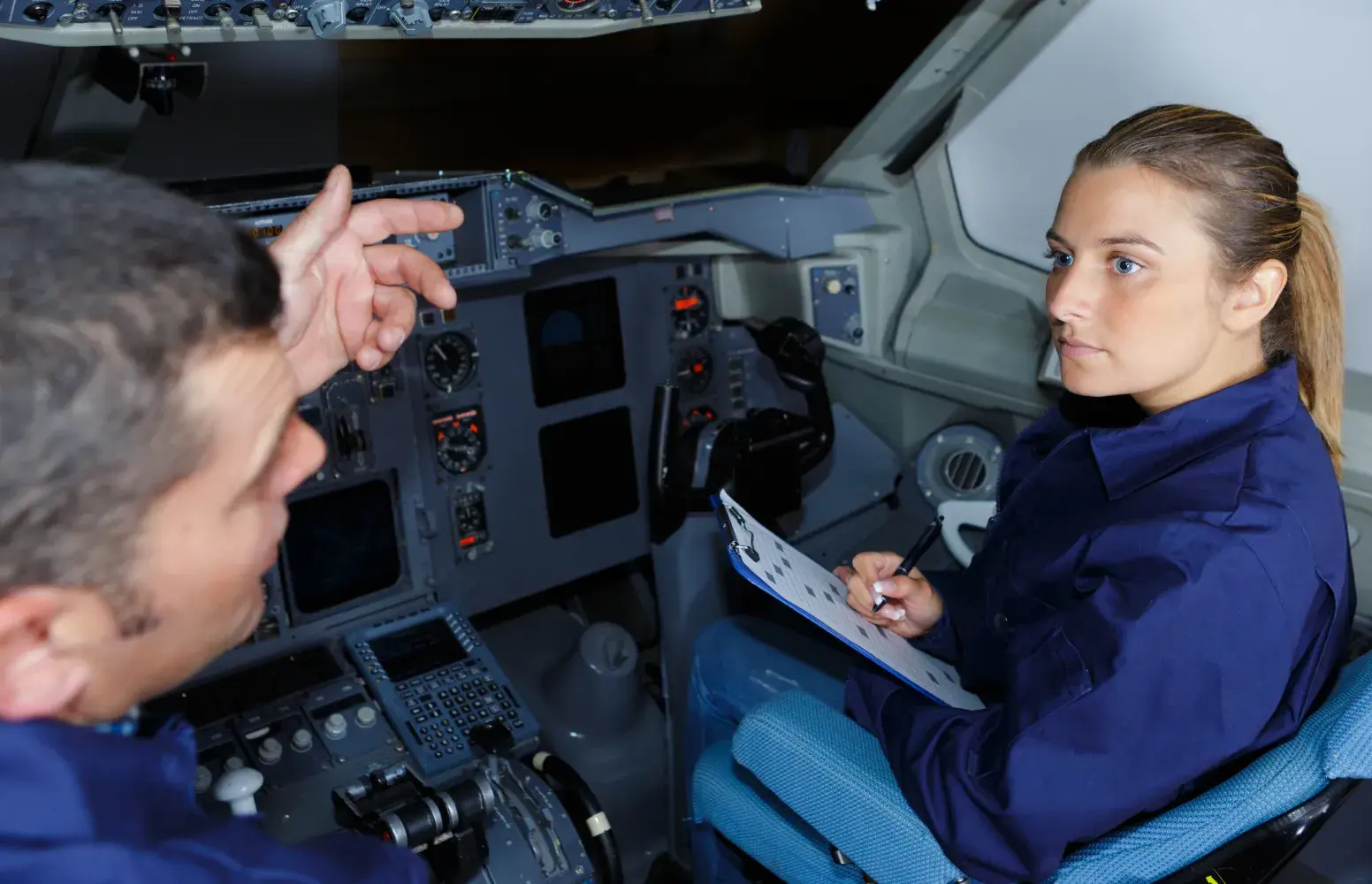
From commercial airlines to military jets and helicopters, every aircraft must undergo rigorous testing before it is certified for service. Behind the successful test flight is the flight test engineer, who is part of the team responsible for ensuring the aircraft performs safely. A flight test engineer plans test missions, monitors aircraft performance, analyses flight data, and works closely with test pilots to validate new aircraft. Aspiring professionals who want to take up this role must find out how to become a flight test engineer.
With the aerospace industry focusing on innovation and sustainability, the demand for qualified flight test engineers is steadily growing. This type of career is ideal for someone who can combine engineering expertise, analytical thinking, and a passion for aviation.
In this guide, you'll learn how to become a flight test engineer, including the qualifications you'll need, the step-by-step career path, essential skills, and salary expectations.
Step 1: Foundation in Science and Mathematics
The first step when learning how to become a flight test engineer begins long before university. In high school, it is important to focus on subjects such as mathematics, physics, chemistry, and computer science. This helps you build the foundation of aerodynamics, aircraft systems, and engineering principles.
As a flight test engineer, you will analyze performance, collect technical data, and solve complex engineering problems. STEM subjects inculcate strong analytical and problem-solving skills. Participating in STEM clubs, robotics competitions, coding projects, or aviation-related activities can further strengthen your technical aptitude.
Building these skills early prepares you for the rigorous academic and technical training ahead. Regardless of where you plan to work, a solid background in science and mathematics is one of the most important first steps in understanding how to become a flight test engineer.
Step 2: Engineering Degree
The next step to learning how to become a flight test engineer is to opt for an engineering degree in aerospace engineering, aeronautical engineering, mechanical engineering, avionics engineering, electrical engineering, or systems engineering. Choose an accredited engineering programme so your qualifications are recognised internationally and prepare you for advanced technical responsibilities.
The above-mentioned programs provide future engineers with a thorough understanding of complex subjects. These include aircraft structures, propulsion systems, flight mechanics, avionics, control systems, and data analysis. As you begin your degree, it is crucial to focus on subjects such as aerodynamics, aircraft performance, instrumentation, software systems, and structural analysis.
Along with theory, you will also have laboratory work, simulation projects, and industry placements that provide valuable practical experience. It is crucial to maintain strong academic performance, as flight test engineering jobs tend to be competitive. Employers look for candidates with an exceptional academic record.


Posted 10 days ago


Posted 10 days ago

Posted 118 days ago

Posted 119 days ago
Step 3: Practical Aviation Experience
The third step when learning how to become a flight test engineer is to gain hands-on industry experience. Most employers prefer candidates who have practical experience in areas like aircraft design, maintenance, systems integration, manufacturing, or aerospace research. This helps them confidently assign successful candidates to flight test programs.
During the practical part of your training, you will learn skills in different areas. These include troubleshooting, technical documentation, systems verification, quality assurance, and engineering analysis. Particularly beneficial are areas such as ground testing, instrumentation, and aircraft certification projects. You can pursue internships and graduate engineering programs to develop these technical skills.
Step 4: Expertise in Flight Testing and Data Analysis
The next step to learning how to become a flight test engineer is to have specialised knowledge that goes beyond general engineering principles. It is important to focus on developing expertise in advanced areas. These include flight testing methodologies, aircraft instrumentation, telemetry systems, flight data acquisition, and performance analysis.
In this role, one must also have experience with regulatory certification standards, risk assessments, and systems verification. Additionally, you must know how pilots interact with aircraft systems. This is crucial as flight test engineers work closely with the flight crew during the testing phases.
Step 5: Specialised Flight Test Certifications
The next step of learning how to become a flight test engineer is not mandatory but improves your employability. It is beneficial to complete recognised flight test courses. These are offered by military test schools, national aviation authorities, universities, or dedicated flight test training centres.
As part of the program, you will be taught multiple subjects. This includes flight test planning, aircraft stability and control, systems testing, certification requirements, safety management, data acquisition, and flight test reporting. Some also provide practical flight experience alongside experienced test pilots and engineers. This way, students understand real-world flight testing procedures.
Depending on the country, you can opt for additional certifications. Courses include systems engineering, project management, aviation safety, or data analysis. Certifications like this help employers know that you are focused on continuous improvement while maintaining technical excellence throughout your engineering career.
Step 6: Flight Test Engineer Roles
The next step to learning how to become a flight test engineer is to apply for flight test engineer positions. You will find multiple opportunities with aircraft manufacturers, aerospace research organisations, defence contractors, and government agencies.
You will be assessed on the following: engineering knowledge, technical problem-solving ability, and understanding of flight testing principles. Expect questions about aircraft systems, engineering calculations, and previous project experience. Here, it is crucial to demonstrate your familiarity with certification standards and flight test methodologies.
Another way to find your role is to network. Networking through aerospace conferences, engineering societies, and aviation industry events can unlock new opportunities. Remember, persistence is important considering the specialized field of flight test engineering.
Responsibilities of a Flight Test Engineer
After learning how to become a flight test engineer, it is also important to understand what the role demands. As a flight test engineer, you will be responsible for a range of tasks. While you do these duties, you will also work with test pilots, aerospace engineers, and certification authorities. Their work is essential in verifying that new aircraft, engines, avionics, and onboard systems meet regulatory requirements. Ultimately, flight test engineers play a critical role in bringing new aircraft and aviation technologies into service.
- Develop flight test plans by defining test objectives and parameters.
- Coordinate with test pilots and engineering teams to prepare aircraft for flight testing.
- Install and verify flight test instrumentation to accurately measure aircraft performance.
- Monitor aircraft systems during test flights and record critical operational data.
- Analyse flight test data to assess aircraft performance and system behaviour.
- Evaluate aircraft stability under different flight conditions.
- Identify technical issues and recommend engineering modifications when necessary.
- Prepare detailed technical reports documenting test results, findings, and recommendations.
- Ensure compliance with aviation regulations and certification standards.
- Conduct risk assessments and contribute to flight safety planning.
Essential Skills to Become a Flight Test Engineer
The next step to learning how to become a flight test engineer is to understand the essential skills that will help you be successful in this role. Flight test engineers work at the intersection of engineering, aviation, and data analysis. This means that the role requires a blend of technical expertise, analytical thinking, and strong interpersonal skills.
- Strong Engineering Knowledge: A thorough understanding of aerospace engineering is essential in this role. Additionally, one should have strong foundational knowledge of aircraft technicalities.
- Data Analysis Skills: Every flight test generates thousands of data points. In the role, one must be able to analyse this data and draw meaningful conclusions that improve aircraft performance and safety.
- Problem-Solving Ability: You will be required to quickly investigate technical problems and recommend improvements while ensuring testing remains safe.
- Attention to Detail: This type of engineer will be required to review test procedures, inspect instrumentation, monitor flight data, and document findings with precision.
- Communication Skills: The ability to convey information effectively is an important skill here. In this role, you will work closely with test pilots, aerospace engineers, maintenance technicians, project managers, and certification authorities.
- Teamwork and Collaboration: You must know how to coordinate with various departments throughout planning, execution, and post-flight analysis.
- Technical Writing and Documentation: In this role, you will be required to prepare test plans, operational procedures, data reports, and certification documents.
- Adaptability and Continuous Learning: Flight test engineers must continually update their technical knowledge through professional training, certifications, and industry experience to remain effective throughout their careers.
Enjoying the article?
Follow us and never miss an update on the aviation industry.
Conclusion
A career as a flight test engineer can be both exciting and rewarding. You get the chance to work at the forefront of aviation technology while shaping the performance of aircraft systems. In this role, you will play a vital role in bringing new aircraft from the drawing board to the skies.
Aerospace manufacturers will continue to develop next-generation commercial aircraft. As a result, we will see a growing demand for skilled candidates who will take flight test engineer jobs. As a career, it also pays well. Flight test engineers command an average salary of $95,000 to $141,000 per year. The compensation package goes up as one progresses in their role. The demand for skilled flight test engineers is expected to remain strong worldwide.
If you're looking for a challenging and impactful engineering career, becoming a flight test engineer could be the perfect path. Alternatively, if you are interested in operating and monitoring aircraft systems during flight rather than testing new aircraft, explore our guide on how to become a flight engineer.