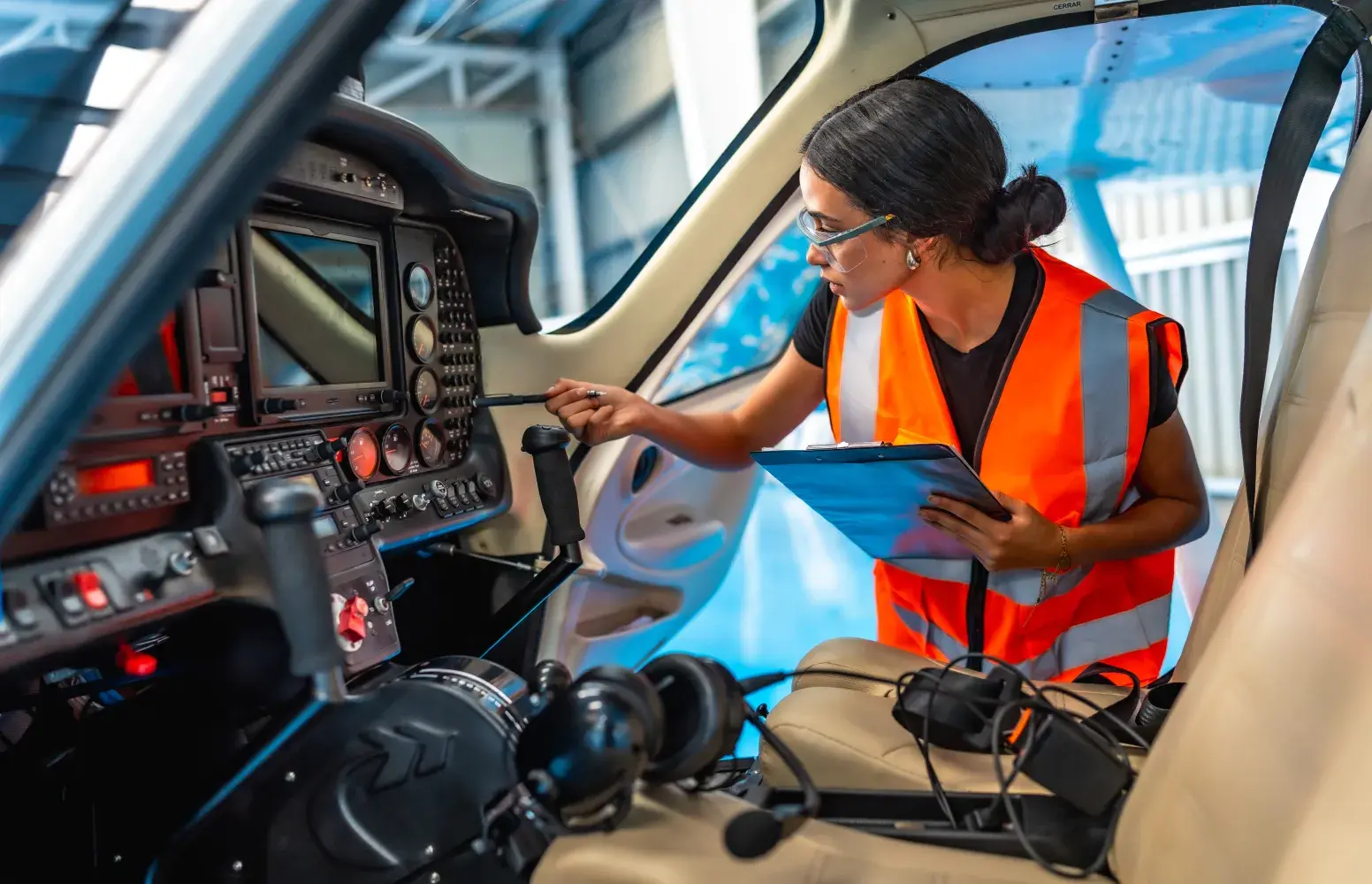
Becoming an avionics technician has never been as sought after as it has become now, thanks to the global air travel demand, which has increased the demand for skilled maintenance professionals. As an avionics technician, you will have the opportunity to work with modern electronic systems. In this line of work, you will ensure the proper functioning of all electronic and navigation systems of an aircraft. The job requires meticulousness, precision, and robust technological expertise. If you are an aspiring professional looking to enter this field, you must prepare for these avionics technician interview questions.
1. Tell me about your experience with avionics systems.
This is the first among the many avionics technician interview questions that the recruiter will ask you. So how can you make your answer impactful? Your answer should clearly summarize your hands-on experience, certifications, and the types of aircraft you have worked on. You must also mention your expertise in using troubleshooting tools, diagnostic software, and maintenance procedures.
An example from your past stint can help make your answer better. You can mention a project or task that you worked on where you identified and fixed the issue on time and efficiently. This will help employers understand that you have the technical skills and know how and when to apply them. Remember to connect your experience with your future organization’s operations, safety standards, and efficiency.

Posted 8 days ago

 Verified

Posted 12 days ago
Verified

Posted 12 days ago
Verified


Posted 19 days ago
Verified

Posted 28 days ago
Verified
Posted 28 days ago
Verified


Posted 3 days ago
2. How do you troubleshoot avionics equipment failures?
Avionics technician interview questions, such as this, help recruiters understand what your logical and systematic approach is. Since troubleshooting is a core responsibility in this field, recruiters look for candidates who follow a logical, methodical process instead of guessing. You can start your answer by first explaining your standard troubleshooting procedure. This can include reviewing system documentation, symptom analysis, and fault isolation.
You should also mention the different types of tools you use, such as multimeters, oscilloscopes, and built-in test equipment (BITE). You should also highlight how, irrespective of the step, you always focus on following all the necessary safety guidelines. While a structure is important, you must explain how the goal is to minimize downtime without compromising on safety.
3. What safety procedures do you follow when working on aircraft systems?
Considering the central role of safety in aviation, avionics technician interview questions like this one are asked to evaluate if you understand and consistently apply safety protocols. This question also wants to evaluate if you understand the consequences of your actions. So, what can you say to demonstrate a strong safety mindset?
Start by highlighting the importance of adhering to protocols laid down by aviation bodies like the FAA and EASA. This part can include discussions on lockout/tagout procedures, proper grounding, and the use of personal protective equipment (PPE). It will be beneficial to include an example that showcases how careful adherence to safety prevented an issue. Focus on explaining how safety is incomplete without consistent communication, especially during complex maintenance tasks. Also mention documenting work and double-checking systems before sign-off.
4. How do you stay updated with new avionics technology?
Avionics technician interview questions like this one are designed to evaluate if you focus on continuous learning, a cornerstone of success in the dynamic landscape of aviation. A question like this helps recruiters assess your curiosity, adaptability, and long-term value to the company. It is also a marker for recruiters to know if you will manage to transition to newer aircraft systems without supervision.
Your answer should highlight your proactive attitude towards learning. You can start the answer by mentioning training programs, workshops, or certifications that you have completed or are in the process of completing. You can also mention reading technical manuals, aviation publications, or manufacturer updates. If you are part of online learning platforms or forums, don’t forget to include those. Besides learning, you can highlight the topics that are of interest to you, such as digital avionics, GPS advancements, or integrated cockpit systems. This can show the recruiters that you can adapt to evolving technologies.
5. Describe a challenging avionics problem you solved.
Avionics technician interview questions like this are asked by recruiters to evaluate your real-world competencies and how well you are able to apply your theoretical knowledge to such scenarios. Avionics is a complex ecosystem where you will be required to handle complicated situations quite often. By asking such a question, recruiters want to understand your analytical skills, persistence, and decision-making process.
So, how can you proceed with an impactful answer? Use the STAR method (Situation, Task, Action, Result). Start by explaining the problem, perhaps a recurring system fault or unexpected failure. Proceed to the steps taken by you to diagnose the issue. Highlight any collaboration with team members that helped you speed up the process. Conclude with an outcome where you can include tangible results, like reduced downtime or improved system performance. While it is important to keep each section brief, you can also mention the tools used and procedures followed.
6. What tools and equipment are you familiar with?
Some avionics technician interview questions will attempt to gauge your hands-on capabilities. Tools are an essential part of this. Recruiters want to know whether you have had real-world experience of using the tools and not just theoretical knowledge. This helps them get candidates who can utilize such items with minimal supervision.
Start the answer by mentioning the common avionics tools known to every technician, such as multimeters, signal generators, oscilloscopes, and diagnostic software. Move over to the aircraft-specific proprietary tools you’ve worked with. Explain how that tool helped you to troubleshoot issues. If you do not have experience in this, you can highlight training exposure and your willingness to learn quickly. Ultimately, what is important is to keep a balanced answer, where you don't just list out the name of the tools but also explain your proficiency with them.
7. How do you handle working under pressure or tight deadlines?
Aircraft maintenance often operates under strict timelines, especially in commercial aviation. Avionics technician interview questions, such as this, help recruiters understand your temperament in high-stakes situations. During emergencies, it becomes twice as important to remain calm and not rush things carelessly. Recruiters look for candidates who can manage doing this while balancing speed with accuracy.
You can start your answer by explaining the time-sensitive nature of tasks in aviation, which requires one to stay calm and focused. You need to show recruiters that you prioritize tasks based on urgency and safety. Emphasize that you never compromise safety or quality, even under pressure. You can do this by providing an example where you completed a task within the deadline without compromising on safety standards. What matters is to show the recruiter that you understand the balance between speed and accuracy.
8. Why do you want to work as an avionics technician with our company?
Avionics technician interview questions like this help recruiters evaluate your motivation and seriousness about the role. In any role, you must research the company and the role, so that your responses are tailored to that company’s unique needs. Roles like avionics technician demand the same diligence. Such questions also help them evaluate cultural fit and long-term potential.
Your answer should highlight your motivation and research. Show that you understand where the company stands, its reputation, aircraft fleet, and operations. You have to highlight how your specific skills complement what the company is undertaking. Highlight what you can contribute, such as reliability, technical expertise, or willingness to learn. While you can tailor your answer, it is always beneficial that your answer reflects genuineness.
Enjoying the article?
Follow us and never miss an update on the aviation industry.
Conclusion
Considering the evolving nature of the industry, what does the future hold for avionics technicians? Analysts see a strong future with 5% employment growth projected from 2024 to 2034. Factors such as aging aircraft fleets and more retirements are fueling the need for skilled professionals to take up the many avionics technician jobs.
In the coming years, the role of avionics technicians will become even more critical to aircraft maintenance. This is because avionics is a specialized field that requires highly skilled professionals. Considering the technical shift overtaking the industry, we will see an increasing reliance on avionics over traditional mechanical systems. For aspiring professionals looking to enter this field, having a clear understanding of the role is essential. Check out our blog on what an avionics technician does to learn more.
The future looks bright for those who enjoy solving complex problems and have a passion for aviation. You get to work for major airlines and component repair shops. aerospace manufacturers, and also military roles. Now is the time to skill up and start preparing for the upcoming interviews.