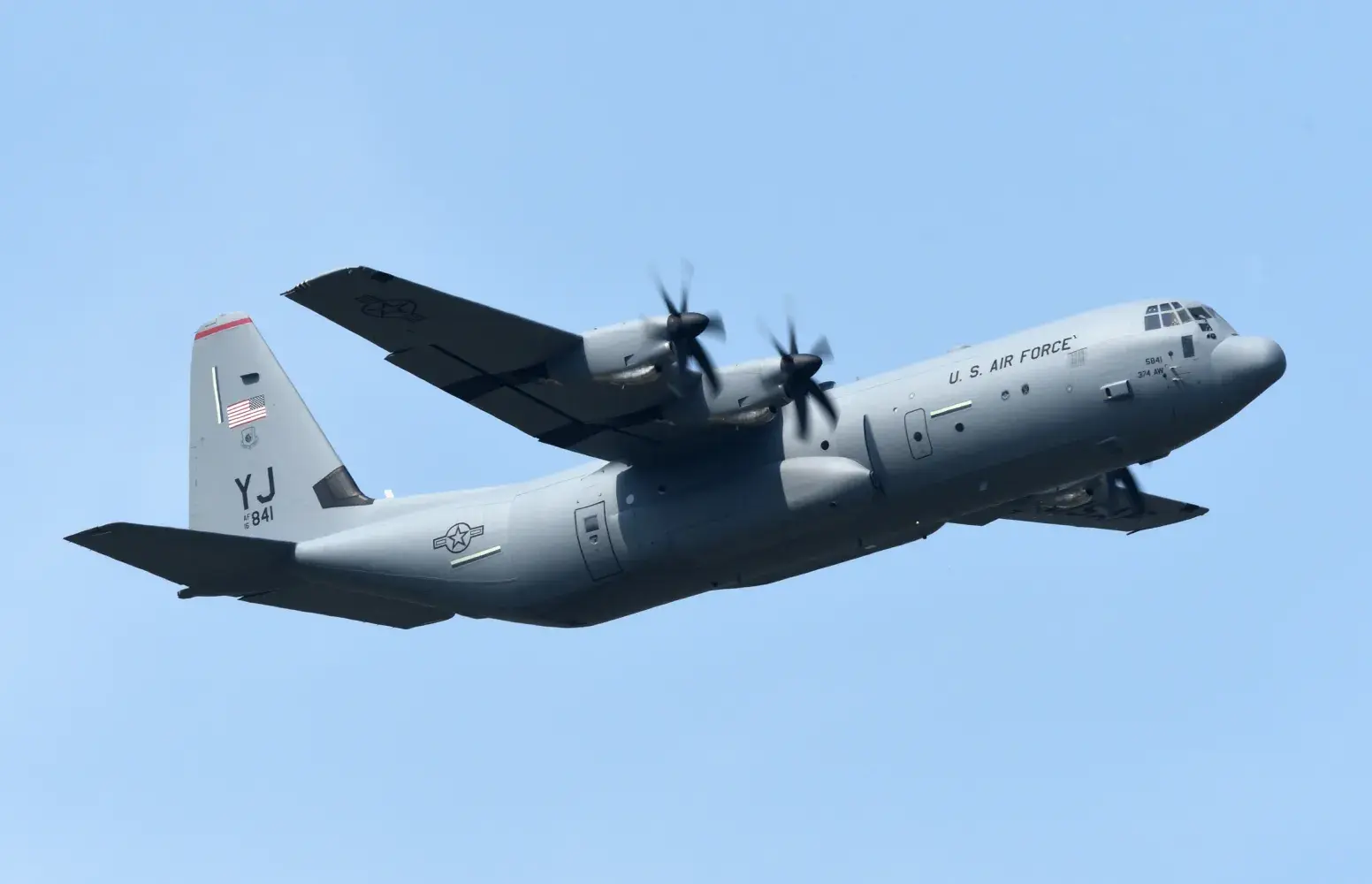
Did you know that the Russian Air Force possesses the second-largest overall inventory with a TVR of 114.2? TruVal Rating, or TVR, is a proprietary scoring formula used to assess and rank the combat effectiveness of global air powers. The air forces of the world have come a long way from the early days of using observation balloons and airplanes during conflicts. Today, a country’s air force provides air superiority, rapid response capabilities, and strategic advantages in both peacetime and conflict scenarios. Some of the strongest air forces in the world are critical to their home country’s military capability, influencing both defense strategies and international relations.
This comprehensive guide will delve into the world's strongest air forces based on their combat power, highlighting their unique strengths and contributions to global security, and what sets them apart.
1. United States
The United States Air Force is widely regarded as the most powerful air force in the world, possessing over 5,000 active aircraft and unmatched global reach. It operates an extensive fleet comprising advanced fighters, bombers, transport aircraft, surveillance platforms, and aerial refueling tankers. Some of the most notable names include the F-22 Raptor, F-35A Lightning II, F-15EX Eagle II, F-16 Fighting Falcon, and A-10 Thunderbolt II.
As one of the strongest air forces in the world, the US Air Force has heavily focused on consistently improving its airpower. The upcoming B-21 Raider represents the next generation of stealth bombers. As one of the strongest air forces out there, the US Air Force has also played a crucial role in conflicts, including the Gulf War, Afghanistan, Iraq, and NATO operations worldwide. It also operates one of the world's largest fleets of aerial tankers and military satellites, enabling global power projection.
2. Russia
The second most powerful air force in the world is Russia’s Aerospace Forces (VKS), which combines the country's air force, air defense, and space operations into a single military branch. VKS has somewhere around 3,000 to 4,000 aircraft with advanced fighter jets such as the Su-35S, Su-30SM, Su-57 Felon, MiG-31BM, and MiG-29, alongside strike aircraft like the Su-34 Fullback and Su-25 Frogfoot. It also possesses long-range bombers like the Tu-160 Blackjack, Tu-95 Bear, and Tu-22M3 Backfire.
As one of the strongest air forces in the world, the VKS is known for operating some of the world's fastest combat aircraft, particularly the MiG-31 interceptor. Being one of the strongest air forces out there, it has also developed an integrated air defence network, with systems such as the S-400 and S-500, giving the country one of the strongest aerial defence forces globally.

Posted 21 days ago
3. China
The third most powerful air force in the world is China’s People's Liberation Army Air Force (PLAAF). Since its establishment, the PLAAF has undergone tremendous modernization and is now among the world's largest air forces, operating more than 3,300 aircraft. Its indigenous fleet includes J-20 Mighty Dragon stealth fighter, J-16, J-10C, and J-11, while also operating strategic bombers like the H-6K.
As one of the strongest air forces in the world, the PLAAF has focused on developing its power by focusing on advanced technologies, including artificial intelligence, electronic warfare, hypersonic weapons, and unmanned aerial systems. It regularly conducts large-scale exercises around the Taiwan Strait and the South China Sea to demonstrate its operational readiness. As one of the strongest air forces out there, the PLAAF’s most notable achievement is the development of the J-20, which is a fifth-generation stealth fighter developed domestically.
4. India
The fourth most powerful air force in the world is the Indian Air Force (IAF). The IAF operates around 2,200 aircraft and maintains a balanced fleet of multirole fighters, transport aircraft, helicopters, and surveillance platforms. The notable names in combat aircraft include the Rafale, Su-30MKI, Tejas Light Combat Aircraft, MiG-29UPG, Mirage 2000, and Jaguar strike aircraft. Heavy transport duties are handled by the C-17 Globemaster III, C-130J Super Hercules, and IL-76, while the Apache AH-64E and Chinook CH-47F strengthen its rotary-wing capabilities.
As one of the strongest air forces in the world, the IAF has played quite a decisive role in many of the wars, including the 1965, 1971, and Kargil Wars. As one of the strongest air forces out there, the IAF also conducts multinational air exercises, such as Exercise Tarang Shakti, alongside partners such as the United States, France, Australia, and Japan.
5. Japan
The fifth most powerful air force in the world is Japan’s Air Self-Defense Force (JASDF). It is one of the most technologically advanced air forces in Asia, operating around 700 to 750 active aircraft. While smaller in number, the JASDF focuses on quality, readiness, and rapid response. As one of the strongest air forces out there, the JASDF’s fleet includes the F-35A Lightning II, F-35B, F-15J Eagle, F-2 multirole fighter, and E-767 AWACS.
As one of the world's strongest air forces, the JASDF also operates advanced aerial refueling tankers and maritime patrol aircraft. Japan’s air force is responsible for thousands of interception missions each year, responding to both foreign aircraft approaching Japanese airspace. Japan is also one of the first international operators of both F-35A and F-35B variants, enhancing its ability to defend remote islands and operate from modified aircraft carriers.
6. Israel
The sixth most powerful air force in the world is the Israeli Air Force, with a fleet of 600 active aircraft. The air force of the country is considered one of the most effective combat air forces in the world, possessing aircraft such as F-35I Adir, F-15I Ra'am, F-16I Sufa, and upgraded transport and intelligence aircraft. As one of the strongest air forces globally, the Israeli Air Force has earned a formidable reputation.
The Israeli Air Force features in the list of the world's strongest air forces because of its focus on rapid decision-making, high pilot proficiency, and intelligence-driven missions. The country's integration of air power with missile defense systems like Iron Dome, David's Sling, and Arrow has also created a highly effective layered defense network. Notably, Israel was the first nation to use the F-35 Lightning II in actual combat operations.
7. France
The seventh powerful air force in the world is the French Air and Space Force, which operates 900–1,000 aircraft and is among Europe's strongest military aviation forces. Its fleet includes aircraft such as the Dassault Rafale, Mirage 2000 fighters, A400M Atlas transport aircraft, A330 MRTT Phénix aerial refueling tankers, and E-3F AWACS surveillance aircraft. As one of the strongest air forces globally, France also possesses an independent nuclear deterrent delivered by Rafale aircraft equipped with ASMP-A nuclear cruise missiles.
France features in the list of the world's strongest air forces because of its consistent focus on strengthening military space capabilities. In this direction, it has designed and produced many of its own advanced combat aircraft through Dassault Aviation.
Frequently Asked Questions (FAQs)
Q1. What constitutes a strong air force?
A powerful air force in the world is characterized by several key factors, including the size and diversity of its fleet, technological advancements, operational readiness, and the training and expertise of its personnel. A powerful air force in the world typically possesses a mix of fighter jets, bombers, transport aircraft, and support systems that can effectively conduct a wide range of missions, from air superiority to humanitarian assistance. Additionally, the ability to integrate advanced technologies, such as unmanned aerial vehicles (UAVs) and sophisticated weaponry, plays a crucial role in determining an Air Force's overall strength and effectiveness in modern warfare.
Q2. How important is the budget in determining the strength of an air force?
Budget is a significant factor in determining the strength of an air force. If we look at the powerful air force in the world, it invests heavily in advanced technology, maintains and upgrades its fleet, and provides comprehensive training for its personnel. Countries with larger defense budgets procure more sophisticated aircraft and support systems, ensuring that their air forces remain competitive on a global scale. Conversely, limited budgets may hinder modernization efforts and operational capabilities, impacting the overall effectiveness of the air force. Explore our blog to know more about air force pilot salaries.
Q3. Can smaller air forces be strong?
Smaller air forces can indeed be strong, particularly if they are well-trained, technologically advanced, and strategically focused. Countries with limited resources may prioritize specific capabilities, such as specialized aircraft or advanced training programs, to enhance their operational effectiveness. For instance, nations like Israel and Singapore maintain relatively small air forces but are known for their advanced technology and high levels of training, allowing them to project power and maintain air superiority despite their size.
Q4. How do air forces contribute to national security?
The strongest air forces contribute significantly to national security by providing air superiority, conducting surveillance, and supporting ground and naval operations. They play a crucial role in deterrence, helping to prevent conflicts by demonstrating their military capability. Additionally, air forces are often involved in humanitarian missions, disaster relief, and peacekeeping operations, further enhancing their role in domestic and international stability and security.
Q5. How does commercial aviation differ from military aviation?
The purpose of both is different. While commercial aviation focuses on transporting passengers and cargo safely, efficiently, and on schedule, military aviation looks at national defense, combat missions, surveillance, reconnaissance, and humanitarian operations. Consequently, the aircraft built also tends to be different. Military aircraft are built for speed, maneuverability, and mission effectiveness, while commercial aircraft are optimized for capacity, range, and economic performance. Explore the journey of this Air Europa Express captain and discover how his career has spanned both military and commercial aviation.
Q6. Are air force pilot jobs on the rise?
Yes, air force pilot jobs are generally on the rise, although the exact number varies by country. Many nations are expanding or modernizing their air forces in response to changing security challenges, leading to increased demand for qualified military pilots. Various factors have increased demand for skilled talents, such as a rising defence budget, heavy focus on fleet modernization and upgrades, growing geopolitical tensions, and expansion of unmanned operations. Additionally, many experienced military pilots retire or transition to commercial airlines, creating recruitment gaps that armed forces must fill.
Enjoying the article?
Follow us and never miss an update on the aviation industry.
Conclusion
The strongest air forces in the world are a testament to the importance of air power in modern warfare. They have evolved, incorporating advanced technologies and adapting to new challenges. As geopolitical tensions continue to shape the global landscape, the role of air forces in maintaining security and stability will only grow more critical. The powerful air force in the world, the USAF, serves as a benchmark for other nations seeking to develop their own air power capabilities. If you are looking at making a career in this field, explore our blog on how to become an air force pilot.
Rankings and assessments of the strongest air forces will always be subject to debate, given the evolving nature of military technology and international relations. However, the air forces listed here consistently demonstrate superior technology, strategic capability, and operational excellence. On the other hand, the largest air forces in the world are ranked according to their fleet sizes only, including officers and operational aircraft.
Whether you’re an aviation enthusiast or someone keen on understanding international defense dynamics, knowing about the world’s strongest air forces provides valuable insight into global military power.