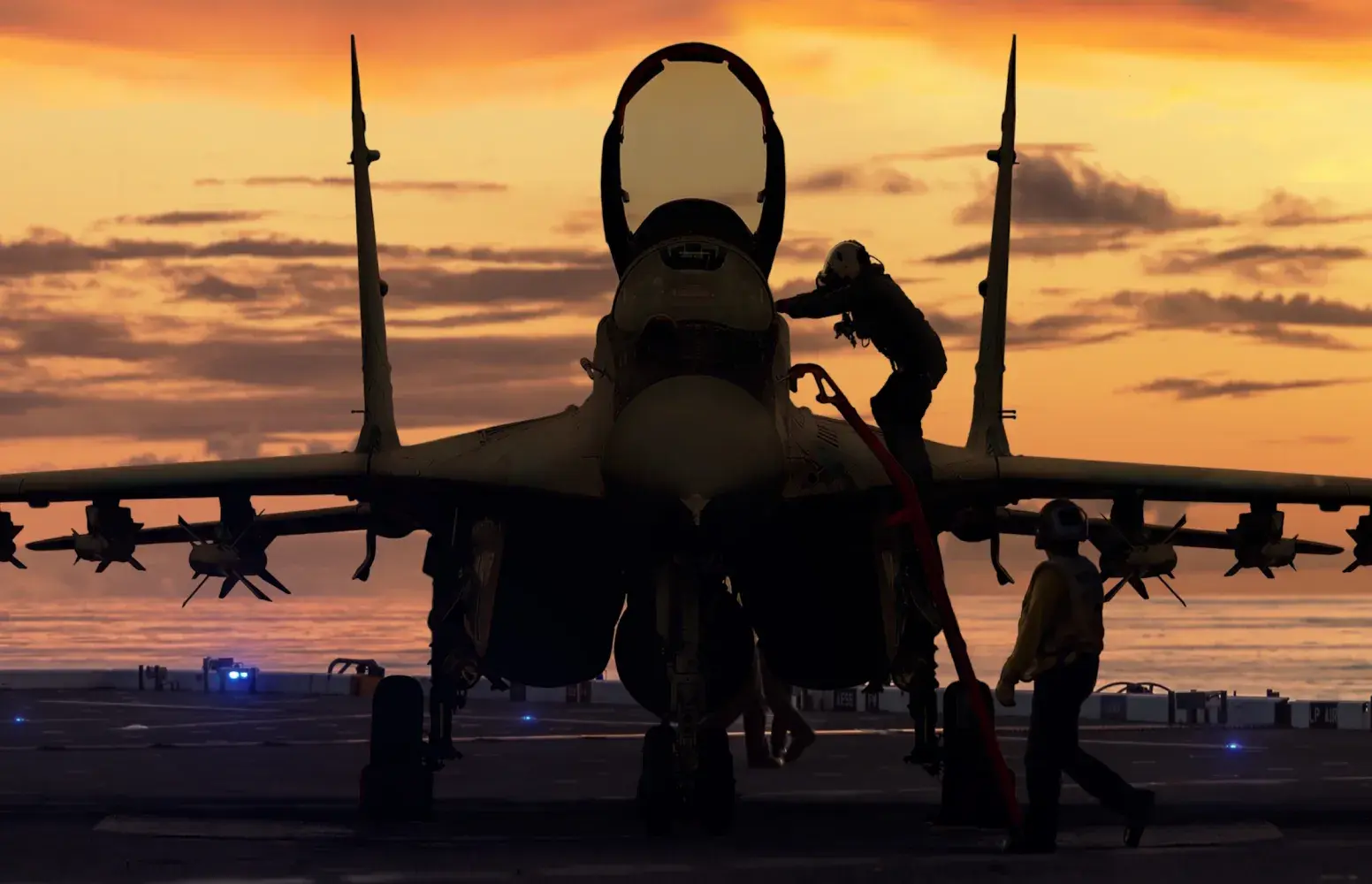
Becoming an air force pilot is a dream career for many aspiring aviators. The role offers an opportunity to fly the most advanced aircraft as you serve your country. Along with the prestige and responsibility of the role, the air force pilot salary is an important consideration for those exploring this career path.
The air force pilot salary, however, can vary significantly depending on various factors. This includes country, military rank, years of service, aircraft specialisation, and additional allowances. They may also receive benefits. This includes housing support, healthcare, retirement benefits, and flight-related incentives.
In this blog, we explore the combat pilot salary across different countries, the factors that influence earnings, and the qualifications required to pursue this career. Whether you are an aspiring military aviator or simply curious about the financial prospects of the profession, this guide will help you understand what to expect.
1. United Kingdom
The fighter pilot salary in the United Kingdom varies, depending on the training period. For cadets, the total compensation is roughly £27,200 to £35,900 ($36,165.80 to $47,733.54) per year. The air force pilot pay for a Flying Officer/Flight Lieutenant is £50,500 to £65,000 ($67,146.06 to $86,425.62) per year.
RAF pilots also receive other benefits. This includes tax-advantaged housing allowances, operational deployment bonuses, and comprehensive military medical cover.
To become an RAF pilot, you require a minimum of 5 GCSEs, alongside 2 A-Levels. A university degree, while not mandatory, can give you a competitive advantage. Training begins at the RAF College Cranwell.
2. India
The air force pilot pay in India is generally a fixed monthly stipend of ₹56,100 ($589.29) per month for flight cadets. The fighter pilot salary for a Flying Officer ranges from ₹14 lakhs to ₹18 lakhs ($14,705.91 to $18,907.60) per year.
The total pay includes the basic pay. Military service pay, flying allowance, and dearness allowance. This is generally complemented by free military housing, healthcare, and subsidized canteen facilities.
To enter the role of an IAF pilot, you will need a 10+2 qualification with Physics and Mathematics. Alternatively, you can also obtain a Bachelor’s Degree in Engineering or Science. Cadets complete rigorous training at the Air Force Academy, which is typically of one year.
3. United States
The average air force pilot in the United States is strictly tied to military rank, length of service, and flight status rather than commercial flight hours. The air force pilot pay for a starting 2nd Lieutenant is between $45,000 and $60,000 per year.
The air force pilot salary for a captain increases to $100,000 and $140,000 per year. Base pay is substantially boosted by non-taxable allowances for housing and subsistence, alongside specialized Aviation Incentive Pay and retention bonuses reaching up to $50,000 per year for experienced fighter pilots.
To join the US Air Force as a pilot, you must hold an accredited 4-year Bachelor’s Degree (STEM degrees preferred). You also need to pass the Air Force Officer Qualifying Test (AFOQT). Candidates commission through the Air Force Academy, ROTC, or Officer Training School before entering Undergraduate Pilot Training.
4. Germany
The air force pilot salary in Germany is fixed at €28,000 to €35,000 ($31,201.10 to $39,001.38) per year for trainee officers. The fighter pilot salary for junior officers is €50,000 to €65,000 ($55,716.25 to $72,431.13) per year, which includes the base salary plus flight allowances.
The air force pilot pay also includes civil service pension rights, comprehensive state-provided medical insurance, and specialized hazard allowances.
To become a pilot in the German air force, you must have the Abitur or higher education entrance qualification. Recruits enter as Officer Candidates and typically complete an accredited Bachelor's degree. While they do so, they also complete their officer training before undergoing specialized flight school.
5. Japan
The air force pilot pay is typically between ¥110,000 and ¥160,00 ($696.02 and $1,012.40) during academy training. Upon commissioning as a Second Lieutenant, the military pilot salary jumps significantly due to flight status bonuses. This brings the yearly compensation to between ¥5,500,000 and ¥7,500,000 ($34,807.26 and $47,464.45).
The fighter jet pilot salary is also boosted by state-provided housing, health insurance, and specialized hazard allowances.
To become a pilot in the JASDF, you must hold a High School Diploma or a Bachelor’s Degree from an accredited university. Selection includes rigorous screening and officer training at the National Defense Academy of Japan before heading to flight instruction school.
6. Canada
The military pilot salary factors in specialized flight pay stipends, remote location allowances, full medical coverage, and a government pension plan. The starting fighter jet pilot salary ranges from CAD 65,000 to CAD 80,000 ($46,493.52 to $57,222.80) per year for trainees and junior officers.
The Canadian Air Force pilot salary for captains significantly increases to CAD 106,000 to CAD 150,000 ($75,820.21 to $107,292.75) per year.
To become a pilot, you will require a Bachelor’s Degree, ideally in Science, Technology, Engineering, or Math. You must also qualify through the Regular Officer Training Plan (ROTP). It is ROTP that will pay your tuition.
7. South Korea
The fighter jet pilot salary in South Korea for junior commissioned officers ranges from ₩35,000,000 to ₩50,000,000 ($2,616.45 to $3,7377.89) per year. Once you become a Captain or Major, the average air force pilot salary rises to ₩65,000,000 to ₩95,000,000 ($48,591.26 to $71,017.99) or more a year.
There is high attrition to commercial domestic airlines like Korean Air. To curb this, the total military pilot salary also includes multi-year re-enlistment retention bonuses, full medical benefits, housing assistance, and pension benefits for long-serving officers.
To become an air force pilot, you must possess a High School Diploma if you want entry via the Republic of Korea Air Force Academy. You can also opt for Officer Candidate School, for which a Bachelor’s degree is required.
Candidate pilots undergo military officer preparation followed by basic, intermediate, and advanced flight training programs.
8. China
How much does an air force pilot make in China? The fighter pilot salary in China for a junior pilot is roughly between RMB 120,000 and RMB 180,000 ($18,001.67 to $27,002.50) per year. The compensation for experienced operational pilots is between RMB 250,000 and RMB 450,000 ($37,503.47 and $67,506.26) or more per year.
The overall compensation is heavily fortified by complete state provision of housing, meals, high-altitude/combat hazard stipends, subsidized family benefits, and early retirement privileges.
To enter the PLAAF as a pilot, you require a high school diploma. A university degree can give you an added advantage. Recruits attend PLAAF Aviation Universities for military officer and flight training.
A Global Overview
Here are 5 global insights on the combat pilot salary.
- Standardized Pay: Unlike the salary given to commercial pilots, the average air force pilot salary is tied to standard officer rank, grade, and length of service. This is true for almost all countries. This means that the combat pilot salary for a fighter jet pilot and a transport aircraft pilot of the same rank is similar.
- Allowances and Flight Pay: Looking at only base pay will paint you an incomplete picture. Most countries heavily supplement their air force pilots’ income with specialized incentive pay, such as Aviation Hazard/Flight Pay, housing stipends (BAH), ration allowances, and tax-exempt deployment bonuses.
- Global disparity: The air force pilot salary varies depending on a country's defense budget and cost of living.
- Retention Bonuses: Air force pilots are typically headhunted by commercial airlines. To counter this, many countries offer multi-year re-enlistment retention bonuses as part of the average air force pilot salary. This ranges from tens of thousands to hundreds of thousands of dollars.
- High Non-Salary Value: Air Force pilot packages globally carry high hidden value. This includes tax-free benefits, comprehensive healthcare for families, early pension eligibility, and zero out-of-pocket costs for advanced flight training.
Factors Affecting Overall Compensation
Several factors influence pilot compensation. You should note that you need citizenship of a country to join its Air Force or any other military division.
1. Rank and Experience
The rank and years of experience can greatly impact what one can earn. With each promotion, the salary gets higher. There are also other ways to increase your salary in the same role, such as by gaining more experience and adding more specialized skills.
The starting salary for Air Force pilots can vary depending on the country they serve. For instance, the USAF pilot salary is one of the most competitive salaries in the world.
Gaining experience is another way to increase a combat pilot salary. Senior Air Force pilots can have a significantly higher package. The high compensation showcases their specialized skills, leadership responsibilities, and years of experience.
2. Geographical Location
The geographical location of the job has a major effect on the overall pay package. For example, pilots get additional allowances in major cities and areas with a higher cost of living.
If you look at UK salaries, they reflect the importance of skilled personnel in maintaining national defense. Similarly, the Indian Air Force pilot salary shows the country's economic conditions and the demand for skilled personnel.
These benefits and allowances vary between regions but are vital additions to the base salary, significantly enhancing the overall pay during active deployments.
3. Career Growth Opportunities
Job security is one of the most attractive aspects of a military career. Advancement opportunities can result in higher salaries and better roles within the Air Force, like wing commander or squadron leader.
The military typically offers stability in employment with a clear path for growth. Explore our blog to learn more about how to become a pilot in the air force.
4. Family Status
Additional allowances and benefits are given to the pilot depending on their family status. This includes allowances for dependents. Pilots with dependents often receive allowances to help with raising a family, like childcare and housing.
There are also tax considerations. The taxation systems of Air Force pilot pay are often different depending on the family status. For instance, some allowances are tax-free, leading to huge savings for pilots with families.
5. Diversity Considerations
Addressing the gender pay gap and promoting diversity are critical areas within many air forces worldwide. There are many prevailing efforts to ensure equitable opportunities and pay regardless of gender.
Programs aimed at increasing diversity within the pilot ranks are becoming more dominant, aiming for an inclusive environment for all aspiring pilots. While there is progress, the commitment to gender diversity and parity continues to grow. Explore our blog to know the core differences between an air force pilot and a navy pilot.
Enjoying the article?
Follow us and never miss an update on the aviation industry.
Summing it Up
We looked at the question: how much does a fighter pilot make? This is one of the most important research items to complete as you look at how to become one. Joining the air force offers an exciting opportunity to those who want to serve their nation. Becoming a pilot is particularly rewarding for those passionate about aviation, advanced aircraft, and challenging missions. The role also helps in developing leadership skills. While salaries vary by country, rank, experience, and allowances, the role offers both financial and professional rewards.
While new technologies, like drones and AI, are impacting what one can earn, they have in no way stopped the rise of pilot jobs. Changes in defense budgets, geopolitical tensions, and alliances are also playing an important role in deciding the demand and compensation for air force pilots.
Looking ahead, the outlook will depend on each country's defence priorities, recruitment needs, and investment in modern aircraft and aviation technology. While these will lead to a renewed demand for qualified candidates, the selection process will remain highly competitive. If you want to learn more about the world’s largest air forces, then explore our blog to discover the largest air forces in the world.