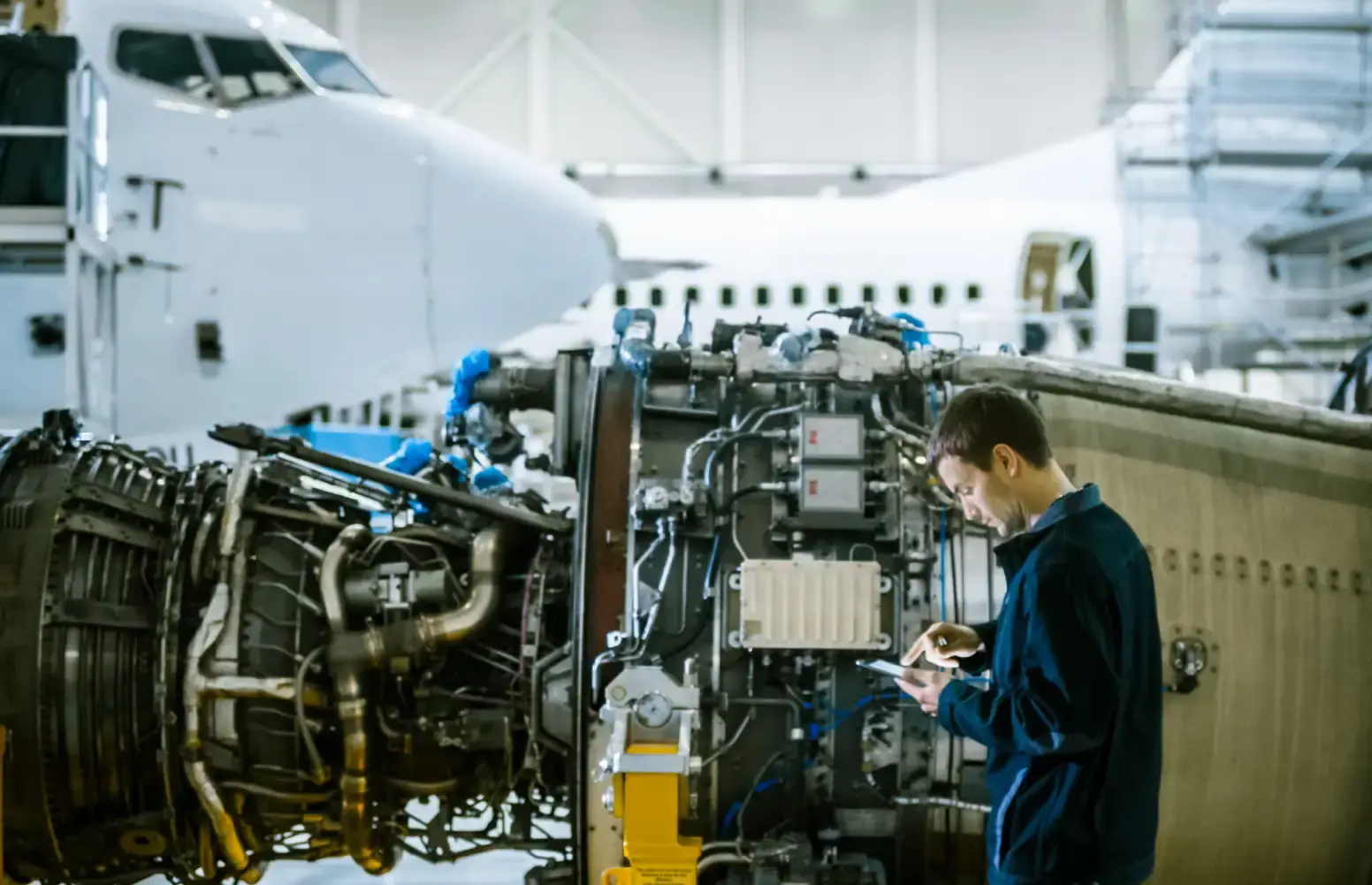
If you have plans of joining the aviation industry, a career path as a B1 or B2 licensed aircraft engineer can be a rewarding experience. The role combines aviation, technology, and aircraft maintenance seamlessly into one package. It is a type of role that demands highly-skilled individuals to be part of it, and who will play a crucial role in ensuring aircraft remain safe, efficient, and airworthy. Both these lines of work have a different focus. While a B1 engineer works on mechanical systems such as engines, hydraulics, and airframes, a B2 engineer specialises in avionics and electrical systems, including navigation, communication, and instrumentation equipment. Considering their importance in the aviation industry, the B1 engineer qualification and the B2 engineer qualification are very important to enter this field.
There are specific educational and training requirements that a candidate must meet, along with approved maintenance programmes and hands-on experience, to qualify for a job in this field. Understanding the qualifications and career pathway is the first step towards building a successful future in aviation engineering. To become a B1 or B2 licensed aircraft engineer, you need to meet certain qualifications and follow specific steps. Here are the typical requirements.
Education
Whether it be B1 or B2 licensed aircraft engineer qualifications, the educational background for both is an important starting point for aspiring engineers. Most professionals entering this field begin by completing secondary education with strong grades in subjects such as Mathematics, Physics, and English. After this, one must enrol in an approved aircraft maintenance engineering programme or diploma course recognised by aviation authorities such as EASA, FAA, DGCA, CAA, or the national aviation body of the respective country.
When you research how to become a B1 licensed aircraft engineer, you will see that the education pathway focuses heavily on mechanical and aeronautical subjects. As a student learning the ropes of the trade, you will have the opportunity to learn in depth about aircraft structures, turbine engines, hydraulics, pneumatics, fuel systems, and maintenance practices. The curriculum is designed to build a strong understanding of how aircraft mechanical systems operate and how to safely diagnose and repair faults.
When researching how to become a B2 licensed aircraft engineer, you will study subjects related to avionics and electrical systems. The curriculum includes aircraft electronics, digital systems, communication and navigation equipment, radar technology, and instrumentation.
In the end, it is important to obtain a relevant educational background in aircraft maintenance engineering or a related field. This is typically achieved by completing an approved aircraft maintenance engineering program or obtaining a degree in aeronautical engineering.

Posted 11 hours ago

 Verified
Posted 12 hours ago
Verified
Posted 13 hours ago
Verified


Posted 1 day ago
Verified
Posted 1 day ago
Verified

Posted 1 day ago
Verified

Posted 1 day ago
Verified
Training
Training is a vital part of your B1 engineer qualification or B2 qualifications. A well-laid-out training program provides the practical skills and real-world experience needed to work safely on aircraft systems. The training to become either a B1 or a B2 engineer starts after the completion of your bachelor’s degree. Candidates usually undergo approved maintenance training through aviation academies, airlines, or Maintenance, Repair, and Overhaul (MRO) organisations.
In the B1 licensed aircraft engineer qualifications, the training focuses on mechanical maintenance tasks, including inspecting aircraft structures, servicing engines, repairing hydraulic systems, and performing routine maintenance checks. As a trainee, you will also have the opportunity to use specialised tools, interpret technical manuals, and follow strict safety procedures while working on aircraft components.
For B2 engineer qualifications, the training is centred around avionics and electrical systems. As a trainee, you will be required to gain experience in troubleshooting aircraft communication systems, navigation equipment, flight instruments, and digital control systems. You will also get exposure to computer-based diagnostic systems and electronic testing equipment.
The training is required to be completed through an approved training program that covers the theoretical and practical aspects of aircraft maintenance. Hands-on training forms a major part of both pathways. Not only do trainees get better and more confident with the job, but they also get a thorough understanding of industry standards.
Work Experience
If you research B1 licensed aircraft engineer qualifications, you will see that work experience is a very important requirement for becoming a B1 or B2 licensed aircraft engineer, as it allows candidates to apply their technical knowledge in real aviation maintenance environments. This experience is generally gained through apprenticeships or while working with airlines, aircraft maintenance organisations, or Maintenance, Repair, and Overhaul (MRO) facilities under the supervision of certified engineers.
For B1 engineers, the work experience typically comprises mechanical maintenance tasks, such as inspecting engines, repairing airframe structures, servicing landing gear systems, and performing scheduled maintenance checks. Likewise, work experience for B2 engineers includes avionics and electrical systems. The responsibilities are varied, such as testing communication and navigation equipment, troubleshooting electronic faults, maintaining cockpit instruments, and supporting aircraft software systems.
The specific requirements for work experience vary by aviation authority but generally range from 2 to 5 years, depending on the type of training program completed.
License
Whether it is B1 or B2 licensed aircraft engineer qualifications, obtaining a license is the final and most significant step. A license in this field highlights your competence in aircraft maintenance to any recruiter. In most regions, licences are issued by aviation authorities such as the European Union Aviation Safety Agency (EASA), the UK Civil Aviation Authority (CAA), or other national regulators.
To get your license, you first need to pass the licensing examinations conducted by the aviation authority. These exams typically include written, oral, and practical assessments to test your knowledge and competence in specific aircraft systems and maintenance procedures. The exams are based on the regulations and standards set by the aviation authority.
Once you get your license, you are authorized to work on aircraft, certify maintenance work, and release aircraft back into service after inspections or repairs. It is important to note that licensing does not end with just certifications. As a B1 or a B2 engineer, you are expected to keep updating your knowledge with recurrent training and type-rating courses for specific aircraft models, such as Boeing or Airbus aircraft. In fact, maintaining your license also requires continuing education and a commitment to aviation safety and operational excellence.
Type Rating
A type rating can go a long way in enhancing your employability potential. While engineers already hold a general aircraft maintenance license, further certifications in the form of a type rating can help them perform maintenance on particular aircraft types, such as the Airbus A320 or Boeing 737.
Type rating in this field is given by approved training organisations, airlines, or aircraft manufacturers. The programme to obtain your type rating includes theoretical instruction with practical training and covers areas such as aircraft systems, troubleshooting procedures, safety regulations, maintenance manuals, and operational limitations.
Along with the theoretical part, your type rating training will also include a practical aspect. Practical training helps aspiring engineers gain hands-on experience working directly on the aircraft. This type of training helps them learn how to perform inspections, diagnose faults, and follow manufacturer-approved maintenance procedures accurately. After completing the course and assessments, engineers receive certification for that aircraft type, allowing them to certify maintenance work legally.
Language Proficiency
Language proficiency is equally important for B1 and B2 engineering since communication plays a critical role in aviation safety and maintenance operations. English is recognized internationally in aviation, making it a mandatory skill for engineers to read, write, speak, and understand. Most aircraft maintenance manuals, safety procedures, technical documents, and regulatory publications are also written in English, making strong language skills essential.
Ultimately, you need to demonstrate proficiency in the English language, as it is the international language of aviation. The level of proficiency required may vary depending on the aviation authority or the specific airline or organization you intend to work for. In fact, many aviation training institutions and employers assess English language ability during recruitment for B1 licensed engineer jobs.
Enjoying the article?
Follow us and never miss an update on the aviation industry.
Wrapping Up
Ultimately, it is important to stay updated with the latest developments in aircraft technology and maintenance practices if one wants to be part of B2 licensed engineer jobs. This may involve participating in recurrent training programs and completing additional courses to maintain and renew your license.
It's important to note that the specific requirements and procedures for obtaining a B1 or B2 license can vary between countries and aviation authorities. Therefore, it's advisable to check with the relevant aviation authority in your country or the country where you intend to work to ensure you have the most accurate and up-to-date information. If you want to explore B1 and B2 aircraft engineering in greater detail and understand the key differences between a B1 and B2 engineer, read our blog for further insights into qualifications, responsibilities, training pathways, and career opportunities in the aviation industry.