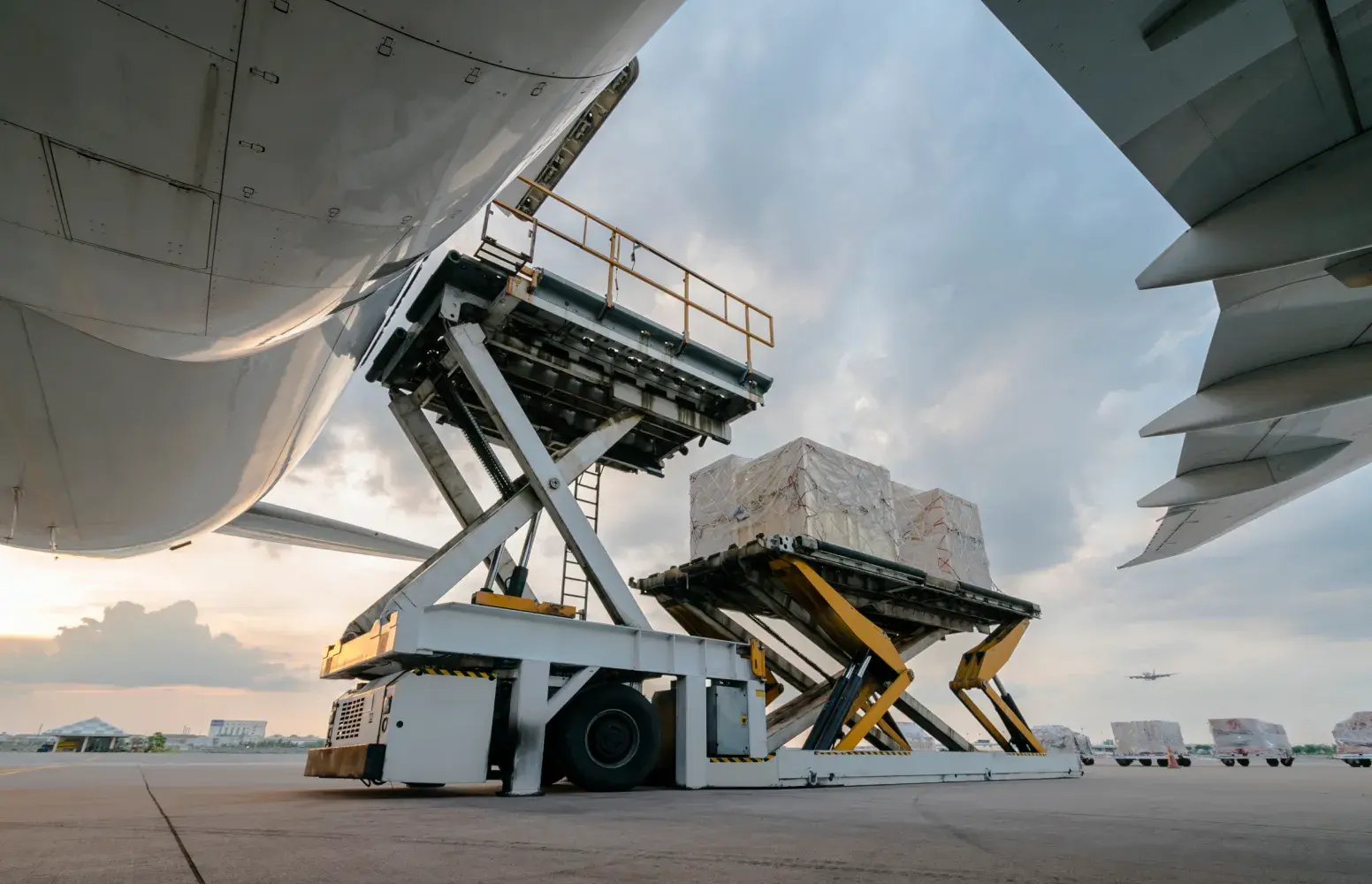
A career as a cargo pilot has its challenges, but the journey is rewarding. When searching how to become a cargo pilot, you will understand how the profession requires a unique combination of qualifications, skills, determination, and a passion for flying. Cargo pilots play a crucial role in global economic growth. They transport vital supplies and goods to every part of the world.
Global supply chains depend on cargo pilots. Their responsibilities include ensuring the smooth and on-time delivery of various types of cargo. This includes fragile items, perishable foods, life-saving medical equipment, important manufacturing parts, and emergency supplies.
To become a cargo pilot, there are certain steps one must follow. The exact requirements vary by country and aviation authority. Take the United States, for instance. For example, the FAA requires 1,500 hours of aeronautical experience for a standard ATP airplane certificate. The same is different in Europe, where the EASA ATPL(A) also calls for specific experience requirements.
Their job is far bigger than the cockpit. They have to be able to establish productive collaboration with air traffic controllers, ground crew, and logistics managers to ensure the smooth delivery of goods throughout the world.
With the number of imports and exports across borders these days, the importance and demand for cargo pilots are only rising. To become a cargo pilot is to play an essential role in intercontinental trade and humanitarian endeavors. Mostly unnoticed, people don’t know how big an impact cargo pilots have on daily lives across the globe.
Let’s look at the requirements to be a cargo pilot.
Step 1: Education
The first step to becoming a cargo pilot is to ensure you meet the cargo pilot qualifications. The mandatory requirement is a high school diploma. Subjects such as mathematics, physics, and English are generally required to build a useful foundation for pilot training.
Other cargo pilot qualifications include good communication skills, problem-solving skills, and decision-making capabilities. In aviation training, one will also get to learn varied subjects. This includes navigation, meteorology, aircraft systems, aerodynamics, flight planning, and aviation regulations.
While a university degree is not a mandatory part of cargo pilot qualifications, some airlines and cargo operators may prefer one for certain positions.
Step 2: Medical Requirements
The next step in how to become a cargo pilot is meeting the medical standards. These usually vary by country. A general framework includes assessments for vision, hearing, cardiovascular health, and overall fitness.
The specific medical certificate and standards depend on the aviation authority issuing the license.
For aspiring cargo pilots, it is important to complete these formalities. In fact, completing the appropriate medical assessment early can help students avoid spending significant amounts on training.


Posted 18 days ago
Step 3: Private Pilot License
The journey to obtaining a cargo pilot license starts with obtaining a private pilot license (PPL). Many aspiring pilots begin their professional training by obtaining a PPL. Alternatively, one can complete the corresponding stage of an integrated professional pilot programme.
The PPL training will include the fundamentals of flying. This will include areas like aircraft handling, take-off and landing, navigation, radio communication, basic meteorology, flight planning, and aviation safety procedures.
A PPL by itself does not qualify someone to have a cargo pilot license. Instead, it provides an important foundation for progressing toward commercial pilot qualifications.
Step 4: Commercial Pilot Training
The next step in how to become a cargo pilot is obtaining a commercial pilot license (CPL). The training for acquiring a CPL will take you beyond basic recreational flying. You will now be prepared to operate aircraft professionally.
Training typically includes advanced navigation, instrument flying, aircraft performance, meteorology, regulations, and commercial operating procedures.
Obtaining a CPL means completing a specific number of flight hours, which varies by country. In the United States, the FAA states that 250 total flight hours are required for a U.S. commercial pilot certificate. It is important to check the specific requirements as set by your country’s aviation authority.
Step 5: Instrument Rating
To become a cargo pilot, you will also require an instrument rating (IR). IR is an important qualification that teaches pilots how to fly primarily by reference to aircraft instruments instead of relying solely on outside visual references.
For cargo pilots, an IR is crucial, as these pilots often operate in a wide range of weather conditions and fly long distances.
In your research on how to become a cargo pilot, your IR training will be crucial. Your IR training will include learning various skills. This includes instrument approaches, IFR flight planning, navigation using aircraft instruments, departure and arrival procedures, and weather interpretation.
For aspiring professional pilots, instrument flying is therefore an important part of progressing toward airline and cargo operations.
Step 6: Flight Experience
To become a cargo pilot, one also requires substantial flight experience. This is one of the longest stages of the career journey. A newly qualified cargo pilot generally cannot fly a wide-body aircraft. To achieve this, many pilots gain experience through different roles. This includes flight instructor, charter pilot, regional operator pilot, and other commercial flying positions.
The required flight experience depends on the country. In the United States, a standard FAA ATP airplane certificate requires 1,500 hours of total pilot time. This also includes specified cross-country, night, and instrument experience.
Step 7: Airline Transport Pilot License
How long does it take to become a cargo pilot? To become a cargo pilot, one must meet multiple conditions. The next step if one wants to progress toward airline or large cargo operations is to obtain an Airline Transport Pilot License (ATPL).
The ATPL is the highest level of professional pilot licensing in many regulatory systems. It also qualifies pilots to serve as the pilot in command of commercial air transport operations.
The ATPL rules differ by country. In Europe, where EASA is the aviation authority, an applicant is required to hold the prerequisite qualifications and 1,500 hours of aeroplane flight time. This includes specified multi-pilot, cross-country, instrument, and night experience.
Step 8: Multi-Engine and Multi-Crew Experience
To become a cargo pilot, one also must have multi-engine and multi-crew experience. This is an important part of the requirements to be a cargo pilot. The training includes multi-engine aircraft handling, crew resource management (CRM), multi-crew procedures, standard operating procedures, emergency procedures, and advanced instrument operations.
For example, EASA's ATPL framework includes multi-pilot experience as part of its aeronautical experience requirements.
Step 9: Aircraft Type Rating
To become a cargo pilot, one must also have a type rating. To understand more about type rating, explore our blog on type rating in aviation. A type rating provides the training and qualification necessary to operate a specific aircraft type or group of aircraft under the applicable regulations.
Depending on the cargo operator, pilots could eventually fly aircraft such as Boeing 737, Boeing 767, Boeing 777, Airbus A300, and Airbus A330, among others.
In cargo pilot requirements, the type of aircraft a pilot flies depends on their license, ratings, employer requirements, and training. Cargo operators may provide or arrange type-rating and aircraft-specific training as part of the hiring or qualification process.
The table below provides a quick overview of the key qualifications and requirements one requires to become a cargo pilot.
| Requirement | What It Means |
|---|---|
| Education | Secondary/high school or equivalent |
| Medical certificate | Must meet aviation medical standards |
| CPL | Required for professional commercial flying |
| Instrument rating | Important for professional operations |
| Flight hours | Requirements vary by country/employer |
| ATPL | Generally required for airline captain roles |
| Type rating | Required for specific aircraft |
| English proficiency | Important for international aviation |
Cargo Pilot vs Passenger Airline Pilot
When researching the question, how long does it take to become a cargo pilot, you will wonder about the differences between a cargo pilot and a passenger airline pilot. While both these pilots share many of the same core qualifications and flying skills, their working environments and day-to-day responsibilities can be quite different.
To enter either of the roles, you require extensive training, professional pilot licenses, instrument-flying skills, and strong knowledge of aviation safety procedures. The main difference occurs when we come to the operational considerations.
One of the most noticeable differences is the working environment. Airline pilots operate in an environment that demands regular communication with cabin crew and passengers. Cargo pilots generally have little or no direct passenger interaction. If you want to learn more about this topic, explore our blog on the differences between a cargo pilot and an airline pilot.
So, is one better than the other? There is no universally accepted answer to this. Cargo flying may appeal to pilots who prefer a more operations-focused environment and do not want regular passenger interaction. Alternatively, passenger airline flying might suit those who enjoy the broader airline environment.
Frequently Asked Questions (FAQs)
Q1. What skills are essential for cargo pilots?
Requirements to be a cargo pilot include a combination of technical proficiency, problem-solving abilities, physical and mental stamina, and good decision-making skills. They must also navigate international regulations and collaborate effectively with ground crews and air traffic controllers.
Q2. What is the typical salary for cargo pilots?
Salaries for cargo pilots can vary widely. Senior Captains at FedEx can earn up to $326,000, while First Officers may make around $226,000 annually. Pay rates are typically based on flight hours flown. To know more about this, explore our blog on cargo pilot salaries.
Q3. Can cargo pilots fly passenger aircraft?
Yes, many pilots are qualified to fly both cargo and passenger aircraft. The qualifications for both roles include similar pilot licenses, but the focus and responsibilities differ between the two.
Q4. What are the challenges of being a cargo pilot?
Cargo pilots face unique challenges, such as navigating and landing in unplanned situations, managing irregular schedules, and dealing with the physical and mental demands of the job. They must be able to handle stress and make quick decisions in emergencies.
Q5. What is the work-life balance like for cargo pilots?
Cargo pilots often have to deal with irregular schedules and frequent travel, which can be challenging for maintaining a healthy work-life balance. However, the opportunity to see the world and work in a dynamic industry can appeal to those with a passion for aviation.
Enjoying the article?
Follow us and never miss an update on the aviation industry.
Conclusion
Cargo pilot jobs entail many responsibilities, including managing cargo, flying large aircraft, and ensuring the safety and transportation of the goods. The cargo pilot requirements could seem overwhelming; it is a rewarding but challenging journey.
A cargo pilot's role requires trustworthiness regarding safety and the delivery system, as their actions and decisions can have a huge impact on communities, lives, businesses, and even entire economies.
Becoming a cargo pilot can be a rewarding career experience. One gets to work with advanced aircraft while being a part of the global logistics network. It is true that the journey to becoming a cargo pilot requires significant investment. However, it provides opportunities to operate sophisticated aircraft and fly domestic or international routes.
Considering that global air cargo traffic is projected to grow by roughly 2.6% to 3.7% annually, the role offers exciting opportunities. As we move ahead, we will see an increasing number of cargo pilot jobs as well as pilot jobs. A cargo pilot career can offer the chance to combine professional aviation with the fast-growing world of global freight.