What makes the Airbus A320 so popular? It is, without doubt, one of the most intensely popular aircraft among airline pilots. But why is that the case? Is it its efficient design, impressive performance capabilities, or ample capacity? Pilots have been known to benefit from the A320's advanced aerodynamics that provide a smooth and comfortable ride. However, what sets the A320 apart is its advanced safety features, which are essential for pilots to ensure the safety of their passengers. In this article, we will delve into all the reasons that make flying the Airbus A320 a dream come true for pilots everywhere. Let's begin.
Airbus A320: A Brief History
The Airbus A320 has a proud history spanning decades. The A320 program was launched in March 1984 and defined by confidence, boldness, innovation, and, above all, success!
When it was launched, the program instantly had 80 orders from five major airline players, including British Caledonian and Air France. Today, the A320 family order book stands at 18,460 aircraft, making it the world's best-selling commercial aircraft. No wonder pilots love flying the Airbus A320.
Across all decades, despite facing stiff competition from other prominent names, the A320 has consistently remained a leading presence in the aviation industry. In 2023, more than 1,800 such aircraft were ordered by customers worldwide. What makes it so successful? Over the years, Airbus, its suppliers, and partners have successfully expanded and increased the number of production sites worldwide. Beyond this, flying the Airbus A420 is the first preference of choice for pilots because the program incorporates four decades of continuous improvement and bold innovation, from advanced avionics to Sharklet wingtips and the Airspace cabin. Another popular feature, and perhaps the most revolutionary, is its pioneering use of fly-by-wire (FBW) technology. Introducing a digital control system to replace conventional manual flight controls was also a technological leap forward.
What Makes the A320 So Popular
1. Fly‑by‑Wire (FBW) with Flight Envelope Protection
What makes flying the Airbus A320 such a delight among pilots? For starters, it is the first commercial airliner to employ full FBW or Fly‑by‑Wire. This means that the A320 can translate pilot input via the side stick into digital commands processed by the flight computers. By doing so, the aircraft reduces system weight, enhances precision, and brings smoother handling. Additionally, the integrated flight envelope protection prevents the A320 from exceeding safe angles, speeds, or load limits. In other words, it acts like an intelligent "guardrail," allowing pilots to benefit from the safety layer without additional training while maintaining complete control authority. Flying the Airbus A320 is so pilot-friendly due to its unique blend of autonomy and manual override, which helps pilots gain more confidence in their flight operations.
2. Side‑Stick Cockpit and Ergonomics
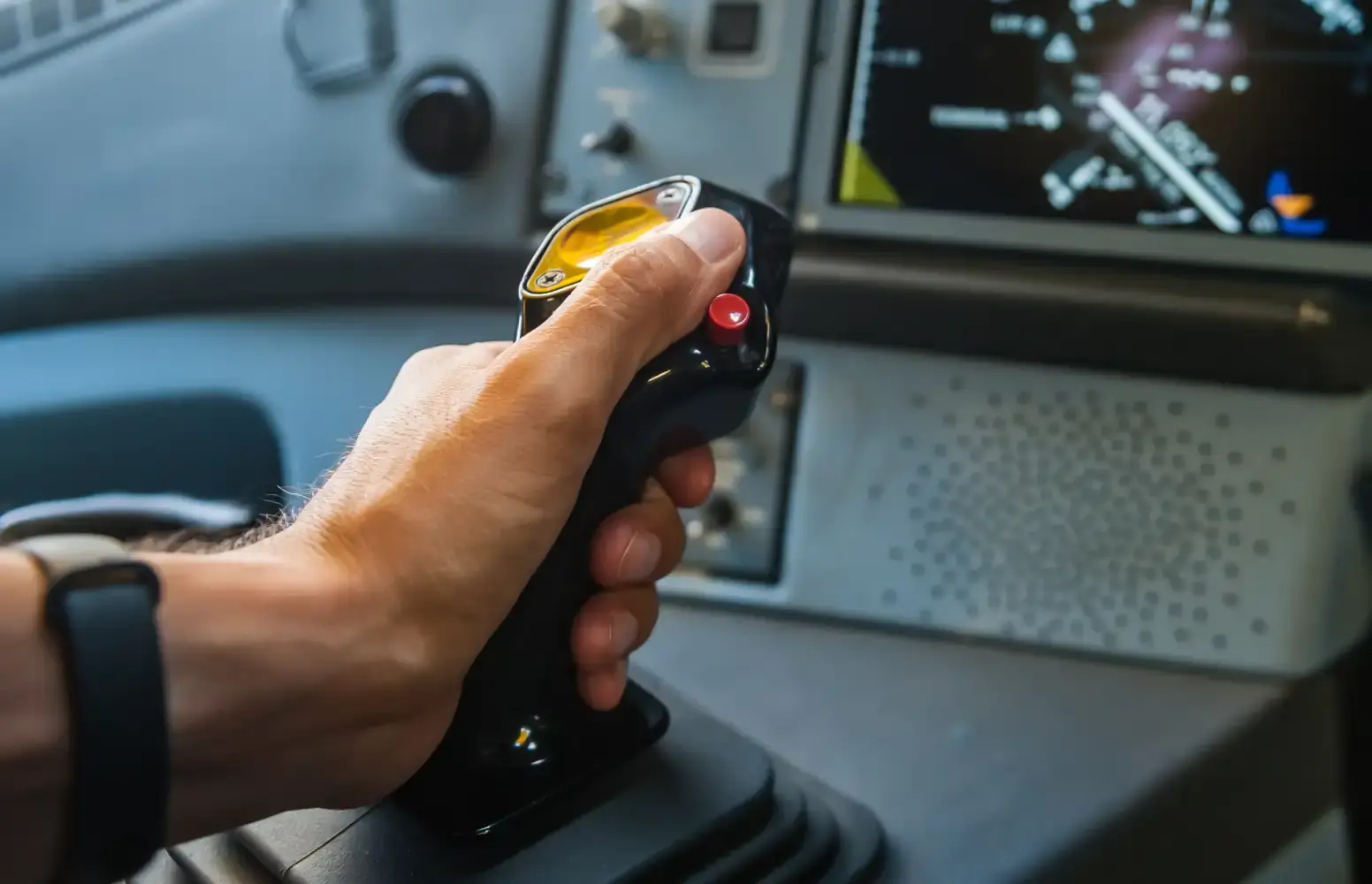
Another reason why flying the Airbus A320 is so pilot-friendly is the airline's introduction of side-sticks in the aircraft. This freed up the cockpit space and enhanced its ergonomics. For pilots, it meant better visibility, more legroom, and optional flip-flop tables to lay charts or meals. These prove to be small luxuries in long-haul flights. The counterbalance offered by FBW stability ensured that the sidestick provided responsive and intuitive control. No cables or pulleys clutter the flight deck; it’s quieter, cleaner, and more spacious. Flying the Airbus A320 became much more comfortable when the pilots knew they could spend long hours in the cockpit, while revamped designs reduced fatigue, enhanced situational awareness, and boosted overall efficiency.
3. Cockpit Commonality Across Airbus Fleet
Another reason that makes flying the Airbus A320 so pilot-friendly is its unified cockpit design that is visible across the A320 through the A350 fleet. This means that pilots learning one model will find it far easier to transition to another model via short “differences training,” saving time and costs. This commonality extends to various items, including controls, displays, systems, and operational philosophies. By doing this, the airline also reaps massive benefits in the form of lower training expenditure, greater flexibility in crew deployment, and streamlined maintenance. Fleet commonality also translates to enhanced safety by reducing procedural errors. With familiar layouts and workflows, pilots face fewer surprises when switching between variants. It’s a practical and operational boon, as well as a key strategic advantage, for airlines with large Airbus fleets.
4. Advanced Automation and ECAM System
Another reason pilots prefer flying the Airbus A320 is its legendary automation. The Airbus A320 has paved the way for automated management of systems, thrust, navigation, and flight paths. A central component of this layout is the Electronic Centralised Aircraft Monitoring (ECAM), which logs system performance and automatically presents corrective action during faults. What this essentially means is that there is less manual interplay with switches and gauges during non-normative events. The ECAM system informs pilots of what happened and how to resolve the issue. Automations such as these substantially reduce routine tasks, allowing pilots to focus on decision-making, communication, and monitoring. It also enhances safety and reduces mental strain, especially in high-pressure or abnormal situations.
5. Spacious, Well-Laid Cockpit
Compared to legacy aircraft like the Boeing 737, the Airbus A320 cockpit is remarkably roomy and thoughtfully designed. With a wide dashboard and ample air vents, the aircraft also comes with optional foot warmers, storage for bags or crew meals, and space for charts or tablets. The preference for flying the Airbus A320 is also due to its worker-friendly environment, which directly contributes to reduced pilot fatigue and improved efficiency. Many pilots have remarked how the A320 is also quieter than the 737. When pilots have a comfortable workspace, it supports better concentration and safer operation, especially during long shifts or complex procedures.
6. Glass‑Cockpit, Modern Avionics and Displays
The Airbus A320 introduced a human‑machine interface evolution via full glass cockpits, which replaced analog gauges with LCD screens and EFIS. This made flying the Airbus A320 even more pilot-friendly as the displays became more intuitive, customizable, and integrated with flight data and diagnostics. The dark-cockpit philosophy means that the absence of lights signals normalcy, making alerts truly stand out. The A320 became a popular choice among pilots because many appreciated the clarity and situational awareness provided by EFIS and ECAM integration. In the rare event of screen failures, the aircraft includes battery-backed standby instruments, ensuring vital data remains available. For modern crews, this setup means safer and more effective flight management.
7. Efficient Performance & Fuel Economy
Another reason pilots prefer to fly the Airbus A320 is that the aircraft was meticulously engineered for cost-effective short- to medium-haul operations. The use of lightweight composites, aerodynamic wing design, and high-bypass turbofans contributed to a fuel burn reduction of ~16–35% per seat compared to older rivals. FBW, as mentioned above, also helped optimize fuel efficiency by enabling high–aspect–ratio wings and lighter control surfaces. These upgrades result in far smoother handling, predictable performance, and a cleaner flight envelope for pilots. Airlines ultimately reduced costs, increased range flexibility, and paved the way for infotainment-friendly operations.
8. Proven Safety Records & Handling in Emergencies
So, why do pilots prefer flying the Airbus A320? The aircraft boasts one of the best safety records in commercial aviation. Thanks to its FBW and ECAM systems, human error is substantially mitigated. One can look at case studies such as Airways Flight 1549 (Hudson Miracle) that highlight the aircraft’s handling precision during extreme scenarios. While FBW aids in precision during critical maneuvers, such as bird-strike recovery, ECAM guides procedural responses. These features enhance pilot confidence in abnormal situations. Combined with Airbus’s robust design and redundancy, such capabilities make the A320 highly reliable and responsive, traits pilots deeply value under pressure.
The Role of the A320 in Global Aviation
So, why do pilots prefer flying the Airbus A320? It also has to do with a sense of pride. The A320 has a long history in the aviation industry. Ever since its debut in 1988, the aircraft has played a transformative role in global aviation. It was the world's first commercial aircraft to fully adopt fly-by-wire technology, making the A320 a benchmark in innovation, efficiency, and safety while redefining expectations for single-aisle aircraft. Fast forward to today, the A320 remains one of the most widely used and best-selling commercial airliners, with over 10,000 units delivered and thousands more on order.
The entire A320 family has become the backbone of short- to medium-haul operations for major airlines and low-cost carriers alike. It is often an ideal choice for high-frequency domestic routes as well as transcontinental services due to its versatility, fuel efficiency, and relatively low operating costs. Airlines across the world have built significant portions of their fleets around the A320.
Moving beyond economics, the A320 has also transformed pilot training operations. Airbus's trademark approach of cockpit commonality, where pilots can transition easily between different models in the A320 family and even to larger Airbus jets, has revolutionized crew management across global fleets.
The Neo series of the A320 has further solidified the aircraft’s importance in modern aviation, with improved engines, reduced emissions, and an extended range. These enhancements align with the industry's push for sustainability, enabling airlines to meet their environmental goals while maintaining optimal performance.
The Future of the A320
What does the future hold for the Airbus A320? Will pilots continue to prefer flying the Airbus A320? In all probability, yes. Airbus has been focusing on enhancing the efficiency, sustainability, and passenger experience of the A320. This means that various R&D programs are already in the pipeline to explore options for more advanced technologies, such as new engine types, aerodynamic improvements, and sustainable aviation fuels (SAFs), to reduce the environmental impact of the A320. These efforts are part of a broader push towards net-zero carbon emissions by 2050.
It is not just under-the-hood development that Airbus is looking at. The A320 family will continue to evolve with innovations in cabin design and in-flight entertainment while leveraging AI and data to enhance operational efficiency and safety.
Enjoying the article?
Follow us and never miss an update on the aviation industry.
Conclusion
The Airbus A320 family has transformed the landscape of modern aviation, setting new benchmarks in efficiency, comfort, and sustainability. It has consistently been the aircraft of choice for numerous pilots. One of the primary reasons pilots continue to prefer flying the Airbus A320 is its unique blend of advanced aerodynamics, fuel efficiency, and passenger-centric design, which enhances the flying experience.
For aspiring pilots with their eyes on A320 pilot jobs, now is a good time to consider obtaining a type rating in A320. A type rating is a specialized certification that showcases a pilot's ability to fly a particular aircraft, and the A320 requires its specific type rating. If you are unsure about type rating, here's an easy resource to help you understand what a type rating is in aviation.