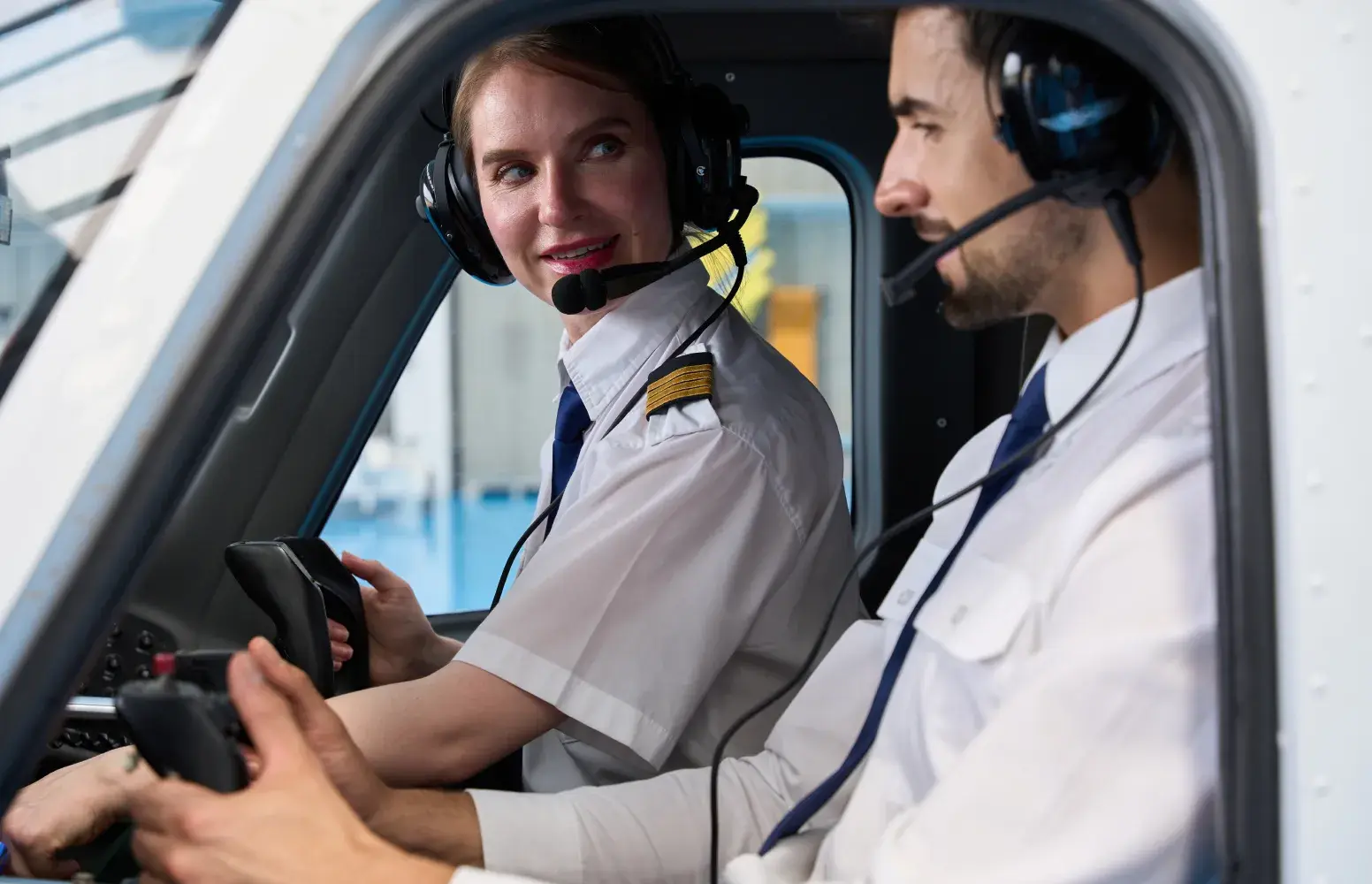
There are many areas to choose from if you want to become a pilot. A fixed-wing pilot is among them. A career in this field can offer many exciting opportunities. One can choose to work in commercial aviation, corporate flying, charter services, cargo operations, and other sectors. One of the key factors people consider when exploring this career is the fixed-wing pilot salary.
The fixed-wing pilot salary can vary significantly. It depends on the pilot’s experience, qualifications, aircraft type, employer, location, and role. The pay potential as an entry-level pilot is much less than what experienced pilots earn. There are also differences in fixed-wing pilot salary if one can fly larger or specialized aircraft.
This guide explores fixed-wing pilot salaries, the factors that influence pay, common career opportunities, and the qualifications and skills required to become a fixed-wing pilot.
1. India
The fixed-wing pilot salary in India depends on various factors. These include experience, airline, aircraft type, and rank. A newly qualified pilot can earn anywhere between ₹1.5 lakh and ₹3 lakh ($1,563.20 and $3,126.39) per month. With more experience and specialization, pilots earn approximately ₹3 to ₹6 lakh ($3,126.39 to $6,252.79) per month.
Senior airline Captains, particularly those operating larger or wide-body aircraft, can earn ₹10 lakh ($10,421.31) or more per month, depending on the employer and compensation structure.
To become a fixed-wing pilot in India, you will need a commercial pilot license (CPL). The educational requirements for obtaining a CPL include passing high school with Physics and Mathematics from a recognised board. The DGCA also requires candidates to meet the relevant medical, examination, and flight-training requirements.
With more experience, pilots with a CPL generally work towards obtaining an airline transport pilot license (ATPL), which unlocks airline captain positions.
2. United Kingdom
In the United Kingdom, the fixed-wing pilot salary depends heavily on a pilot’s experience. Airline first officers make around £40,000 and £90,000 ($52,909.60 and $119,046.60) annually. With more experience and seniority in captain roles, one can earn approximately £120,000 and £185,000 ($158,728.80 and $244,706.90) or more, depending on the airline and aircraft.
To work as a fixed-wing pilot, you will require the relevant pilot licenses issued or recognised by the UK Civil Aviation Authority (CAA). This includes a CPL. A candidate must be at least 18 years old and hold a valid UK Part-MED Class 1 Medical Certificate.
It is important that candidates complete their theoretical training and examinations, flight training, and a practical skill test. Additionally, those pursuing airline careers generally undertake ATPL-level theoretical training.

3. United States
The fixed-wing pilot salary in the United States is significantly different from what commercial pilots and airline pilots earn. What one earns is also dependent on factors such as experience, aircraft specialization, and ranking.
As per the latest data, pilots earn a median annual wage of $123,220. Pilots working for bigger airlines or in senior captain positions earn much more. Location also has a big role to play, with fixed-wing pilots in bigger cities earning more.
To become a commercial fixed-wing pilot, you must meet the certification requirements set forth by the FAA. This includes 250 total flight hours for a Commercial Pilot Certificate. Educational requirements vary between pilots. A college degree is not universally required to obtain a CPL. Airline pilots must subsequently build the required flight experience and obtain an Airline Transport Pilot (ATP) certificate. Additional ratings, medical certification, and aircraft-specific training may also be required.
4. Canada
The fixed-wing pilot salary depends on various factors. This includes experience, employer, aircraft, and location. The average salary for a fixed-wing pilot in Canada ranges from approximately CAD65,000 to CAD97,500 ($46,081.42 to $69,122.14) per year,
For education, aspiring pilots must have a high school diploma. A college degree is generally not mandatory for this role. One must also have a Commercial Pilot License or an Air Transport Pilot License, together with the relevant aircraft ratings and endorsements.
Transport Canada requires applicants for a Commercial Pilot License (Aeroplane) to be at least 18 years old, hold a Category 1 Medical Certificate, pass the required knowledge examination, and meet the prescribed flight-experience requirements.
5. Germany
The fixed-wing pilot salary in Germany is dependent on various factors. This includes employer, aircraft type, location, and ranking. The gross annual salary is generally around €110,000 ($125,089.25), with entry-level pilots earning around €55,000 ($62,544.63) per annum.
As one obtains more experience and progresses to higher roles, the fixed-wing pilot salary also increases. Senior airline captains can earn approximately €280,000 ($318,409.00) per annum.
Aspiring pilots must complete their professional flight training. The subjects include mathematics, physics, aviation regulations, navigation, meteorology, and aircraft systems. They must hold a valid CPL along with a Class 1 medical certificate.
For an airline career, candidates normally need the appropriate EASA flight crew licenses and ratings, medical certification, and the required theoretical and practical training. Specific airlines can also set additional education, experience, and language requirements.
6. United Arab Emirates
The fixed-wing pilot salary for first officers or co-pilots usually ranges between AED 30,000 and AED 46,000 ($8,168.82 and $12,525.53) per month. The pay potential is higher when one works for major carriers like Emirates.
In senior roles as an airline captain, one can earn anywhere from AED 45,000 to AED 70,000 ($12,253.23 to $19,060.59) and more per month. Training captains earn significantly more based on flight hours and seniority.
To be a fixed-wing pilot in the UAE, one must have the appropriate UAE General Civil Aviation Authority (GCAA) license or recognition/conversion of an eligible foreign licence. GCAA regulations also cover requirements for CPL(A). This includes necessary training, examinations, skill tests, medical certification, and English-language requirements.
Educational requirements vary between airlines. While a high school diploma is necessary, not every airline asks for a college degree. What airlines do look for is substantial flight experience, an instrument rating, multi-engine experience, and an ATPL.
7. Australia
The fixed-wing pilot salary in Australia varies, depending on the experience one has as a pilot. For entry-level roles, pilots earn anywhere between AUD45,000 and AUD96,000 ($31,621.05 and $67,458.24) per year. In regional airlines, fixed-wing pilot salary is approximately AUD85,000 to AUD100,000 ($59,728.65 to $70,269.00).
Captains at major airlines also earn more than this, depending on the size of the aircraft. Additionally, specialized operations or police air support also have a larger base salary. The total compensation goes up if we add the superannuation.
To become a commercial pilot, candidates must meet CASA requirements covering education, English-language proficiency, medical fitness, security, and flight experience.
A Commercial Pilot License requires approved theoretical and practical training, the prescribed flying hours, and successful completion of the relevant flight test. Candidates seeking airline careers generally continue with instrument, multi-engine and ATPL training.
8. Japan
The fixed-wing pilot salary in Japan varies depending on the airline, pilot rank, aircraft type, and experience. The average annual salary for a commercial fixed-wing pilot is generally between ¥12,000,000 and ¥25,000,000 ($85,000 to $175,000) or more.
Major legacy carriers like Japan Airlines and All Nippon Airways offer some of the highest corporate pay scales in the country.
Pilot licensing in Japan is carried out by the Ministry of Land, Infrastructure, Transport and Tourism (MLIT). To become a fixed-wing pilot in Japan, one must obtain the relevant national aviation qualification, with licenses including Private Pilot, Commercial Pilot, and Airline Transport Pilot qualifications. Pilots must meet prescribed age and flight-experience requirements and pass written and practical examinations.
Responsibilities of a Fixed-Wing Pilot
Besides researching the fixed-wing pilot salary, it is also important for aspiring pilots to make a note of day-to-day responsibilities in this role. Regional airlines offer another career path for fixed-wing pilots, particularly those looking to build experience in commercial aviation. Here’s a useful blog to understand how to become a regional pilot.
- As a fixed-wing pilot, you will be required to conduct pre-flight checks. This includes inspecting the aircraft, reviewing technical information, and confirming that essential systems are functioning correctly.
- Pilots are also required to review the route, weather conditions, fuel requirements, aircraft performance, and relevant aviation information before departure.
- During flight, a fixed-wing pilot must control the aircraft during take-off, cruising, manoeuvring, and landing while following established procedures.
- Communication is important in this role. A pilot must maintain clear communication with ATC and follow assigned clearances and instructions.
- As a fixed-wing pilot, you must regularly check instruments, navigation equipment, fuel levels, and other critical systems during flight.
- Documentation is just as important. One must complete required flight logs, reports, and other operational documentation after each flight.
Enjoying the article?
Follow us and never miss an update on the aviation industry.
Conclusion
With fixed-wing pilot jobs on the rise, a career in this role can be a rewarding experience. Aspiring pilots should first understand the licensing and educational requirements in their chosen country before beginning their training.
Irrespective of the country you plan to work in, it is important to complete your research and be thorough about all the requirements to make a successful career in this role. If you're considering a career as a fixed-wing pilot, understanding the differences between short-haul and long-haul flying can help you explore the career paths available.