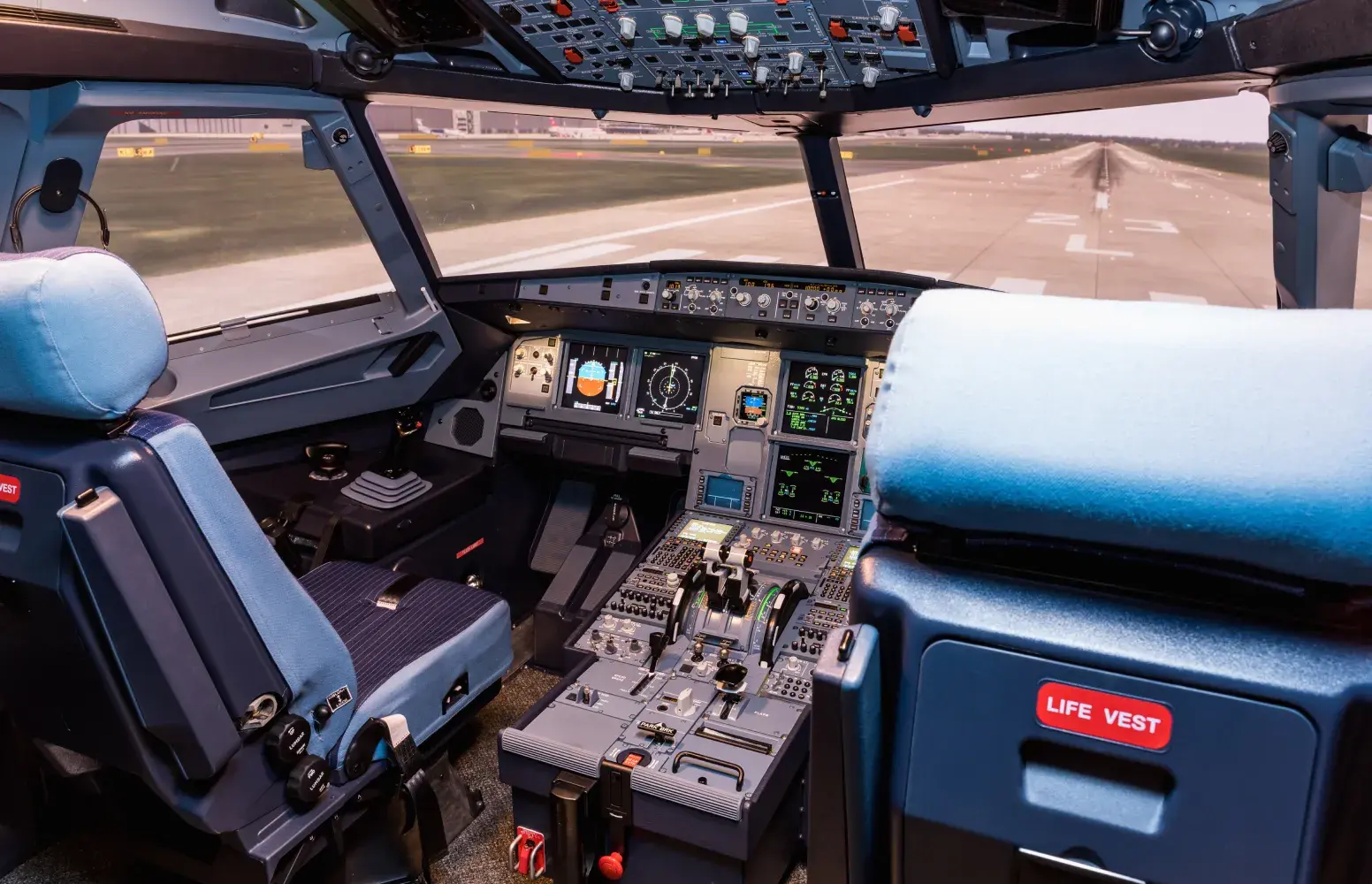
In a complex field like aviation, precision and the correct knowledge are paramount. A type rating can help pilots demonstrate this part. But what exactly is a type rating? A type rating is a license endorsement that pilots, whether holding a private pilot license or a commercial pilot license, must obtain. This rating enables pilots to fly a particular model of an aircraft, such as the Airbus A320. Aircraft as big as the Airbus A320 have complex systems, and pilots require specialized knowledge to fly them effectively and safely. Planes like the A320 are also every pilot's dream, which is why a type rating for the A320 is quite sought after. As an aspiring pilot, you must have considered the A320 type rating cost. Here's a breakdown.
Before we delve into the cost of A320 type rating, let's look at why this type rating is so sought after among pilots. A Type Rating for the A320 allows pilots to operate the Airbus A320 family of aircraft. How is it different from a regular pilot license? While licenses such as the CPL or ATPKL authorize you to fly professionally, you're only permitted to fly aircraft for which you are type-rated. According to ICAO regulations, adopted by leading authorities worldwide, jet aircraft weighing more than 12,500 lbs (5,700 kg) require a specific type rating due to their complexity.
Regarding the Airbus A320 type rating cost, the A320 is one of the most widely used narrow-body aircraft in the world. Airlines, such as Lufthansa, easyJet, IndiGo, and American Airlines, have added this model to their fleets. This means that getting type-rated on the A320 can open doors to global opportunities that you, as an aspiring pilot, cannot overlook.
A320 Type Rating Cost Breakdown
The A320 type rating cost can vary significantly, depending on the training location, regulatory authority, and other factors. One also has to consider what is included in the package. Before delving into the full A320 type rating price, it is essential to understand what contributes to this amount, allowing you to make an informed decision.
1. Tuition and Training Fees
In the cost of A320 type rating, the primary component is the tuition fees, which will cover classroom instruction, CBT (computer-based training), manuals, and access to simulators. Typically, this part takes 4 to 6 weeks to cover. The training will also include ground school, where you get to know about systems, performance, and procedures, simulator sessions in a Full Flight Simulator Level D, Multi-Crew Cooperation and Jet Orientation Course, and lastly, base training to help you experience real aircraft takeoffs/landings.
2. Simulator Fees
The second element in the A320 type rating price is simulator fees, which are generally excluded from the main tuition. Simulator time can cost $300–$500 per hour, depending on the training center and its location. Some training centers also provide “dry” (without instructor) hours, where you are required to pay for instruction separately.
3. Instructor and Examiner Fees
When looking at the cost of A320 type rating, you will see that in some training packages, the fees for instructors, check airmen, and examiners are separate. When you take your Type Rating Skill Test (TRST), you may be required to pay for an independent examiner approved by your licensing authority. All these factors add to the final bill.
4. Accommodation and Travel
When considering the A320 type rating price, many pilot trainees choose to train abroad, often in countries where training costs are lower. Some countries have specific regulatory approvals (EASA, FAA, DGCA) available. These are additional expenses that you will have to consider. This includes flights, visas, insurance, and lodging. One can also look for training centers that offer accommodation packages. This may be more cost-effective than booking on your own.
5. Other Costs
Apart from what is mentioned above, the cost of A320 type rating can increase if components such as license endorsement and authority fees, pilot uniforms or tablets, medical exams or revalidation, study materials, charts, or subscriptions, and license conversion fees are factored in.
Regional Cost Comparison
The Airbus A320 type rating cost can widely vary across regions due to differences in labor costs, regulatory requirements, training infrastructure, and market demand. Here's a breakdown of some areas that can help you make an informed decision.
1. United States
In the United States, a type rating for an A320 is usually conducted under FAA Part 142 programs. Established training centers, such as CAE, FlightSafety, and ATP Jets, are popular choices among training providers. The A320 type rating cost is relatively moderate, with such programs being offered to pilots already holding a CPL or ATP. It is important to note that many programs in the United States are bundled with MCC/JOC. For non-US residents, there are additional expenses for visa and license conversion costs. Your entire training cost in the US will range from $25,000 to $35,000.
2. Europe
In Europe, one should look for enrollment in EASA-approved programs. They also tend to be more expensive due to stringent regulations requiring more simulator time, highly certified instructors, and detailed performance training. Training schools in countries such as Germany, Spain, Lithuania, and the UK offer comprehensive A320 training, which is often bundled with MCC and JOC. The A320 type rating price can also go up if you look for programs that include accommodation, which is generally not the case. Regardless of the cost, the EASA license is highly valued due to its strict regulation, making it a valuable yet costly investment. The cost of A320 type rating in most European countries will fall in the range of $30,000 to $45,000.
3. India & South Asia
The A320 type rating price in India and neighbouring countries tends to be lower. However, completing your training here may require additional simulator time or conversion if you intend to work internationally. Some of the most popular training hubs in India include Gurgaon, Hyderabad, and Bangalore, where one can avail programs in partnership with global companies like CAE or L3Harris. In India, where the DGCA is the regulatory authority, the Airbus A320 type rating cost can be lower, but the competition for jobs is fierce, and placement is not always guaranteed. In total, you could spend anywhere between $22,000 and $32,000.
4. Middle East & Asia-Pacific
The Middle East, particularly the United Arab Emirates, as well as countries such as the Philippines and Vietnam, offer a cost-effective A320 type rating price. If you are interested in availing yourself of training programs in these countries, you may have the option of bundled cadet programs or fast-track airline partnerships. However, visa and travel costs may add to the final budget. Typically, the total training cost for obtaining a type rating ranges from $23,000 to $35,000.
Is It Worth It?
The A320 type rating cost can range from $25,000 to $45,000, depending on the type of program and location. Nevertheless, the price can be steep when additional equipment is taken into account. With this kind of financial commitment, how should pilots decide if the return on investment will justify what they are paying upfront?
There are several ways to view this. Once you get your type rating, you can apply for the First Officer roles with airlines operating the A320. It is one of the most widely used aircraft globally. This means that even at an entry-level position, your compensation will be competitive. In high-demand areas, particularly in Asia and the Middle East, airlines may even offer joining bonuses, relocation support, or training reimbursements.
Once you land a job within 3 to 6 months, you can easily recover your investment in 12 to 18 months, depending on your income and living expenses. Some training programs even defer type rating costs, which helps trainee pilots reduce some of the upfront financial costs.
While there are enough opportunities, the ROI is not always guaranteed. Some markets may face an oversupply of A320 type-rated pilots with not enough jobs to absorb all of them. Additionally, a lack of airline hiring can delay job placement. This is why it is crucial to select the right training provider, one that offers placement support or has airline ties.
Ultimately, the cost of A320 type rating will be justified because obtaining an A320 type rating is a solid career step—but only if it aligns with a clear hiring pipeline or your long-term aviation goals.
How to Choose the Right Training Center
Choosing the right training center is vastly important because that one single step can decide what kind of A320 pilot jobs you will be able to avail yourself of post-training. So, how do you choose? Start by ensuring the school is approved by a reputable aviation authority, such as the EASA, FAA, and DGCA. It should also have a solid safety record and a strong track record of graduate placement. The A320 type rating price can be steep for many. To justify what you will be spending, look for centers that offer transparent pricing—beware of hidden fees for simulator hours, exams, or base training.
Select a training center that offers airline partnerships or job placement assistance. This can help you bridge the gap between training and employment.
Finally, consider the miscellaneous components that contribute to the A320 type rating cost, such as visa requirements, accommodation, language of instruction, and total living costs in that country. A slightly higher tuition fee may be worth it if it improves your employment prospects.
FAQs
1. How long does it take to complete an A320 type rating?
The training program to obtain an A320 type rating typically takes 4 to 6 weeks. This includes ground school, simulator sessions, and base training.
2. Can I do a type rating without having a job offer?
Yes. Many pilots complete their type rating for the A320 independently. However, it is essential to note that job placement is not guaranteed unless you join a cadet or airline-sponsored program.
3. Is it possible to fail the type rating?
Yes. To obtain an A320 type rating, you must pass both theoretical exams and simulator checks. Failing any one of these may require additional training and re-examination at extra cost.
4. Will the type rating be valid worldwide?
It depends on the type of regulatory authority. EASA, FAA, and DGCA licenses are not interchangeable without conversion. It will be beneficial to train under the authority relevant to your career goals.
Enjoying the article?
Follow us and never miss an update on the aviation industry.
Conclusion
An A320 type rating can unlock doors to multiple exciting opportunities for aspiring pilots and experienced ones looking to upgrade their skills. With scores of A320 captain jobs and A320 first officer jobs up for grabs, now is a good time to sit down and strategize. The A320 type rating cost can be overwhelming. With so many programs and packages, it can be a challenging terrain to navigate, but one that is worth the ride. If you would like to learn more, here's a resource to help you understand the A320 type rating in greater detail.