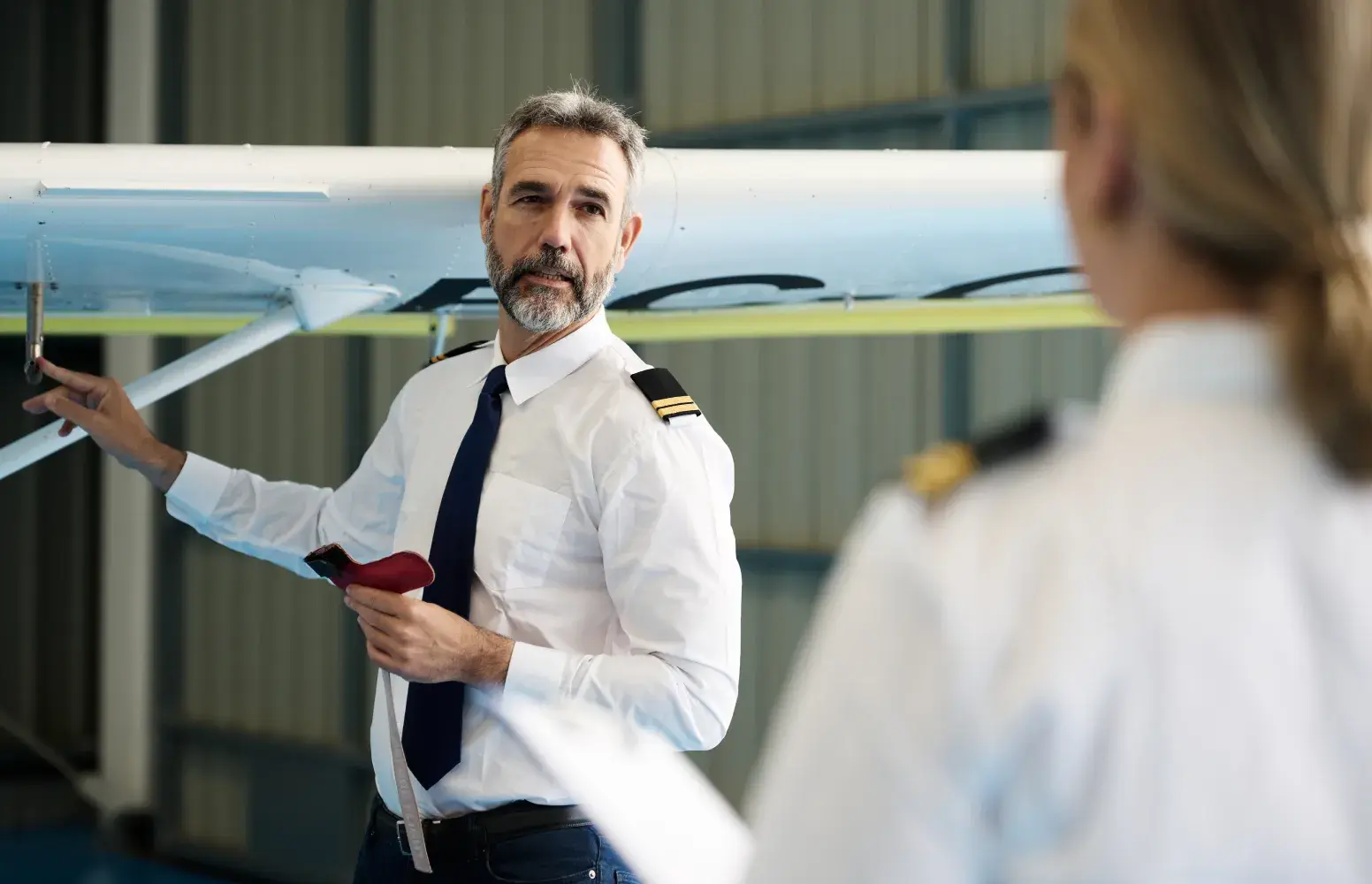
Becoming a pilot is a dream harbored by many. The first step towards fulfilling this is choosing the right flight school. But with numerous training academies across Europe, finding the flight schools in Europe can be a daunting task. Aspiring pilots have a wide range of options for gaining the skills, licences and experience required to work in commercial aviation.
Finding the appropriate pilot training in Europe can help you with structured training programs, modern aircraft, experienced instructors, and pathways towards internationally recognised pilot qualifications.
Regarding European pilot training, several institutions stand out for their quality of education, experienced instructors, and modern facilities. Here’s an in-depth look at some of the best pilot schools in Europe that aspiring pilots should consider.
1. FTEJerez
Based out of Jerez, Spain, FTEJerez is one of the well-known flight schools in Europe. It offers the Airline First Officer Program (AFOP), which is a 62-week integrated course leading to an EASA or UK CAA professional pilot qualification.
The current fees for the course are approximately €129,500 ($145,546.35) for the EASA program. This includes accommodation and full board during the training period. It also includes uniform, training materials, examination attempts, landing and navigation fees, and other specified costs.
As one of the best flight schools in Europe, FTEJerez trains students on a varied fleet that includes the Piper single-engine aircraft and Diamond DA42 NG twin-engine aircraft. The institute also uses a Boeing 737-800W simulator for airline-oriented training.
2. L3Harris Airline Academy
L3 Harris Academy comes in the list of popular flight schools in Europe. The academy offers an integrated ATPL route aimed at students seeking an airline career. The fees for the course start from £94,500 ($106.209.49).
The academy is a popular choice for pilot training in Europe. The academy has a Graduate Placement Pool that helps students with airline interview preparation, CV workshops, simulator refreshers, and airline-readiness support.
The academy’s training fleet includes the Cessna 172, Cirrus SR20, and Piper PA-44 Seminole aircraft. Multi-engine training is provided to students on the PA-44. With modern glass cockpits and avionics, students get to experience firsthand what modern flight operations look like.
3. CAE Oxford Aviation Academy
Another well-known name in pilot training in Europe is the CAE Oxford Aviation Academy. The academy is part of CAE's extensive global pilot-training network. The Oxford Aviation Academy features nine training academies and a fleet of around 180 aircraft. It also boasts the capacity to train more than 2,000 cadets annually.
As one of the well-known schools in Europe, the academy offers multiple programs with different fee structures. Their Generation easyJet MPL program has a fee of approximately €102,942 ($115,697.54). This includes ground, simulator and flight training, examinations, UPRT, uniform, and other specified items.
A major advantage of studying at CAE is its scale and airline connections. Students can access different training pathways, including integrated ATPL and airline-specific MPL programs.


Posted 1 day ago

 Verified

Posted 1 day ago
Verified

4. Skyborne Airline Academy
Another name in the list of well-known flight schools in Europe is the Skyborne Airline Academy. The institute offers an airline-oriented training environment, making it a sought-after option for aspiring pilots.
Its UK chapter boasts a fleet that includes Diamond DA42 aircraft and Zlin Z 242 L aircraft, while its US operation has a fleet of more than 60 Piper single- and multi-engine aircraft.
The key advantage offered by Skyborne is its combination of international training locations, modern training aircraft, airline-focused programs, and exposure to different operating environments.
5. European Flight Academy
Another name in the list of well-known flight schools in Europe is the European Flight Academy. The academy is the Lufthansa Group’s pilot training school. This makes it a sought-after option for students looking for an airline-linked European training pathway.
The academy’s current fees for its training program cost €105,000 ($118,010.55). As one of the best flight schools in Europe, the institute operates a fleet of more than 50 training aircraft and simulators across Germany, Switzerland, and the USA. Its fleet includes Diamond DA40NG, Diamond DA42, Cirrus SR20, and Grob G120.
According to the academy, its training program is designed to maximise graduates' prospects of obtaining cockpit employment within Lufthansa Group airlines. The academy also offers a 50% reimbursement of training costs under specific conditions. For instance, the reimbursement is valid when a graduate does not receive an appropriate cockpit employment offer within 24 months.
6. BAA Training
Another name in the list of best flight schools in Europe is BAA Training. It is a major European aviation training organisation. The institute offers integrated ATPL programs and airline-focused cadet pathways.
As one of the best pilot schools in Europe, BAA Training’s current Cadet Program starts at €105,500 ($118,572.50). This includes ATPL Integrated training, an A320 or B737 type rating, and base training.
The institute has an ab-initio flight base at Spain’s Lleida-Alguaire, where it uses a fleet of 12 Cessna 172S aircraft and one Tecnam P2006T. Students get to train at an international airport, which gives them a chance to experience controlled-airport operations and ATC procedures from the beginning.
7. Egnatia Aviation
One of the best pilot schools in Europe is Egnatia Aviation. The Greek training organization offers an integrated airline pilot program. It is designed to take students from little or no flying experience to airline-ready qualifications.
As one of the best pilot schools in Europe, the organization’s Airline Integrated program lasts 19 months and includes 226.2 total flight-training hours. Its further breakdown includes 124.7 hours on single-engine aircraft, 19 hours on twin-engine aircraft, 42.5 hours on FNPT II simulators and 40 hours of APS MCC simulator training.
Interested students should contact the organization to know the course cost, as the same is not publicly available. A major advantage that works in Egnatia’s favor is its airline-oriented training pathway and established airline connections. The organization has a partnership with airlines including Aegean Airlines, Wizz Air, and Iraqi Airways. This gives students a clearer link between training and potential airline opportunities.
8. Bartolini Air
When researching the best flight academy in Europe, Bartolini Air's name is bound to come up. Located in Poland, the training institute is an appealing option for students looking for an EASA-based pilot training program in Central Europe.
As the best pilot academy in Europe, the institute offers Integrated ATPL, Modular ATPL, CPL, IR, multi-engine training, and MCC/APS MCC programs. This allows students to choose between an integrated airline pathway and a more flexible modular route. The training costs vary, typically falling in the range of €70,000 and €80,000 ($78,673.70 and $89,912.80).
The fleet used by the academy includes Tecnam P2008JC, Tecnam P2006T, and Diamond DA42 aircraft, supported by flight simulators for instrument and multi-engine training. What works in its favor is its combination of EASA-approved training, a relatively competitive European training cost, and a Central European location. In addition, the academy has also developed airline-focused training partnerships.
The table below provides a quick comparison of some of the leading flight schools in Europe.
| Flight school | Location | Approx. fees | Main courses / Training |
|---|---|---|---|
| FTEJerez | Jerez, Spain | €129,500 ($145,546.35) | Airline First Officer Programme, integrated ATPL, APS MCC |
| L3Harris Airline Academy | Cranfield, UK / Sanford, USA | From £94,500 ($106.209.49) | Integrated ATPL, CPL/MEIR, UPRT, APS MCC, airline programmes |
| CAE Oxford Aviation Academy | Oxford, UK / Europe | Varies by programme; generally €100,000+ ($112,586) |
Integrated ATPL, MPL, airline cadet programmes, advanced training |
| Skyborne Airline Academy | UK / Vero Beach, USA | Around £114,950 ($152,488.65) | Integrated ATPL, airline cadet programmes, BSc/ATPL pathway |
| European Flight Academy | Germany / Switzerland | Around €130,000 ($118,010.55) | Integrated ATPL and Lufthansa Group pilot training |
| BAA Training | Lithuania / Spain / France | Around €100,000+, depending on programme ($112,586.00) | Integrated ATPL, cadet programmes, type rating, base training |
| Egnatia Aviation | Kavala, Greece | Contact school | Airline Integrated ATPL, CPL/MEIR, UPRT, APS MCC |
| Bartolini Air | Łódź, Poland | Around €70,000–€80,000, depending on programme ($78,673.70- $89,912.80) | Integrated ATPL, modular ATPL, CPL/IR/ME, MCC/APS MCC |
What to Consider When Choosing a Flight School
When searching for the best flight academy in Europe, several key factors should influence your decision:
1. Approval and Accreditation
One of the most critical aspects of choosing one of the best flight schools in Europe is ensuring that it is accredited by relevant aviation authorities. In this case, it is the European Union Aviation Safety Agency (EASA). EASA accreditation guarantees that the school meets stringent safety and training standards. Enrolling in an accredited institution ensures that your training will be recognized across Europe and beyond.
2. Airport and Facilities
The type of airport you train in can significantly impact your learning experience. Training at a busy international airport exposes you to real-world flying conditions invaluable for building confidence and skills.
The best flight schools in Europe offer top-notch classrooms, libraries, and other learning resources. A well-equipped school with modern amenities can enhance your educational experience.
3. Aircraft Fleet
The quality and diversity of the aircraft fleet are vital for practical pilot training. Look for schools offering various aircraft types, including single-engine and multi-engine planes.
Modern aircraft equipped with advanced avionics provide students with relevant experience that mirrors what they will encounter in their careers. Additionally, inquire about the age and maintenance of the fleet; newer aircraft generally offer better reliability and performance.
4. Maintenance and Support
A flight school with its own maintenance team can ensure that aircraft are well-maintained and ready for use when needed. This minimizes downtime due to repairs or inspections, allowing you to maximize your flying hours. A reliable maintenance program is crucial for maintaining safety standards and ensuring a smooth training experience.
5. Simulation and Training Aids
Advanced simulators play a significant role in pilot training by providing realistic flight experiences without the risks associated with actual flying. Schools investing in high-quality simulators can help students transition smoothly from simulated to real flights.
Look for schools that offer state-of-the-art simulation technology as part of their training programs.
Frequently Asked Questions (FAQs)
Q1. What are the requirements to enroll in pilot training in Europe?
To enroll in one of the best aviation schools in Europe, candidates typically need to meet the following requirements:
- Be at least 17 years old (for a Private Pilot License).
- Hold a valid medical certificate issued by an approved aviation medical examiner.
- Have a good command of English, as it is the international language of aviation.
- Complete any necessary entrance exams or interviews as required by the specific flight school.
Q2. How long does it take to become a pilot in Europe?
The time it takes to become a pilot varies depending on the type of license pursued and the training program structure. Generally, a Private Pilot License (PPL) can take around 6 months to 1 year. For a Commercial Pilot License (CPL), it typically takes 12 to 18 months to obtain, especially if you are pursuing integrated programs that combine ground school and flight training. An Airline Transport Pilot License (ATPL) may take several years, requiring significant flight hours and experience.
Q3. What is the cost of pilot training in Europe?
The cost of pilot training can vary widely based on the flight school, location, and type of training program. For instance, integrated training, which includes full-time, intensive programs, can cost €70,000 to €130000 ($78,673.70 to $146332.13) or more. Flexible, step-by-step part-time paths can lower basic costs.
Q4. Can I work as a pilot in Europe with a non-European license?
If you hold a non-European pilot license, you may need to convert it to an EASA license to operate legally within European airspace. This process typically involves passing theoretical exams and completing flight tests with an approved training organization.
Enjoying the article?
Follow us and never miss an update on the aviation industry.
Conclusion
Thorough research about the top flight schools in Europe is a crucial step for anyone aspiring to become a pilot in Europe. With numerous options available, factors such as accreditation, facilities, aircraft fleet, maintenance support, and simulation technology must be considered before deciding. The best aviation schools in Europe can bring aspiring pilots closer to their dream careers while making the journey both rewarding and exciting.
As we move ahead, the demand for skilled talent for pilot jobs in Europe will go up. Europe requires approximately 57,000 to 64,000 new commercial and business aviation pilots over the next decade. For students currently thinking of entering this role, now is the right time to complete their training and earn their licenses for a rewarding career in the cockpit. Explore this resource for practical tips on preparing effectively for your cadet pilot interview.