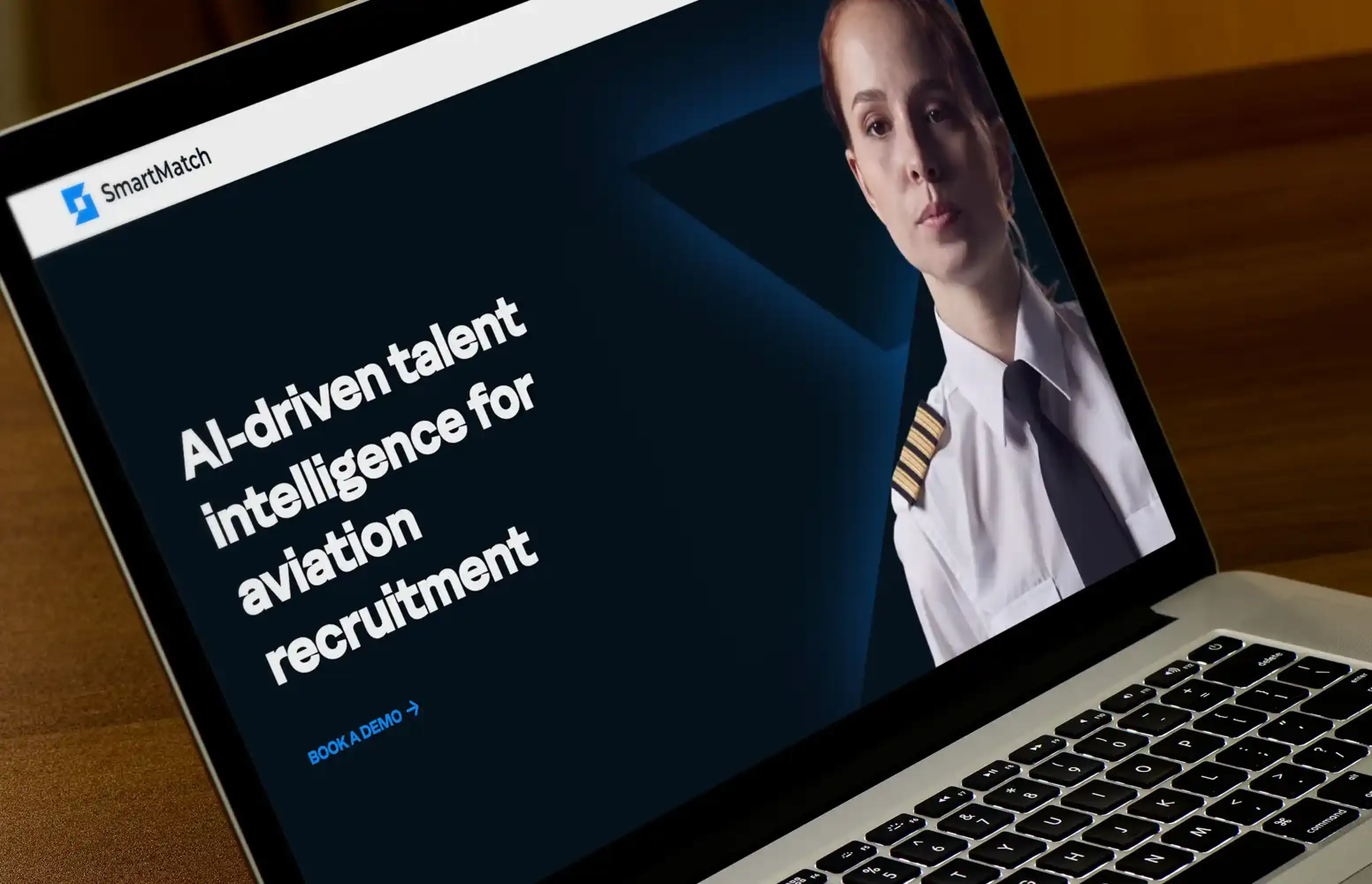
Aviation Job Search is preparing to roll out SmartMatch, a new AI-driven candidate matching tool that will soon be available to recruiters and headhunters on our platform. Its arrival is a timely reminder for aviation professionals to keep their CV updated and uploaded to the right places.
As we know, aviation is a fast-moving sector, and so too is recruitment. The two together means that speeding up the candidate pipeline and shaping how people are found, shortlisted, and contacted is critically important, as is making sure the right people are finding the right roles.
While factors such as fleet changes, seasonal demand, regulatory shifts, training pipelines, retirements, expansion into new routes add volatility to the sector, using AI actually flattens these curves, and can make the recruitment process a far more passive process for both candidates and recruiters with the more mechanical shortlisting process transformed by AI to match candidates to the role based on more technical criteria such as hours, certifications, licenses and other factors that predominate in aviation.
So, for candidates at every stage, from entry-level engineers to widebody captains with decades of flying behind them, SmartMatch is going to change how visibility works.
It doesn’t guess, infer, or improvise. It reads what is there. A CV uploaded months or years ago, missing recent hours, new type ratings, updated licences, or current availability, limits what the system can return to employers.
An up-to-date CV, by contrast, allows SmartMatch to surface profiles that genuinely fit the brief.
What SmartMatch is and why it is being introduced
SmartMatch is designed to assist recruiters with one of the most time-consuming parts of hiring: shortlisting. Aviation roles attract high volumes of applicants, many of whom meet some but not all criteria. Reviewing each profile manually takes time, especially when details such as flight hours, recency, approvals, and licence status need to be checked carefully.
The tool uses AI to compare candidate data against live job requirements.
It looks at structured information drawn from CVs and profiles, then ranks candidates based on relevance. For a flight crew vacancy, that might include total hours, hours on type, recent experience, aircraft category, base eligibility, and licence validity. For maintenance and engineering roles, it can factor in approvals, certifications, recent hands-on experience, and specific aircraft exposure.
Recruiters still make the final decisions. SmartMatch does not replace human judgement or interviews. Its role is to narrow the field quickly and consistently, bringing forward candidates who meet defined criteria without hours of manual filtering.
How SmartMatch reads candidate information
AI matching depends on data quality. SmartMatch does not rely on keywords alone or superficial signals. It reads CV content to identify concrete facts. Hours logged, dates of employment, aircraft types flown or maintained, licence numbers, training records, recency markers, and stated availability all contribute to how a profile is ranked.
When a CV is outdated, the system cannot assume progression. A pilot who gained 800 hours in the last year but has not updated their CV will still appear to have last year’s total. An engineer who added a new type course or approval but has not recorded it will not be surfaced for roles that require it. A newly qualified candidate who completed training but never uploaded a CV may not appear at all.
This matters because SmartMatch is designed to reduce noise for recruiters. If the data is incomplete or old, the system has less to work with and the candidate becomes harder to match accurately.
Speed for recruiters, visibility for candidates
Hiring teams use Aviation Job Search because they need access to aviation-specific talent, not generic CV databases. SmartMatch builds on that by reducing repetitive filtering work. Recruiters can focus on reviewing a shorter, more relevant list rather than scanning hundreds of profiles.
For candidates, this shift changes the timing of opportunity. Instead of waiting for a role to be advertised, then applying manually, being visible in the system becomes more important. Recruiters can use SmartMatch to search proactively, especially for hard-to-fill roles or urgent requirements.
A current CV increases the chance of appearing in those searches. It also increases the chance of being contacted early, sometimes before a role has attracted large numbers of applicants. That applies equally to experienced professionals and those at the start of their careers, where early visibility can lead to conversations that would not otherwise happen.
AI and the direction of aviation recruitment
AI is already part of aviation operations, from flight planning to predictive maintenance. Recruitment is following the same path. Tools like SmartMatch reflect how hiring teams need to work at scale without losing accuracy.
For candidates, this means that preparation shifts earlier. Visibility, accuracy, and completeness matter before any application is sent. Keeping a CV current becomes part of professional currency rather than a reactive task.
A lot of this advice (keeping your CV updated, uploading it to Aviation Job Search, taking the time to keep it up to date) hasn’t actually changed - it’s always best practice.
While previously your career history and current job title were useful indicators of relevance, many roles are dictated by license type, type rating, PIC hours and this is where shortlisting tools including SmartMatch empower recruiters to shorten their lists from many thousands of applicants to a handful of relevant ones, prioritised by their likelihood to progress through the remaining recruitment stages.
This does not remove the human element. Interviews, assessments, simulator checks, and reference reviews remain central. AI assists earlier in the process, handling volume and consistency so recruiters can spend time where judgement matters.
What ‘up to date’ means in practical terms
An up-to-date CV is not about rewriting everything each month. It is about accuracy. Hours should reflect current totals. Dates should reflect recent employment or training. Licences and certificates should show validity and expiry where relevant. Type ratings, recency checks, simulator sessions, and renewals should be recorded clearly.
For entry-level candidates, this may include recent exams, completed modules, practical placements, or line training milestones. For experienced professionals, it may mean adding recent command upgrades, instructor approvals, management responsibilities, or new aircraft exposure.
Formatting matters less than clarity. SmartMatch reads content, not design. Clear headings, consistent date formats, and unambiguous descriptions help the system interpret the CV correctly. Ambiguous entries, missing dates, or vague descriptions reduce matching accuracy.
Why uploading your CV matters, not just your profile
Profiles alone do not always capture the depth recruiters need. CVs provide context, progression, and detail that structured profile fields cannot always hold. SmartMatch uses CV data alongside profile information to build a fuller picture.
Uploading a CV ensures that recruiters using SmartMatch see more than a summary. It allows the system to pick up specifics such as aircraft variants, mixed fleet experience, or the sequence of roles held. This is particularly important in aviation, where small differences can matter during shortlisting.
Candidates who rely on an old upload or skip uploading altogether reduce their own visibility. The system cannot match what it cannot see.
Plus by using your CV as a source of truth, Aviation Job Search can parse this information into your candidate profile, meaning it takes just a minute to keep it up to date.
Preparing ahead of the rollout
SmartMatch will soon be available to recruiters on Aviation Job Search. When it goes live, recruiters will begin using it to identify candidates who fit open roles and future hiring plans. Those with current
CVs already uploaded will be best placed to benefit from that activity.
Updating a CV now avoids last-minute edits later. It also ensures that when recruiters begin searching with SmartMatch, your profile reflects who you are today rather than who you were at the time of your last job change.
Aviation careers move quickly. SmartMatch is built to keep up. An up-to-date CV ensures you do too.
Uploading or refreshing your CV on Aviation Job Search is a small action with a clear outcome: improved accuracy in matching, earlier visibility to recruiters, and fewer missed opportunities as AI becomes part of everyday hiring across the industry.
Your SmartMatch to-do list
Here’s some key advice ahead of the launch of SmartMatch. Following these tips will help you and your career whether you’re in the job market or not, and all are a small investment of time that will help you get noticed, not only on Aviation Job Search, but in general.
- Update your CV: As well as your career history, make sure things like total hours, hours on type, recent experience, base eligibility and license validity are included front and centre so that these can easily be read by AI tools and recruiters
- Upload it to Aviation Job Search: It only takes a minute and we can use the information to build your candidate profile. All the information you have added to your CV will be read by SmartMatch will be used to match candidates to relevant roles
- Keep it up-to-date: It only takes a couple of minutes every month to keep things like hours, type ratings and experience up-to-date. By logging in and engaging with your profile, it will also show SmartMatch you’re an engaged candidate