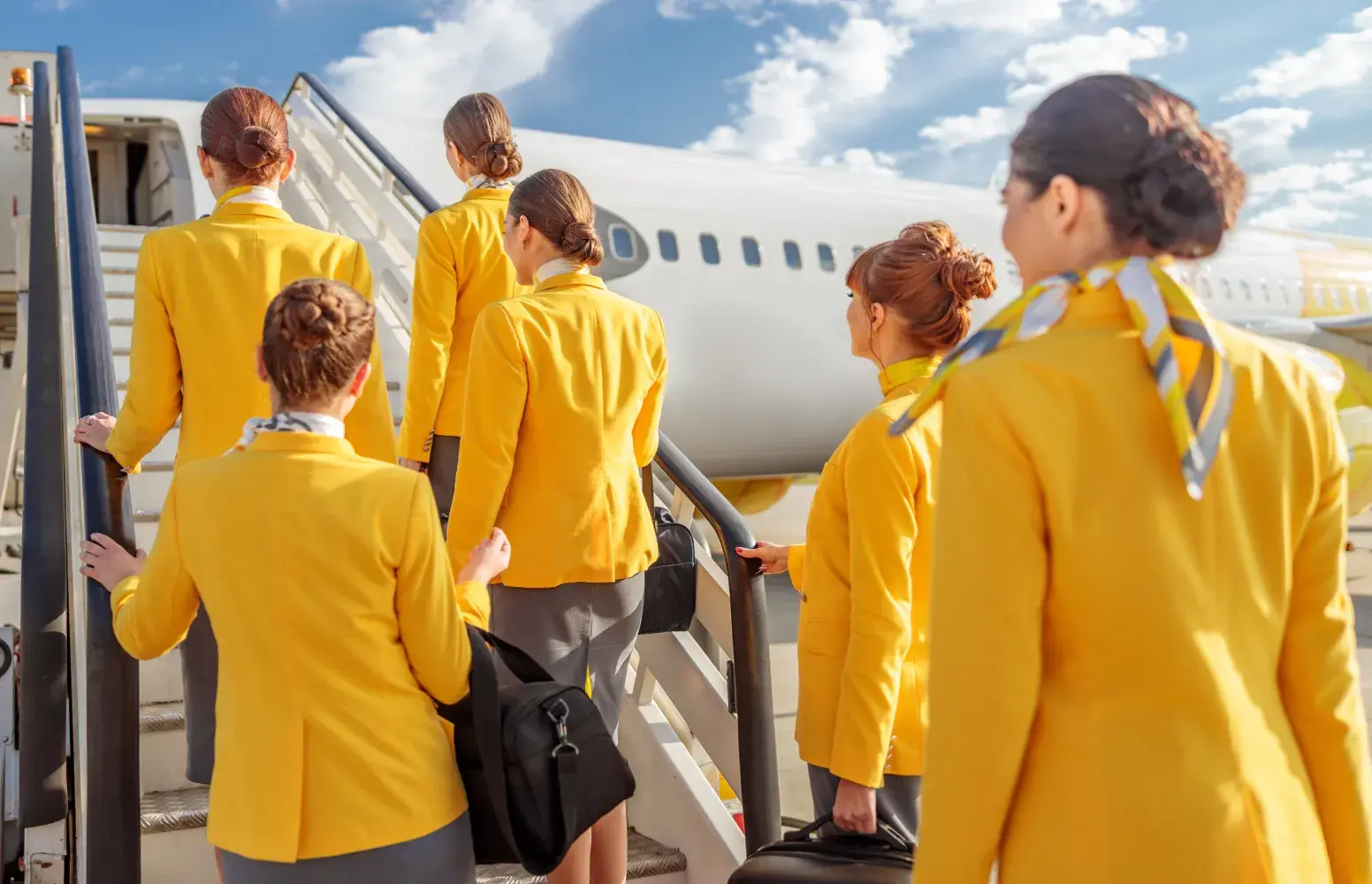
When you board a flight, the cabin crew plays an essential role in ensuring you have a smooth journey. To make this happen, flight attendants and flight pursers work in tandem but at different levels of seniority. For aspiring professionals, it becomes important to understand the flight purser vs flight attendant debate.
Both roles have their own set of responsibilities. A flight attendant typically focuses on passenger safety, cabin service, and assisting travellers during the flight. A flight purser takes on additional leadership and coordination responsibilities. What other differentiating aspects should one know when researching flight purser vs flight attendant?
In this guide, we compare the responsibilities, qualifications, skills, salaries, and career progression of flight pursers and flight attendants.
What Is a Flight Attendant?
The first part of the flight purser vs flight attendant difference is to understand what a flight attendant is. In this role, an aviation professional is responsible for ensuring the safety, security, and comfort of passengers throughout a flight. Along with cabin service, safety is the foremost responsibility of flight attendants.
Besides in-flight services, flight attendants are also responsible for various before-flight and after-flight tasks. Certain soft skills can make this job easier to navigate. This includes strong communication, teamwork, customer service, and problem-solving skills.

Posted 1 hour ago

 Verified

Posted 1 day ago
Verified
Posted 1 day ago
Verified
Posted 1 day ago
Verified
Posted 1 day ago
Verified
Posted 1 day ago
Verified
Posted 1 day ago
Verified
Posted 1 day ago
Verified


Posted 8 days ago
What is a Flight Purser?
The other part of the flight purser vs flight attendant difference is the flight purser. A flight purser is a senior cabin crew member who is responsible for various tasks. Their role typically involves additional leadership and supervisory responsibilities.
The exact title and responsibilities for such a role can vary between airlines. Depending on where you choose to apply, the role may be called cabin manager, cabin supervisor, or senior cabin crew member. Flight pursers generally reach the role after gaining experience as flight attendants.
Flight Purser vs Flight Attendant: Key Differences
The next part of the flight purser vs flight attendant debate is to actually understand how the two roles differ from each other. Both roles are responsible for a few key areas, primarily passenger safety and cabin operations. They differ in seniority, leadership responsibilities, and scope of work.
A flight attendant is responsible for carrying out assigned duties related to safety and passenger care, while a flight purser has the additional responsibility for crew coordination and overall cabin management. The following comparison highlights the typical differences between the two roles:
1. Seniority
The clearest difference in the flight purser vs flight attendant debate is seniority. Flight attendants are members of the cabin crew who handle essential tasks related to safety and service. The flight purser, on the other hand, has more experience and takes on a supervisory role during the flight.
2. Responsibilities
Another differentiating factor in the flight purser vs flight attendant debate is the type of responsibility both roles handle. Flight attendants are tasked with both individual and team-based duties. These include safety checks, passenger assistance, and onboard service.
A flight purser might also take care of such tasks. However, their main task is the overall operation of the cabin. This can include assigning duties, coordinating the crew, and ensuring that safety and service procedures are followed.
3. Career Progression
The next difference in the flight purser vs flight attendant debate is career progression. Flight attendants can generally enter the role at the beginning of their cabin crew career. On the other hand, a flight purser position is typically achieved through experience, strong performance, and additional airline-specific training or assessment.
4. Passenger Responsibilities
In the flight purser vs flight attendant debate, the types of responsibilities handled by professionals in both roles are similar. They differ in scope. Flight attendants handle routine passenger requests, provide meals and refreshments, assist with seating and baggage concerns, and respond to individual needs during the flight.
A flight purser takes responsibility for more complex or escalated concerns, particularly when an issue requires the involvement of a senior cabin crew member.
5. Communication
The next difference in the flight purser vs flight attendant debate is the type of communication. In the role of a flight attendant, you will primarily communicate with passengers and other cabin crew members to coordinate safety and service duties.
The nature of communication changes when one becomes a flight purser. In addition to communicating with passengers and cabin crew, they may coordinate with the flight deck and ground teams. As a flight purser, you will also communicate instructions and updates to the cabin crew and help ensure that everyone understands their assigned responsibilities.
6. Experience
The next difference in the flight purser vs flight attendant debate is experience. To become a flight attendant, you must meet an airline's eligibility requirements and successfully complete the required training.
Flight pursers require experience as a flight attendant and demonstrate the skills required to supervise cabin operations. Airlines may also require additional purser training, assessments, or leadership experience before appointing a crew member to the role.
The Difference in Responsibilities
One of the most important areas of difference that one wants to know in the flight purser vs flight attendant is responsibility. The table below highlights the typical responsibilities of each role, although specific duties can vary by airline and aircraft.
| Responsibility | Flight Attendant | Flight Purser |
|---|---|---|
| Pre-flight preparation | Checks the cabin, emergency equipment, and assigned work areas before departure | Oversees cabin preparation and ensures the crew is ready for departure |
| Safety procedures | Conducts safety demonstrations and follows established safety procedures | Monitors overall compliance with safety procedures and coordinates the cabin crew |
| Passenger concerns | Handles routine passenger requests and concerns | Addresses escalated or complex passenger issues and coordinates solutions with the crew |
| Emergency response | Follows emergency procedures and assists passengers during an incident | Coordinates the cabin crew's response and helps ensure emergency procedures are followed |
| Documentation | Completes assigned safety, service, or incident reports when required | May oversee or complete operational reports and communicate relevant information to the flight deck or airline |
| Post-flight duties | Completes assigned cabin checks and reports issues after landing | Oversees post-flight cabin procedures and ensures relevant information is passed to the appropriate teams |
Frequently Asked Questions (FAQs)
1. How many years does it take to become a flight purser?
An important query that people have in the flight purser vs flight attendant debate is the time it takes to go from being a flight attendant to becoming a flight purser. There is no single number of years required to become a flight purser because airlines set their own eligibility and promotion criteria. Some airlines may require several years of cabin crew experience, while others may have specific internal promotion programmes.
2. Do flight pursers fly on every flight?
A flight purser may not necessarily operate on every flight. Airlines determine the cabin crew structure according to various factors. This includes aircraft type, route, flight duration, passenger numbers, and operational requirements. On flights where a purser or equivalent senior cabin crew member is assigned, they oversee the cabin crew and coordinate cabin operations.
3. Do flight pursers earn more than flight attendants?
Flight pursers may earn more than flight attendants because the position generally involves greater seniority, responsibility, and leadership duties. To know more about what the average pay looks like, explore our blog to learn more about flight purser salaries. Pay can depend on various factors. This includes an employee's experience, airline, location, aircraft type, flying hours, routes, allowances, and other benefits. Some airlines also use different pay scales for senior cabin crew positions.
4. What qualifications do you need to become a flight purser?
In the flight purser vs flight attendant debate, what qualifications does one require to progress to flight purser roles? It actually varies, depending on the airline. Candidates are required to complete the airline's required cabin crew training and have relevant flying experience. Airlines also look for robust knowledge of safety and emergency procedures. Additionally, requirements can also differ depending on the country's aviation regulations and the airline's operating procedures. Explore our blog to know more about cabin crew qualifications.
5. What skills do flight pursers and flight attendants have in common?
Many core skills actually complement both the roles. This includes communication, teamwork, problem-solving, situational awareness, and adaptability. In both roles, one must know how to remain calm under pressure. Strong interpersonal skills also help professionals in both roles to communicate effectively with crew members and passengers. A flight purser generally needs additional leadership, decision-making, and crew-management skills.
Enjoying the article?
Follow us and never miss an update on the aviation industry.
Conclusion
Whether you have just entered the sector as a flight attendant or progressed to a flight purser position, both roles are vital to cabin operations. In the flight purser vs flight attendant debate, it is vital to understand the integral part one plays in either role. While both positions share many responsibilities and skills, the key difference is the level of seniority and leadership involved.
As global air travel continues to spike, airlines will keep increasing their fleets. To make flight operations successful, the demand for skilled professionals for flight purser jobs and flight attendant jobs will keep increasing.
For those considering a career in cabin crew, becoming a flight attendant can provide valuable experience and a pathway towards more senior positions. To support your job search, explore our blog to learn about the most commonly asked flight attendant interview questions.