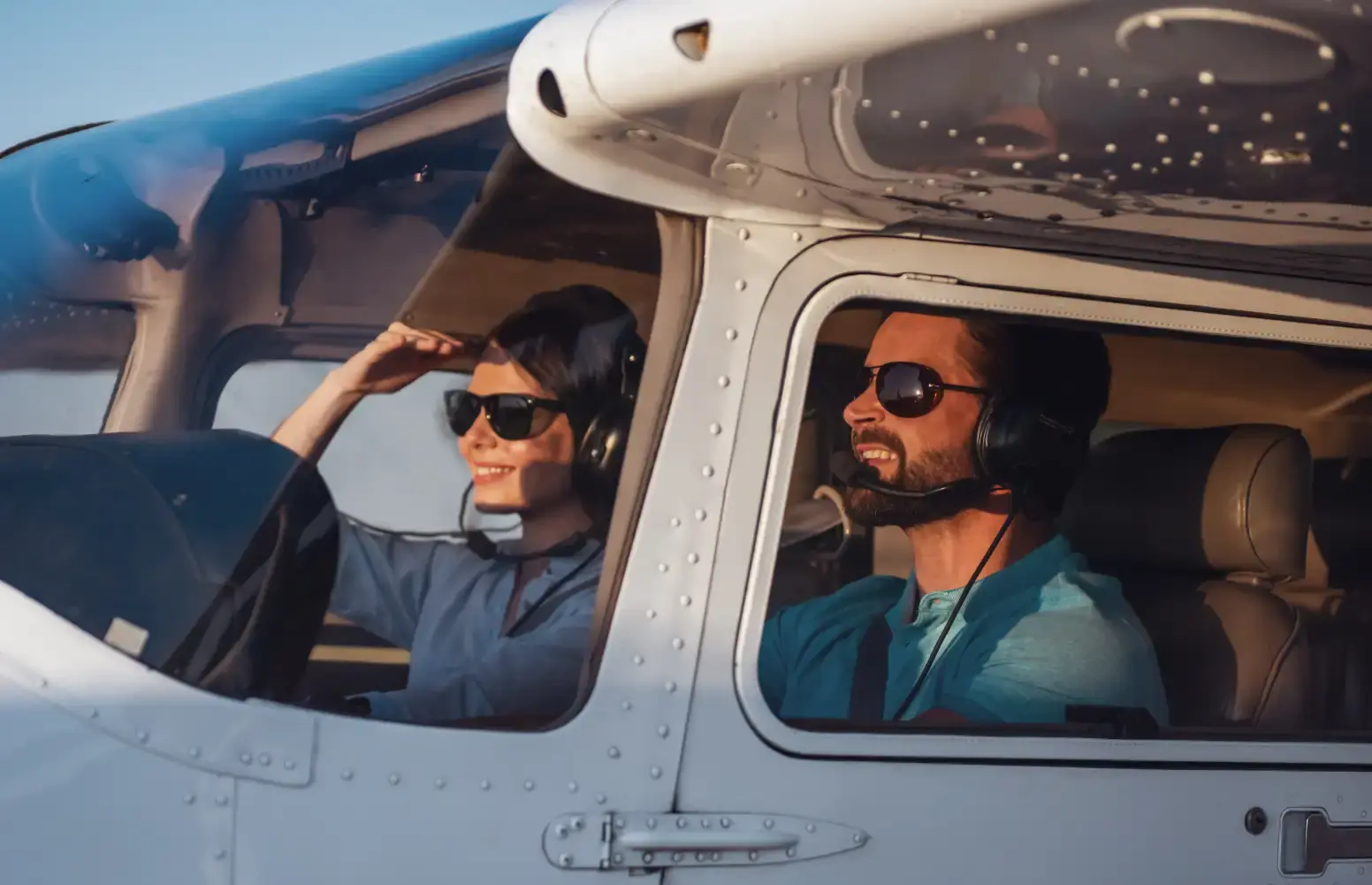
Are you thinking about finally making your dream of flying come true? It all starts with a Private Pilot License, which opens the door to professional and personal opportunities. But before you start, your utmost priority is to think through this decision carefully, as the time and cost of obtaining a private pilot license are high. So, how much does it cost to get a private pilot license?
A PPL is essential to earn any other flying license, such as a Commercial Pilot License (CPL), Airline Transport Pilot License (ATPL), or others. It allows you to fly a non-commercial aircraft as the Pilot In Command (PIC). In most countries, obtaining the license takes around 4-6 months. Once you earn it, a PPL can be used for leisure flying and flying others.
PPL Requirement Checklist
Before you research the cost to get a private pilot license, it is important to have a checklist in place. This checklist will help you prioritize the essential items for obtaining a private pilot license.
- The minimum age must be 17 to get a PPL.
- You must be able to understand and speak English.
- A clear background check is mandatory.
- You must complete a training course at an ATO or DTO.
- Your medical certificates should be up-to-date.
- It is also important to pass the theoretical exams country-wise.
- You are also required to accumulate the required flying hours.
However, the answer to ‘how much does it cost to get a private pilot license?’ is not as simple. Many factors are involved in deciding these numbers, and vary for every country. So, let’s explore the costs involved and the factors that influence them.
Flight Training Cost
The first cost to get a private pilot license is also the biggest expense involved in getting a Private Pilot License (PPL). The flight training cost will include the aircraft rental charges and the instructor’s fee for every hour spent learning to fly. The PPL cost tends to go up as pilots are required to complete a minimum number of flying hours before they can qualify for the license. Many students also require more practise hours to build confidence and master essential flying skills.
The type of aircraft one flies during training also impacts the cost to get a private pilot license. Smaller single-engine aircraft incur less cost, while bigger ones increase the overall PPL cost. Training rates may also vary depending on fuel prices, airport charges, aircraft maintenance expenses, and the location of the flight school. The flight training cost will take up the largest chunk of your private pilot license cost. Depending on the specific country, the range typically falls between $6,000 and $15,000.
Ground School and Theoretical Training Costs
The second cost of getting a private pilot license is mastering the theoretical side of aviation through ground school training. This portion of your training will focus on subjects like aviation regulations, navigation, meteorology, aircraft systems, flight planning, radio communication, and aerodynamics. Ground school is equally important as it prepares students for the written examinations.
The cost to get a private pilot license is dependent on various factors, such as the learning format chosen or whether it is a classroom-based training with instructors. In comparison, online programs may cost less, but students need strong self-discipline to study independently. The cost generally falls in the range of $300 and $3000, depending on the country and the type of ground school. Online ground school tends to be more economical, costing between $300 and $800.
Medical Examination and Certification Costs
The next big cost to get a private pilot license is the mandatory medical examination. Pilots are required to meet certain health and fitness standards to ensure they can safely operate an aircraft. The exam is carried out by an authorized aviation medical examiner and usually includes tests related to vision, hearing, general physical health, and medical history.
So, how much does a private pilot license cost? And how high is the cost of the medical examination? The medical certificate for a private pilot is comparatively less strict than the standards in place for a commercial pilot. But private pilots must demonstrate adequate physical and mental fitness. PPL cost also goes up, depending on the country’s aviation authority, and periodic renewal after a certain duration.
When researching the cost to obtain private pilot license, aspiring pilots might also have to spend money on obtaining medical records, prescription eyewear suitable for aviation use, or follow-up consultations if requested by the aviation authority.
Medical certification for a Private Pilot License generally ranges from $75 to $300 for the initial examination. If follow-up consultations or specialist evaluations are needed, students may spend an additional $100 to $500.
Examination and Licensing Fees
The next big cost to get a private pilot license is the cost of taking multiple examinations, a prerequisite for obtaining a PPL. These examinations usually include written theory exams, practical flight tests, and oral assessments. The PPL license cost for examination and licensing fees is separate from training costs and is often paid directly to regulatory authorities or designated testing centers.
While the written examination aims to evaluate a student’s understanding of aviation subjects learned during ground school, the practical examination assesses the student’s ability to safely operate an aircraft, perform maneuvers, navigate, communicate effectively, and handle emergencies. Other than the exam charges, students must also pay application fees for student pilot permits, logbook verification, radio operator permits, or license issuance. It is important to include these areas when researching how much is a PPL?
In most countries, the charges for examination and licensing range between USD 300 and USD 1,500 overall. The PPL cost for exam fees usually ranges from USD 50 to USD 200 per subject or examination session, depending on the country and aviation authority.
Equipment and Pilot Supplies Costs
The next cost to obtain private pilot license is the cost for tools, accessories, and aviation supplies that support learning and flight operations. While these expenses may appear smaller compared to flight training costs, they still form an important part of the overall budget for obtaining a Private Pilot License.
The most common purchase will be the pilot headset, an important part of your communication with instructors and air traffic control during flights. A good quality headset goes a long way in reducing cockpit noise, making it a valuable long-term investment. Entry-level pilot headsets may cost around USD 150 to USD 300, while premium noise-canceling models can exceed USD 1,000.
Factors Affecting License Cost
The cost to obtain private pilot license is dependent on various factors. Several factors influence the cost of getting a private pilot license, including the flight school’s location, the choice of training aircraft type, and the experience level of the Certified Flight Instructor.
- Location of the Flight School: The location of your flight school has a huge role to play in deciding the cost you will incur. Different locations can have different pricing, depending on the cost of living, flight school availability, and local rules and regulations.
- Aircraft Type: When calculating how much does a private pilot license cost, the type of aircraft chosen for the training makes a huge difference. Smaller or less complex aircraft are mostly cheaper than more extensive or advanced aircraft when hiring for training.
- Instructor Experience: One of the major factors that influences the cost to obtain a private pilot license is the qualification and experience of the Certified Flight Instructor. The fees of the CFI depend on their experience level. This means that the more experienced instructors will be charged more/ However, the upside is that they will also have more to offer in terms of training.
Saving Money on a Private Pilot License
So, how much does a PPL cost? While researching, you will also get to know significant ways of saving up some money when you begin the process of obtaining a private pilot license. Let’s discuss some cost-saving options when obtaining a private pilot license:
- Part 61 Flight School Training: Part 61 flight schools’ programs offer flexibility during the training period. Hence, they are usually cheaper than Part 141 schools.
- Sport Pilot License: The overall expense of a sport pilot license is lower than that of a private pilot license, as it demands lower hour requirements, and you pay for flight training per hour.
- Financing Options: A few financing options are available at some flight schools or aviation companies. Some also offer payment plans to divide the total amount over the training period.
Frequently Asked Questions (FAQs)
Q1. How long does it typically take to earn a PPL?
It typically takes about 4 to 6 months for full-time students to earn a Private Pilot License (PPL), although this duration can vary based on individual commitment, frequency of training, and other factors such as weather conditions and instructor availability. If you want to know what all you can do with a private pilot license, here’s a resource to help you explore the topic.
Q2. What are the main differences between Part 61 and Part 141 flight schools?
In PPL license cost, the main differences between Part 61 and Part 141 flight schools lie in their structure and regulatory requirements. Part 61 schools offer more flexibility in training schedules and do not have a set curriculum, allowing students to progress at their own pace. In contrast, Part 141 schools follow a structured program with a specific syllabus and are often more rigorous, which can lead to a faster completion time for students.
Q3. What factors should I consider when choosing a flight school?
When choosing a flight school, consider factors such as the school's location, the type of aircraft used for training, the experience and qualifications of the instructors, the school's reputation, and the costs involved. Additionally, look into the school's pass rates for examinations and the availability of financial aid or scholarships. Explore our blog to know more about how to get a private pilot license.
Q4. What are the benefits of choosing a Sport Pilot License over a Private Pilot License?
You will also find various avenues when researching the question, “how much does it cost to get a private pilot license.” Opting for a Sport Pilot License (SPL) instead of a Private Pilot License (PPL) can benefit those looking for a more affordable and less time-consuming path to flying. The SPL has fewer training requirements, allowing for a lower total cost and fewer flight hours needed. Additionally, it permits flying light-sport aircraft, which can be ideal for recreational flying without the complexities of a full PPL.
Enjoying the article?
Follow us and never miss an update on the aviation industry.
Conclusion
There is a lot you can do with a private pilot license. A private pilot's license gives you the freedom to fly single-engine aircraft for personal recreation or travel. Additionally, you get to skip airport security lines, as you are the one who will fly the aircraft. You get the opportunity to fly with your friends and family without relying on commercial airline schedules. However, it is important to note that a private pilot's license cannot be used to fly commercially. Explore our blog to know the different types of pilot licenses.
It is not just recreational flying that you can do with a private pilot. Different types of private pilot jobs are cropping up, giving avid aviation enthusiasts a chance to be an air ambulance pilot, a UAV pilot, or a charter pilot. Earning a private pilot license can be an extensive process, but it seems all worth it when it opens the possibilities of your dream job. Proper research around the question “how much does it cost to get a private pilot license” can help aspiring pilots find the most cost-effective way to make their aviation dreams come true.