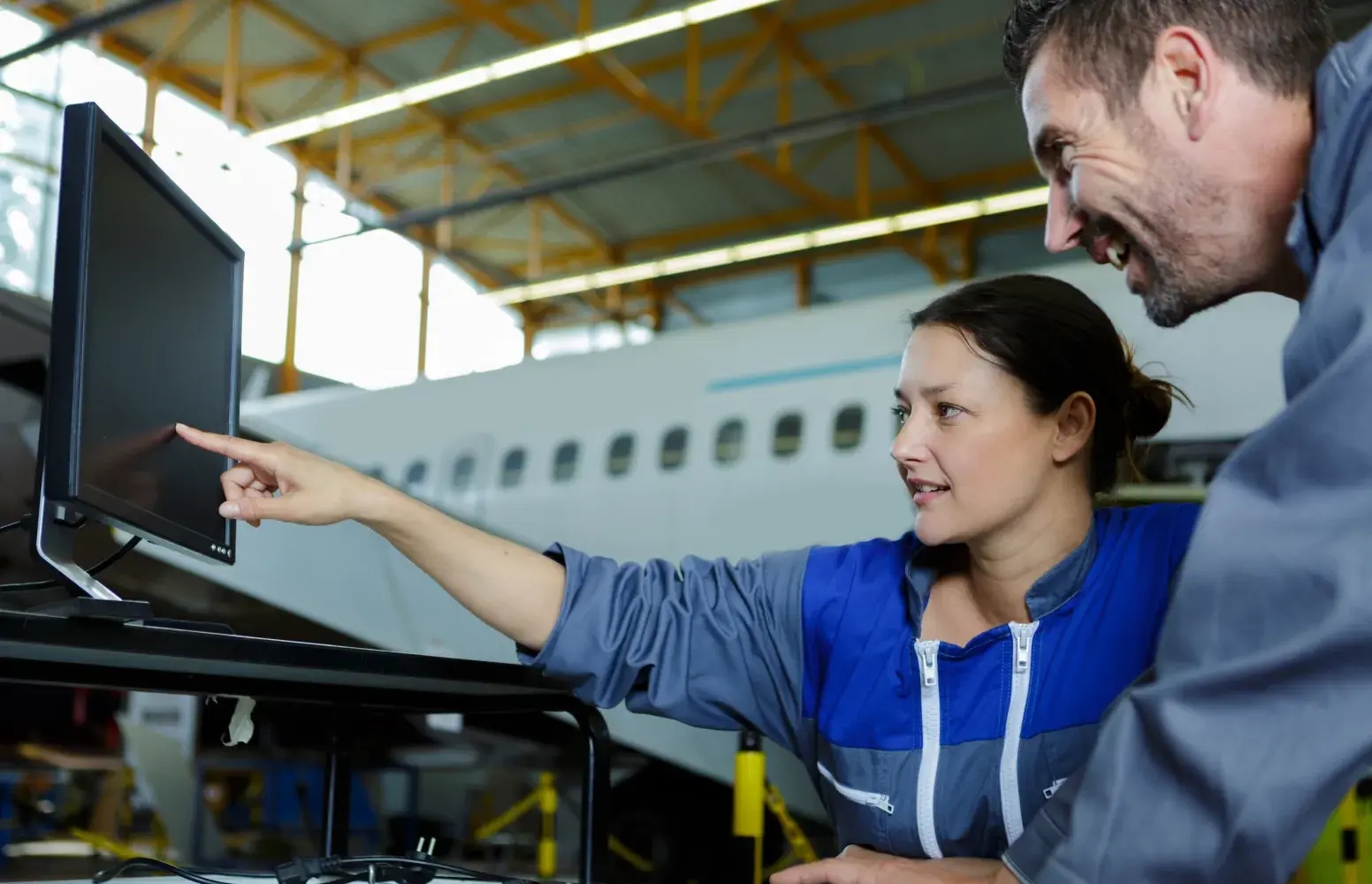
Any aircraft relies on a set of complex electrical and electronic systems that have to operate safely. This makes skilled avionics professionals an essential part of the aviation industry. Among them is the role of a B2 licensed aircraft engineer. This type of engineer specializes in maintaining, inspecting, troubleshooting, and certifying the aircraft's electrical, electronic, communication, navigation, and instrument systems. The B2 engineer job description is varied and helps ensure that every flight departs with critical onboard systems functioning correctly.
With airlines expanding and modernizing their fleet, the role of these engineers has become crucial. Whether you're considering a career in aircraft maintenance or simply want to understand the role, this guide provides everything you need to know before taking the next step.
What is a B2 Licensed Engineer?
Before understanding the B2 licensed engineer responsibilities, it is important to understand what the role is all about. In aviation, a B2 licensed engineer specializes in the inspection, maintenance, troubleshooting, repair, and certification of an aircraft's avionics and electrical systems. A B2 engineer differs from a B1 engineer based on their focus. A B2 engineer works with the sophisticated electronics that enable pilots to communicate, navigate, and monitor aircraft performance.
What does a typical day look like for a B2 engineer? It involves handling multiple tasks such as fault diagnosis, equipment testing, and replacement of defective electronic components, among others. These engineers also have to perform scheduled maintenance inspections, install software updates, and conduct functional tests.
As a B2 engineer, you will have the opportunity to work in various settings. These include aviation settings, including commercial airlines, MRO facilities, aircraft manufacturers, business aviation companies, cargo operators, and military aviation organizations.

Posted 2 hours ago

 Verified
Posted 2 hours ago
Verified

Posted 18 hours ago
Verified

Posted 24 hours ago
Verified


Posted 2 days ago
Verified

Posted 4 days ago
Verified

Posted 5 days ago
Verified
Posted 6 days ago
Verified
Posted 6 days ago
Verified
What Does a B2 Engineer Do?
What does a B2 licensed engineer do? There are various tasks handled by a B2 engineer.
- The primary responsibility is to ensure that an aircraft’s electrical and avionics systems are operating safely and comply with aviation regulations.
- They also examine critical systems such as communication radios, navigation equipment, flight management systems (FMS), autopilot, weather radar, cockpit displays, electrical wiring, and aircraft instruments.
- With technical faults, these engineers use specialized diagnostic equipment and manufacturer-approved troubleshooting procedures to locate the source of the problem.
- They may be required to replace faulty components and update software. Calibrate instruments and perform system testing.
- So, what does a B2 licensed engineer do? A very important duty is documentation. They must keep detailed maintenance records to ensure future traceability and regulatory compliance.
- B2 engineers may also issue a Certificate of Release to Service (CRS), depending on their license privileges and applicable aviation regulations.
- They are also required to work with maintenance teams to ensure aircraft are returned to service safely and on schedule.
If you want to be successful in this field, then you must combine strong technical knowledge with analytical thinking, attention to detail, and a commitment to safety. With advanced digital technologies becoming a mainstay in aircraft manufacturing, B2 engineers will remain essential to ensuring modern aircraft operate efficiently and safely.
How to Become a B2 Engineer?
After answering the question, what does a B2 licensed engineer do, it is time to understand how to become one. Becoming a B2 licensed engineer requires a combination of formal education, approved technical training, practical maintenance experience, and professional licensing.
1. Complete Your Education
A high school diploma is the most basic education required to become a B2 engineer. Across the world, most aspirants complete their high school diploma by focusing on subjects like mathematics, physics, and English.
A strong foundation in STEM helps students to understand aircraft systems and technical documentation.
2. Enroll in a Program
The next step of the process that will help you fulfil your B2 licensed engineer duties is to enrol in an approved aircraft maintenance training program. It will be beneficial to check the website of your country’s aviation authority to get the approved list of academies.
These programmes focus on aircraft electrical systems, digital electronics, avionics, communication and navigation systems, instrumentation, and aviation legislation.
3. Gain Practical Maintenance Experience
Practical training is an important part of your training. Many of the B2 licensed engineer responsibilities are covered in the practical part of your training module. It also bridges the gap between classroom learning and real-world aircraft maintenance.
Once you have completed your theoretical training, you can gain practical experience in an airline, Maintenance, Repair and Overhaul (MRO) organisation, aircraft manufacturer, or another approved maintenance facility. During this period, you get the opportunity to collaborate closely with licensed engineers and develop the skills required to inspect, troubleshoot, repair, and test aircraft avionics systems.
4. Obtain a B2 Aircraft Maintenance License
To become fully qualified as a B2 engineer, you will need to obtain a license. Every country has its own specific requirements for licensing. In general, it involves a series of theoretical examinations covering topics such as electrical fundamentals, digital techniques, avionics systems, aviation legislation, maintenance practices, and human factors.
Candidates must also complete the required amount of practical maintenance experience before applying for a B2 license.
5. Complete Aircraft Type Rating Training
A prime part of the B2 engineer job description is to work on various aircraft. In this regard, a type rating helps engineers get certified to work on a specific aircraft type. For instance, one can get a type rating for the Airbus A320 or Boeing 737 families.
A type rating further enables a B2 engineer to legally certify work, prove system expertise, and unlock job opportunities on specific aircraft models. In fact, various regulatory authorities, like the EASA and the DGCA, mandate that certifying staff hold a valid type rating.
Essential Skills Every B2 Engineer Needs
A big part of a B2 licensed engineer responsibilities hinges on their skill set. Aspiring professionals must inculcate these skills for a successful career. You can explore our blog to learn more about the qualifications required to become a B1 and B2 engineer.
- Technical knowledge of avionics systems: A thorough understanding of an aircraft’s electrical and electronic systems enables engineers to diagnose problems quickly and maintain aircraft safely.
- Troubleshooting skills: Aircraft are highly complex, making effective fault diagnosis one of the most valuable skills for a B2 engineer. Strong analytical skills help minimise aircraft downtime and ensure repairs are completed the first time correctly.
- Attention to detail: Precision goes a long way in helping these engineers inspect components, verify system performance, follow maintenance procedures, and complete documentation without errors.
- Knowledge of aviation rules: As the one certifying aircraft, you must understand maintenance standards established by aviation authorities like the EASA, India’s DGCA, the US’s FAA, or the UK’s CAA.
- Problem-solving skills: Unexpected issues can come up at any time. As B2 engineers, it is your responsibility to quickly assess the situation and come up with possible solutions that resolve complex faults efficiently without compromising safety.
- Communication skills: B2 Engineers work closely with B1 engineers, aircraft technicians, pilots, maintenance planners, and quality assurance teams. Knowing how to relay information clearly and accurately is of utmost importance.
- Time management: B2 engineers must prioritise tasks effectively, work efficiently during routine inspections and unscheduled repairs, and ensure maintenance is completed within allocated timeframes while maintaining high safety standards.
- Digital literacy: Computer literacy is a big part of the B2 licensed engineer duties. Since modern aircraft rely heavily on digital avionics and software-based systems, B2 engineers are required to know maintenance management software, electronic technical manuals, diagnostic tools, and onboard testing equipment.
- Safety-focused mindset: Safety is an integral part of the aviation industry. As someone who will certify if an aircraft is fit to fly. A safety-first approach will help you to follow each regulation effectively.
- Continuous learning: Successful B2 engineers are committed to lifelong learning through recurrent training, aircraft type courses, manufacturer programmes, and regulatory updates.
How Much Do B2 Engineers Earn?
After a thorough review of the B2 licensed engineer duties, it is also important to look at what one can earn in this role. The salary of a B2 licensed engineer varies significantly depending on various factors. This includes the country you work in, type of employer, aviation sector, experience, aircraft type ratings, and license privileges.
On average, the entry-level compensation typically ranges from $30,000 to $50,000 per year. With more experience, one can earn $70,000 to $120,000 annually working for major airlines or MROs.
Some of the highest-paying countries include the United States, the United Kingdom, the UAE, Australia, and parts of Europe. Senior B2 engineers in these locations can earn the equivalent of $120,000 to $150,000 or more per year, especially when overtime, shift allowances, and bonuses are included.
Enjoying the article?
Follow us and never miss an update on the aviation industry.
Is This Career Right For You?
Now that you have looked at the B2 licensed engineer duties, the qualifications required to make it in this role, and what one can earn, how do you decide if this is the career for you? If you enjoy the tech behind aviation and solving complex problems, then becoming a B2 engineer will be a rewarding experience.
As more and more airlines modernize their aircraft and expand their fleets, B2 licensed engineer jobs will continue to increase. As a B2 engineer, you'll play a vital role in ensuring these systems function correctly, helping keep passengers, crew, and aircraft safe.
Once you become a B2 engineer, you can continue your professional development and work towards your Category C license. If you want to focus on the mechanical side of aircraft systems, you can opt for B1 engineering. Explore our blog to learn the difference between a B1 and B2 aircraft engineer.