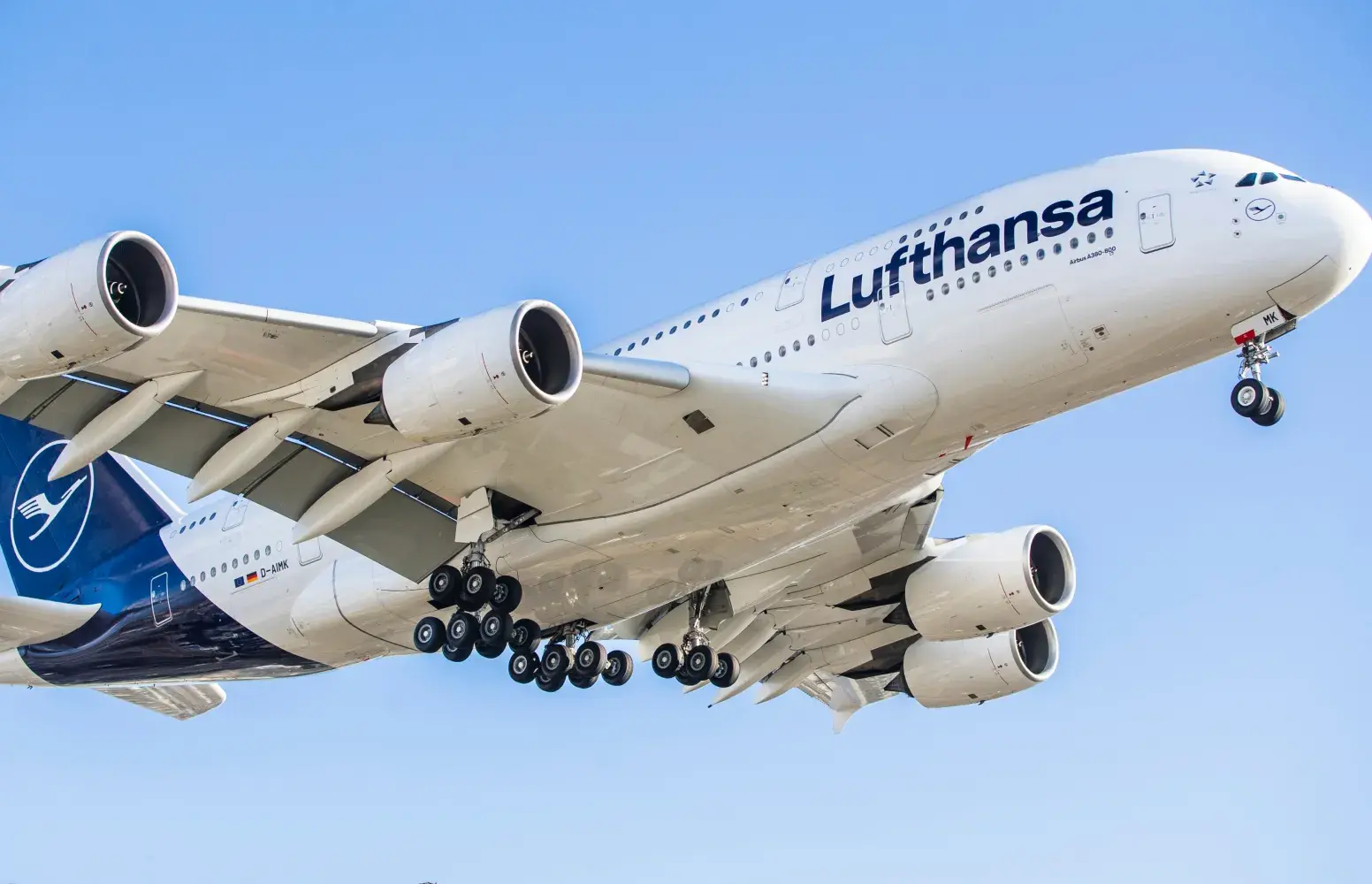
Over the last few decades, passenger planes have grown substantially not just in size but also in seating capacity. Some of the biggest passenger aircraft stretch more than 70 metres in length and carry hundreds of passengers on a single flight.
But what exactly helps an aircraft earn the title of largest passenger plane in the world? Size can be measured in various ways. This includes length, wingspan, height, passenger capacity and maximum takeoff weight. Alternatively, this also means that the aircraft with the longest fuselage isn't necessarily the biggest.
In this guide, we look at six of the biggest passenger aircraft. These aircraft have the maximum seating capacity and are operational across the world.
So, which aircraft takes the title of the biggest passenger plane? Let’s compare these aviation giants and find out what makes each one stand out.
1. Airbus A380-800
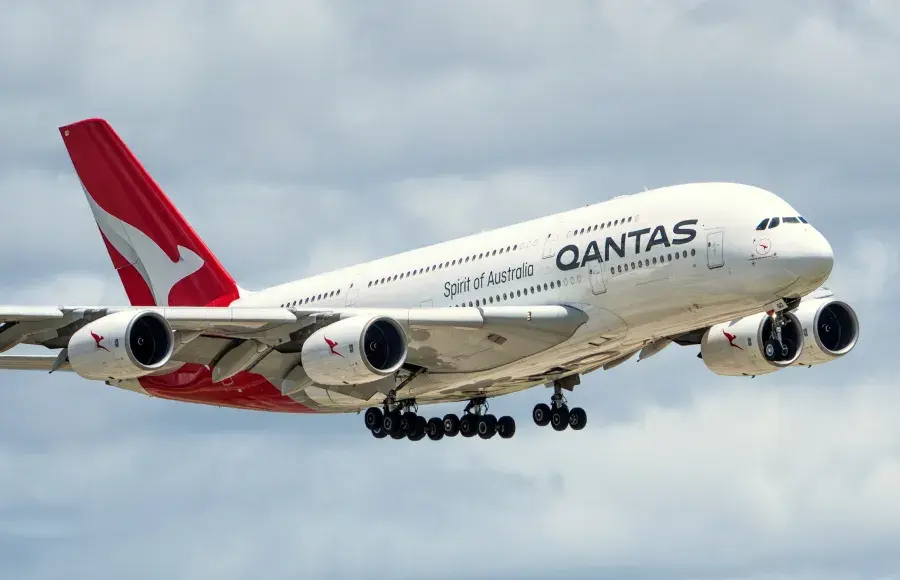 Credit: leekris, Adobe Stock
The largest passenger plane in the world is easily the Airbus A380-800. The aircraft was developed by Airbus to support the growing demand for high-capacity travel. With its first flight, it became instantly recognisable for its enormous size and distinctive full-length double-deck configuration.
The aircraft measures 72.7 metres in length with a 79.8-metre wingspan and a height of around 24 metres. As a big passenger plane, the A380 sports two passenger decks. The decks extend almost the entire length of the fuselage, providing significantly more cabin space than conventional single-deck widebody aircraft. On average, the aircraft can accommodate close to 800 passengers in an all-economy layout. However, the aircraft is generally configured for 500 seats by airlines.
As the biggest airplane in the world for passenger, the A380 has an impressive takeoff weight. Its maximum takeoff weight is around 575 tonnes, and it can fly approximately 8,000 nautical miles. This makes it capable of connecting major international destinations without a fuel stop.
A defining feature of this aircraft is its four-engine configuration. Its engines can be powered by Rolls-Royce Trent 900 or Engine Alliance GP7200 engines. Due to its huge size, passengers get to have spacious cabins along with a quiet interior and advanced passenger amenities.
The Airbus A380 is a recent aircraft, having been introduced in 2021. Nevertheless, it has continued to attract passengers across the world.
2. Boeing 747-8 Intercontinental
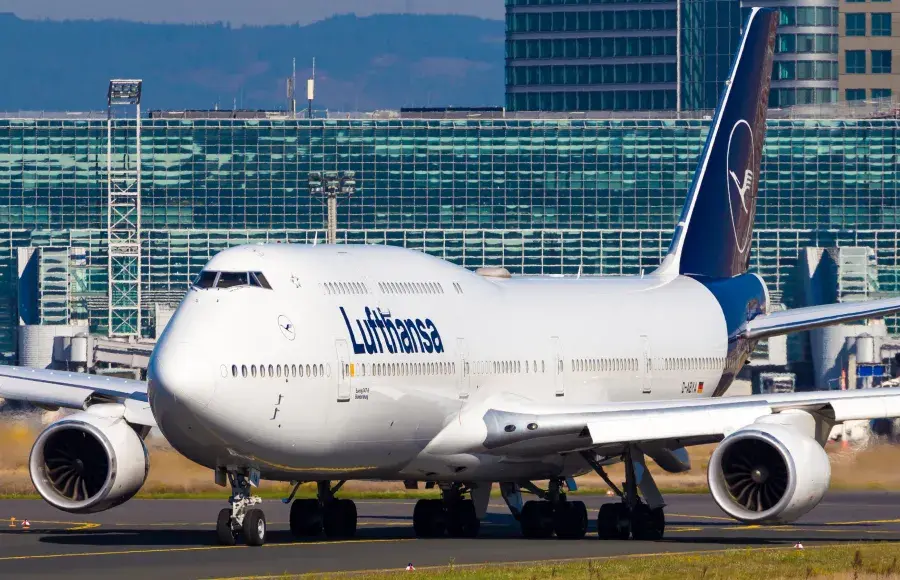 Credit: Christian Palent, Adobe Stock
The second largest passenger plane in the world is the Boeing 747-8 Intercontinental. It is the largest passenger version of the legendary Boeing 747 family. The big passenger plane is often recognized for its distinctive hump-shaped upper deck and four-engine layout.
The aircraft measures 76.4 metres long. This makes it longer than the Airbus A380-800. Along with this, it has a wingspan of approximately 68.4 metres and stands about 19.4 metres tall. Its maximum takeoff weight is around 447,700 kg, while its range is approximately 7,730 nautical miles.
As the second biggest airplane in the world for passenger, the aircraft can carry around 467 passengers in a typical three-class configuration. The main passenger deck provides ample space while the upper deck adds another distinctive seating area. Apart from the interiors, the 747-8 has a redesigned wing and General Electric GEnx-2B engines.
As the second biggest commercial airplane, the 747-8 Intercontinental was introduced at a time when airlines were increasingly looking for more efficient aircraft for long-haul routes. While it never reached the passenger capacity of the A380, its long fuselage, substantial capacity, and long range made it an important aircraft.
3. Boeing 777-300ER
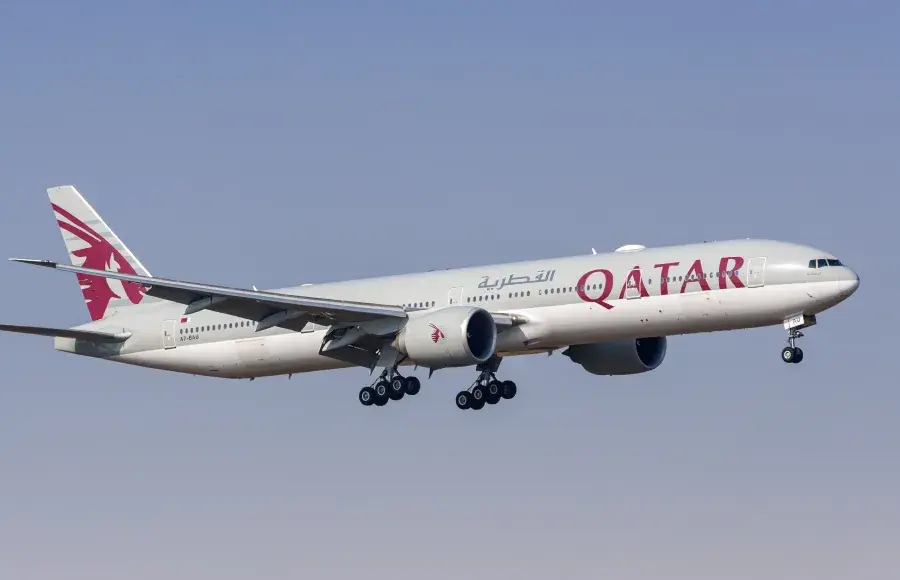 Credit: Markus Mainka, Adobe Stock
The third biggest passenger aircraft in the world is the Boeing 777-300ER. It is widely recognized for its twin-engine passenger aircraft usage in commercial aviation. The aircraft is an extended version of the 777-300. Because of this, it was designed to carry a large number of passengers on long-haul routes.
As the third biggest commercial aircraft, the aircraft measures 73.9 metres in length, with a wingspan of 64.8 metres and a height of around 18.5 metres. Its maximum takeoff weight is about 351,500 kg. It can also travel up to approximately 7,370 nautical miles.
The aircraft has a multi-class configuration. It can also accommodate approximately 365 passengers. What makes it one of the biggest passenger aircraft in the world is its combination of passenger capacity, range, and size.
A notable feature of the 777-300ER is its two-engine configuration. Powered by GE90-115B engines, the aircraft also incorporates features such as raked wingtips, a strengthened airframe, and an increased fuel capacity.
While newer aircraft like the A350-1000 have introduced new features to keep up with the changing times, the 777-300ER remains a major long-haul aircraft. Its combination of large passenger capacity, impressive range, and substantial dimensions earns it a place among the world's largest passenger aircraft.
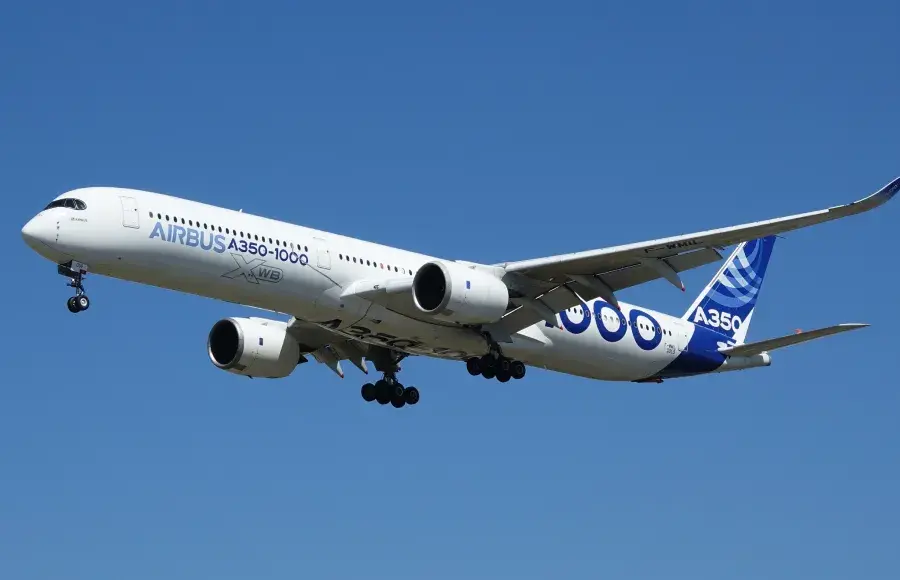
4. Airbus A350-1000
 Credit: franz massard, Adobe Stock
Another name in the biggest passenger aircraft in the world list is the Airbus A350-1000. It is the fourth-biggest commercial airplane sporting a modern twin-engine passenger aircraft. The aircraft was designed for long-haul operations. To help with this, it combines a large passenger capacity with advanced materials, aerodynamic improvements, and fuel-efficient engines.
The aircraft measures 73.8 metres long with a 64.8-metre wingspan. It stands at around 17.1 metres tall and has a maximum takeoff weight of about 322,000 kg. Depending on cabin configuration, the aircraft can accommodate around 350 to 410 passengers, with a maximum certified capacity of more than 480 passengers.
As one of the biggest commercial aircraft in the world, it features the use of carbon-fibre-reinforced polymer composites. This accounts for a significant portion of the aircraft's structure. Its engines are powered by Rolls-Royce Trent XWB-97 engines, which help reduce fuel consumption compared with many previous-generation widebody aircraft.
As the fourth biggest passenger aircraft, it features a spacious cabin designed for long-distance travel. Additionally, its advanced systems and quieter engines contribute to a more comfortable passenger experience.
The A350-1000 is considerably smaller than the Airbus A380 and Boeing 747-8. Despite this, it has consistently demonstrated how modern aircraft can deliver high passenger capacity and long range without relying on four engines.
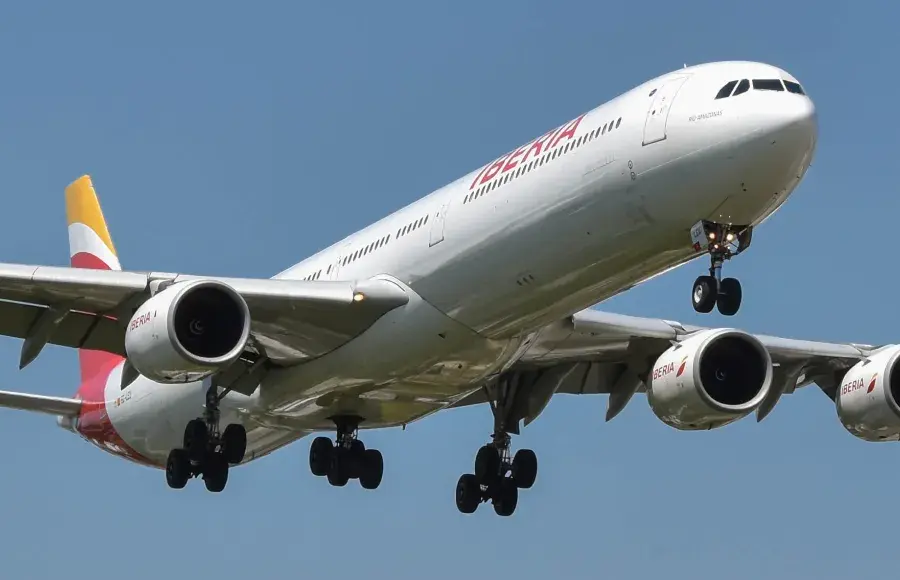
5. Airbus A340-600
 Credit: Gonzalo, Adobe Stock
The fifth largest passenger plane in the world is the Airbus A340-600. It is one of the longest passenger aircraft ever produced. Being a significant addition to Airbus's four-engine A340 family, it was developed for long-haul routes.
As a large passenger airplane, the A340-600 measures 75.4 metres long, making it longer than the Airbus A380-800 and Boeing 747-8 Intercontinental. It sports a wingspan of about 63.5 metres, while standing tall at 17.3 metres. Its maximum takeoff weight can reach 380,000 kg with a range of about 7,900 nautical miles.
As one of the largest passenger aircraft ever built, the A340-600 can accommodate 300 to 380 passengers in a multi-class configuration. The aircraft features a spacious cabin allowing airlines to tailor seating arrangements to different markets. Its engines, the Rolls-Royce Trent 556, were specifically designed for the aircraft. As newer twin-engine widebodies became more efficient, operating four engines became less economical. As time went by, many airlines began replacing the A340-600.
Despite its older design, the A340-600 remains significant in aviation history. Its large passenger capacity and long-haul capability have helped it be included in the list of most impressive large passenger aircraft ever built. While pilots and cabin crew work onboard these aircraft, air traffic controllers play a vital role on the ground. Explore our guide to air traffic controller jobs to learn more about this important aviation career.
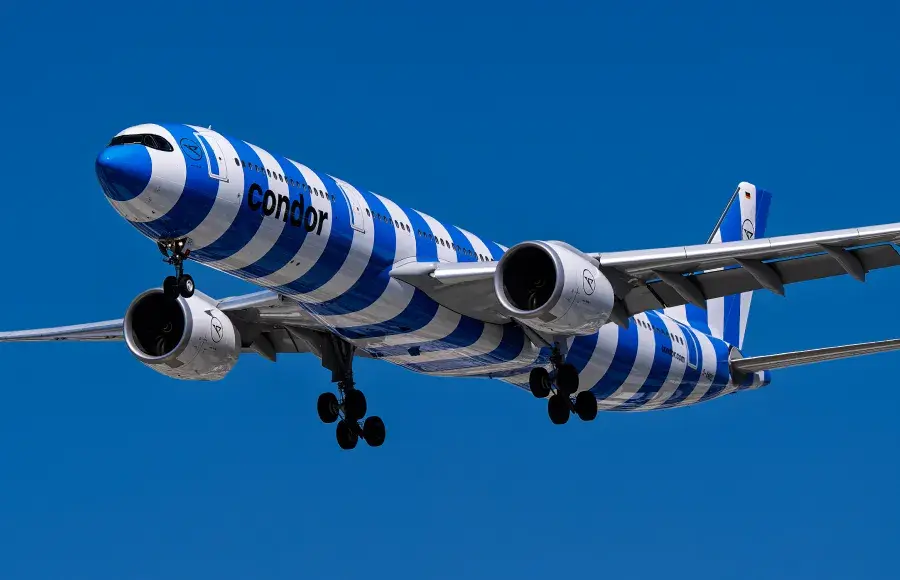
6. Airbus A330-900
 Credit: robin, Adobe Stock
The sixth biggest passenger plane in the world is the Airbus A330-900, which is also called the A330neo. Developed as a more efficient successor to earlier A330 models, it combines a large cabin with improved aerodynamics and newer-generation engines for long-haul operations.
The Airbus A330-900 is a large passenger airplane, measuring 63.7 metres long, with a wingspan of around 64 metres. It also has a height of approximately 16.8 metres. The aircraft’s maximum takeoff weight is up to 251,000 kg, and it can fly approximately 7,200 nautical miles.
Depending on its configuration, the aircraft can accommodate between 260 and 300 passengers. Due to its spacious widebody cabin, it allows airlines to offer multiple seating classes, while it is updated and designed to provide passengers with improved comfort.
As one of the largest passenger aircraft, its stand-out feature is its efficiency. The aircraft is powered by the Rolls-Royce Trent 7000 engines, which were specifically designed for the aircraft. Combined with redesigned wings featuring distinctive winglets and other aerodynamic improvements, these engines help reduce fuel consumption compared with previous-generation A330 aircraft.
While it is one of the biggest passenger aircraft in the world, it is still smaller than giants such as the A380 and 747-8. But what the A330-900 was able to achieve was a different approach to building a large passenger aircraft. If working on some of the world's biggest passenger aircraft interests you, explore our cabin crew jobs and discover what it takes to build a career in the aviation industry.
As one of the biggest passenger airplane in the world, Airbus did not only focus on maximising passenger capacity. Rather, it focused on range, efficiency, and operational flexibility.
Quick Comparison
| Aircraft | Length | Wingspan | Typical Passenger Capacity | Maximum Takeoff Weight | Range |
|---|---|---|---|---|---|
| Airbus A380-800 | 72.7 m | 79.8 m | 500–555 | 575,000 kg | 8,000 nm |
| Boeing 747-8 Intercontinental | 76.4 m | 68.4 m | 410–467 | 447,700 kg | 7,730 nm |
| Boeing 777-300ER | 73.9 m | 64.8 m | 365–396 | 351,500 kg | 7,370 nm |
| Airbus A350-1000 | 73.8 m | 64.8 m | 350–410 | 322,000 kg | 8,700 nm |
| Airbus A340-600 | 75.4 m | 63.5 m | 300–380 | 380,000 kg | 7,900 nm |
| Airbus A330-900 | 63.7 m | 64.0 m | 260–300 | 251,000 kg | 7,200 nm |
Note: Passenger capacity varies significantly depending on how each airline configures its cabin.
Enjoying the article?
Follow us and never miss an update on the aviation industry.
Conclusion
The world’s biggest passenger aircraft shows how far aviation has evolved in the last few decades. From the enormous Airbus A380-800 to the long and iconic Boeing 747-8 Intercontinental, each aircraft was designed for a specific purpose.
If you want to explore some of the largest aircraft across different sectors of aviation, check out our blog on the top 10 biggest airplanes in the world. It covers aircraft from commercial, military, and cargo aviation, giving you a broader look at the giants of the aviation industry and what makes each one stand out.
While the history of aviation showcases some truly magnificent aviation giants, the future will not be dominated by airplanes that feature in the list of the biggest passenger airplane in the world. Rather, the future will be about sleeker aircraft.
More and more aircraft manufacturers are focused on carrying large numbers of passengers more efficiently and over longer distances. These aircraft will require a specific skill set to fly, giving rise to more pilot jobs.
One thing is certain: as air travel demands increase, airlines will be looking for better talent to fill the retiring population. This will give rise to more jobs not just in cabin crew but also in other roles in engineering, such as aircraft maintenance engineer jobs and maintenance.
The biggest commercial aircraft aren't the only aviation giants. Explore our guide to the biggest military planes and their features to see how military aircraft compare in size, capability, and design.